
My Kitchen Renovation
My house is my sanctuary — the place I retreat to, make memories, garden, cook, bake, and entertain. Although I’ve lived here for about ten years, it has quickly become a true home. Over time, the kitchen needed a dramatic overhaul to better reflect the character I wanted: warm, functional, and in keeping with the farmhouse roots of the property.
I embarked on a renovation to shape that ideal: a comfortable, light-filled center for daily life and gatherings. The process tested patience and perseverance, but the outcome was worth every decision and late night. I’m excited to share the story and details of the transformation to inspire anyone looking to make their own house feel more like home.
History of My House and Property
The farmhouse sits in southeast Iowa and predates 1900. While records are incomplete, local historians estimate it was built around 1890. Originally, the home had Victorian features like corbels in the eaves and ornate trim. Over the years—likely during a siding update—many original exterior details were removed, and some pieces were stored in a now-demolished barn. With those gone, the house settled into a modified four-square Midwestern farmhouse form.
My grandparents bought the home in 1980, and my parents moved in after their 1982 wedding. By then, many original interior details had been stripped: doors, hardwood floors, and woodwork were gone, replaced with wood paneling and a drop ceiling on the main floor. My parents installed a typical 1980s kitchen with a soffit — an improvement for the era that my mom still fondly recalls.
In 1988 my parents and grandparents switched homes so Dad could take on increased farm responsibilities. My grandparents renovated much of the main floor (the kitchen remained mostly untouched), and it felt like a nearly new house at the time.
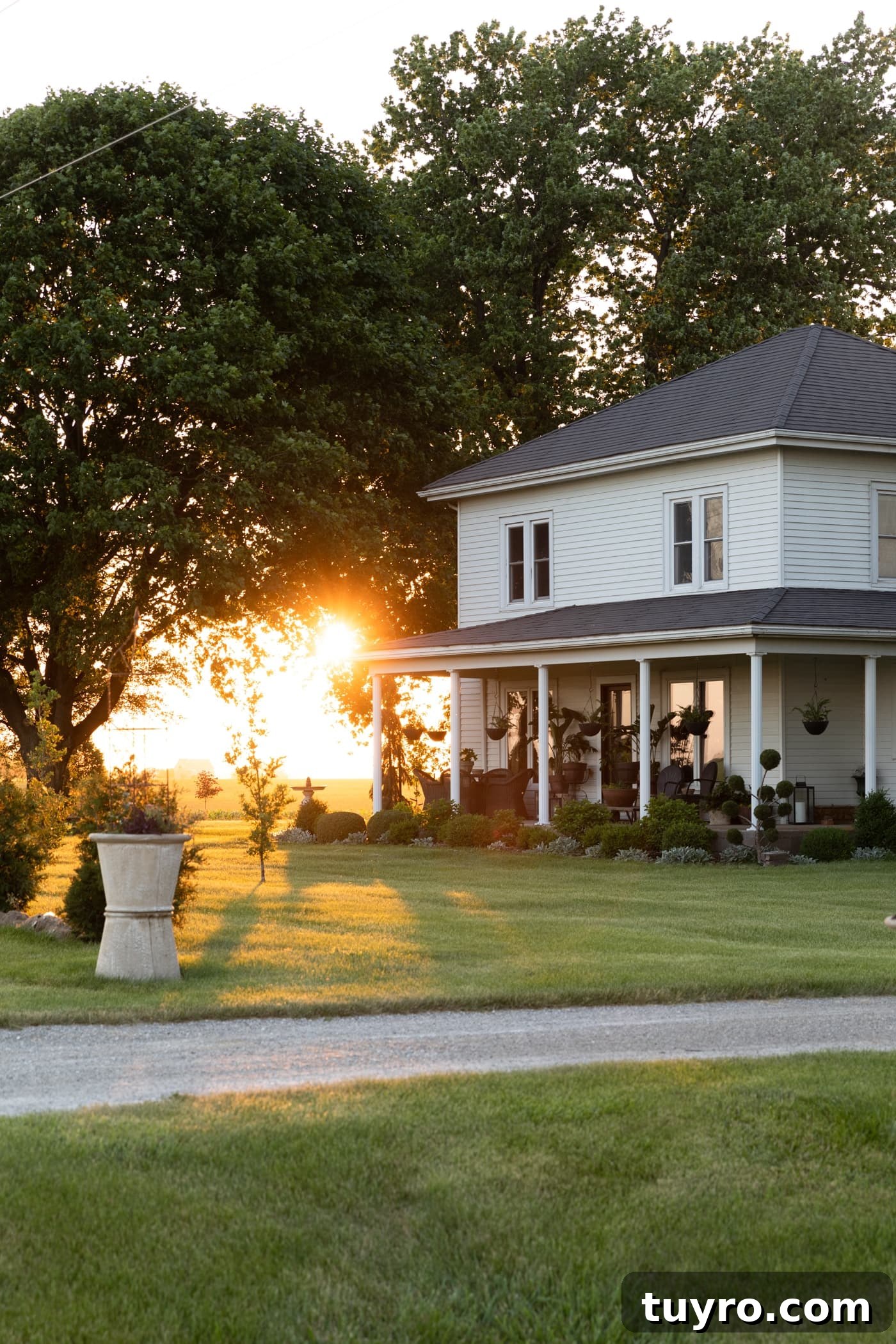
I purchased the home in 2010 and spent the first nine years focused on exterior work: painting, moving vegetable gardens, refreshing landscaping, and reshaping the yard. The house was sound, but it lacked the farmhouse soul I wanted. After much thought I decided to restore that character while updating the layout and finishes.
Floor Plan
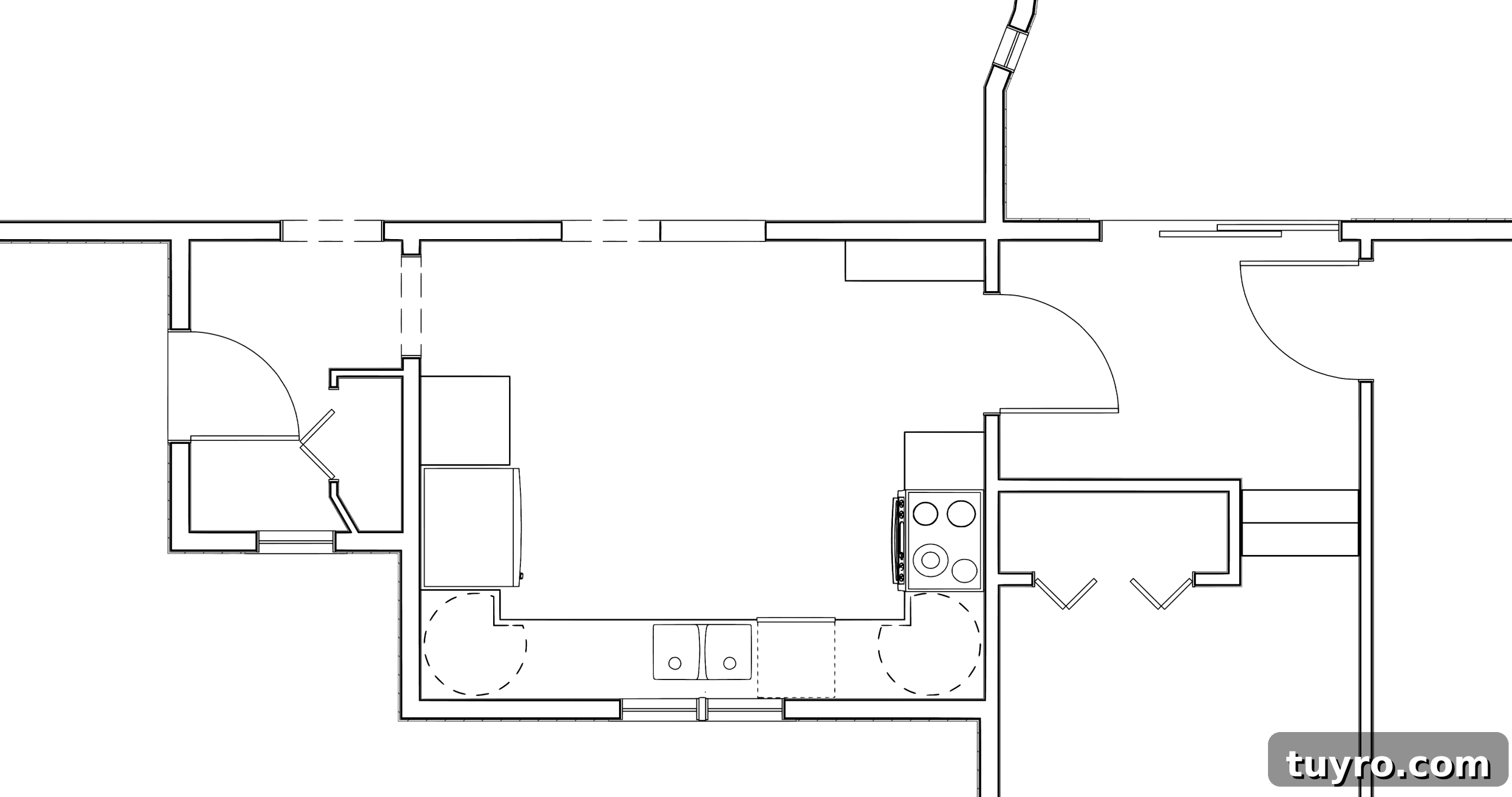
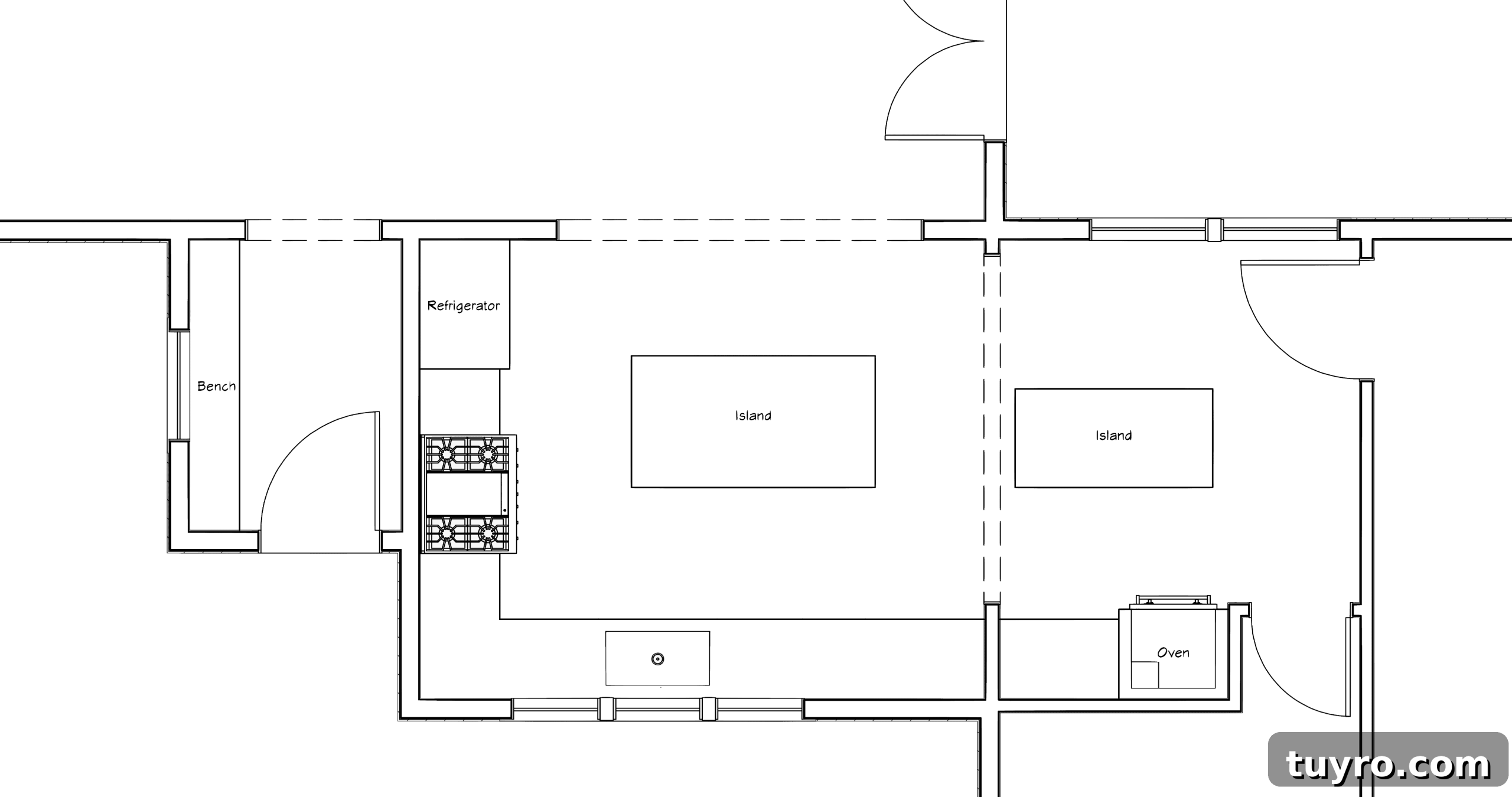
Sometimes a visual plan says more than words. The renovation preserved the original kitchen footprint, but the layout was reimagined for efficiency and flow. The updated plan opens the space while keeping distinct, functional zones.
The Finished Space
What began as a kitchen-only plan expanded into a larger renovation as I refined the vision. My original checklist included:
- 9-foot ceilings in the kitchen
- Open the wall between kitchen and dining space
- Remove the entry closet and reposition the front door
- Install French doors to the back patio
- Create an opening between the living room and TV room
As the project progressed, more improvements were added to bring cohesion and historical character back to the home:
- New baseboard and trim throughout the first floor, matched to original upstairs trim
- Replacement doors to match original styles
- Structural and cosmetic stair updates
- Removal of an unused closet in the TV room and addition of a built-in TV unit
- Replacement of the original front door to match the new aesthetic
- 9-foot ceilings across the first floor
- Updated electrical panel and wiring for the whole floor
I paused further projects for now, leaving the first-floor bathroom and laundry for a later phase. Below are highlights of the completed spaces.
The Kitchen
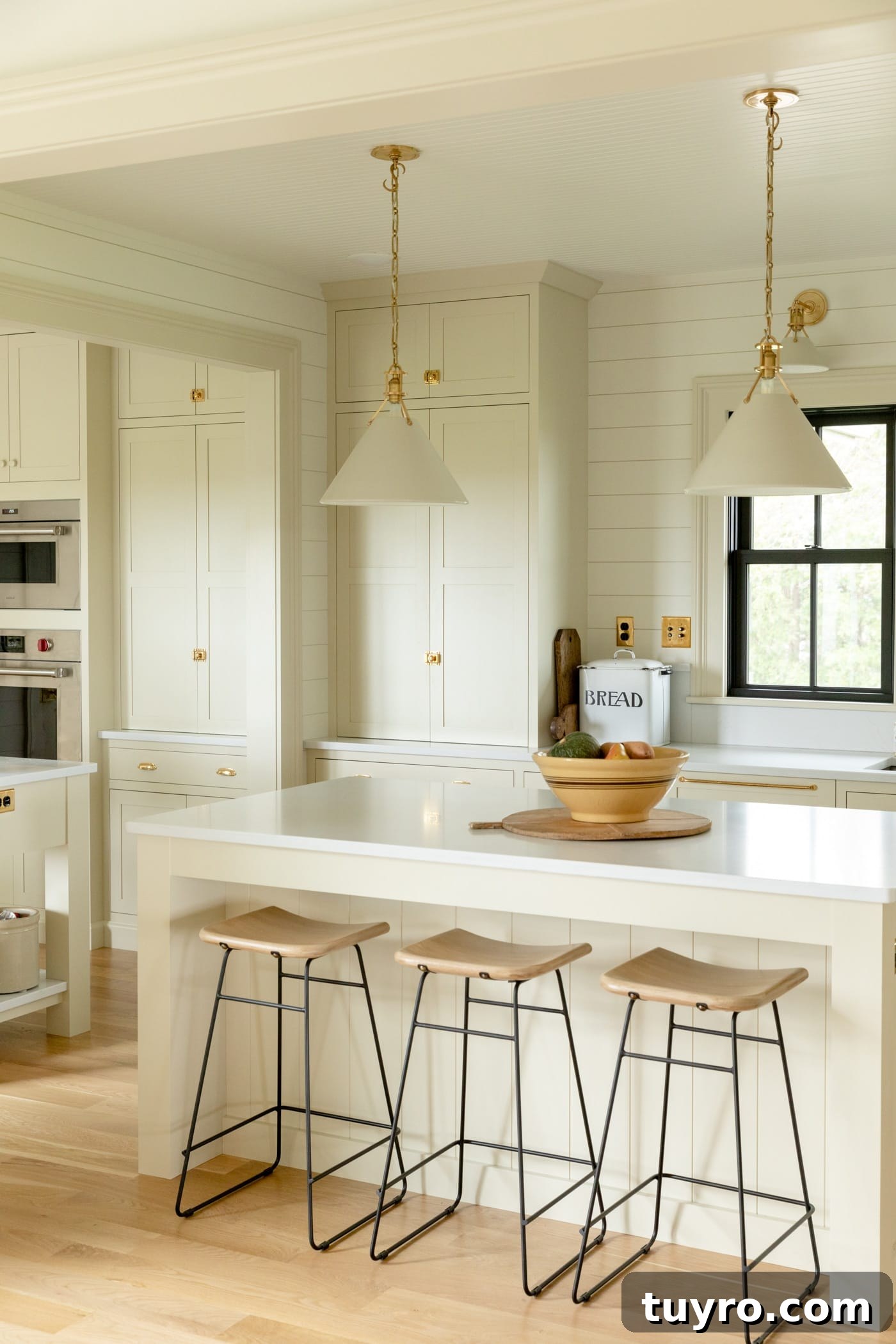
I wanted the kitchen to feel open for entertaining while still retaining the sense of separate rooms. Because some walls were structural, we used generous casings and openings to create visual connection without losing definition. The layout includes a cooking zone, a main pantry, and an island with deep drawers and purposeful storage.
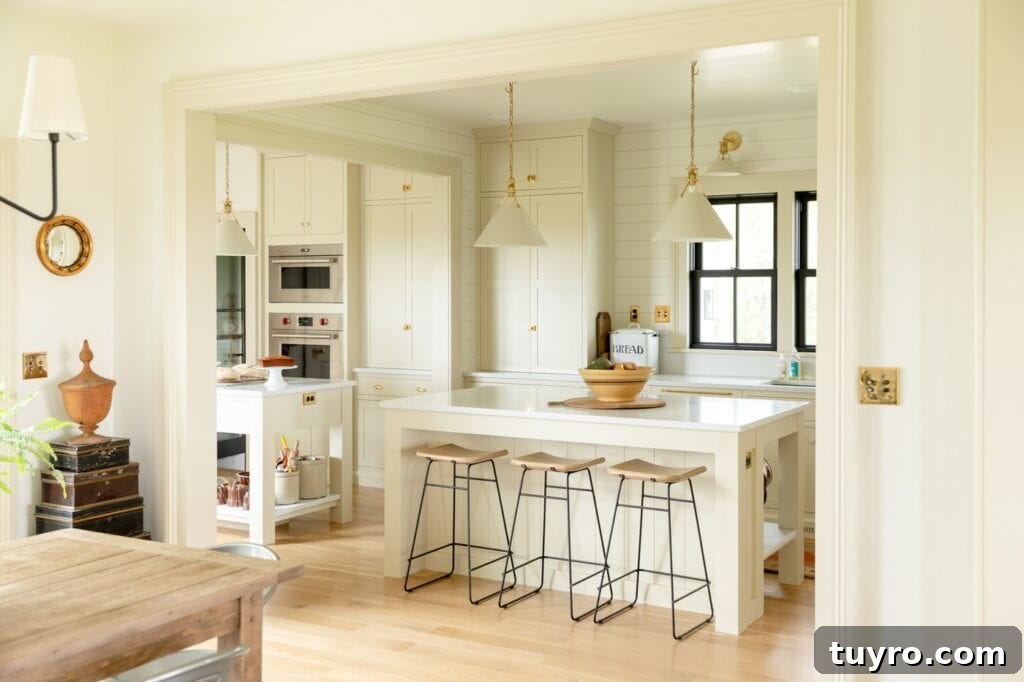
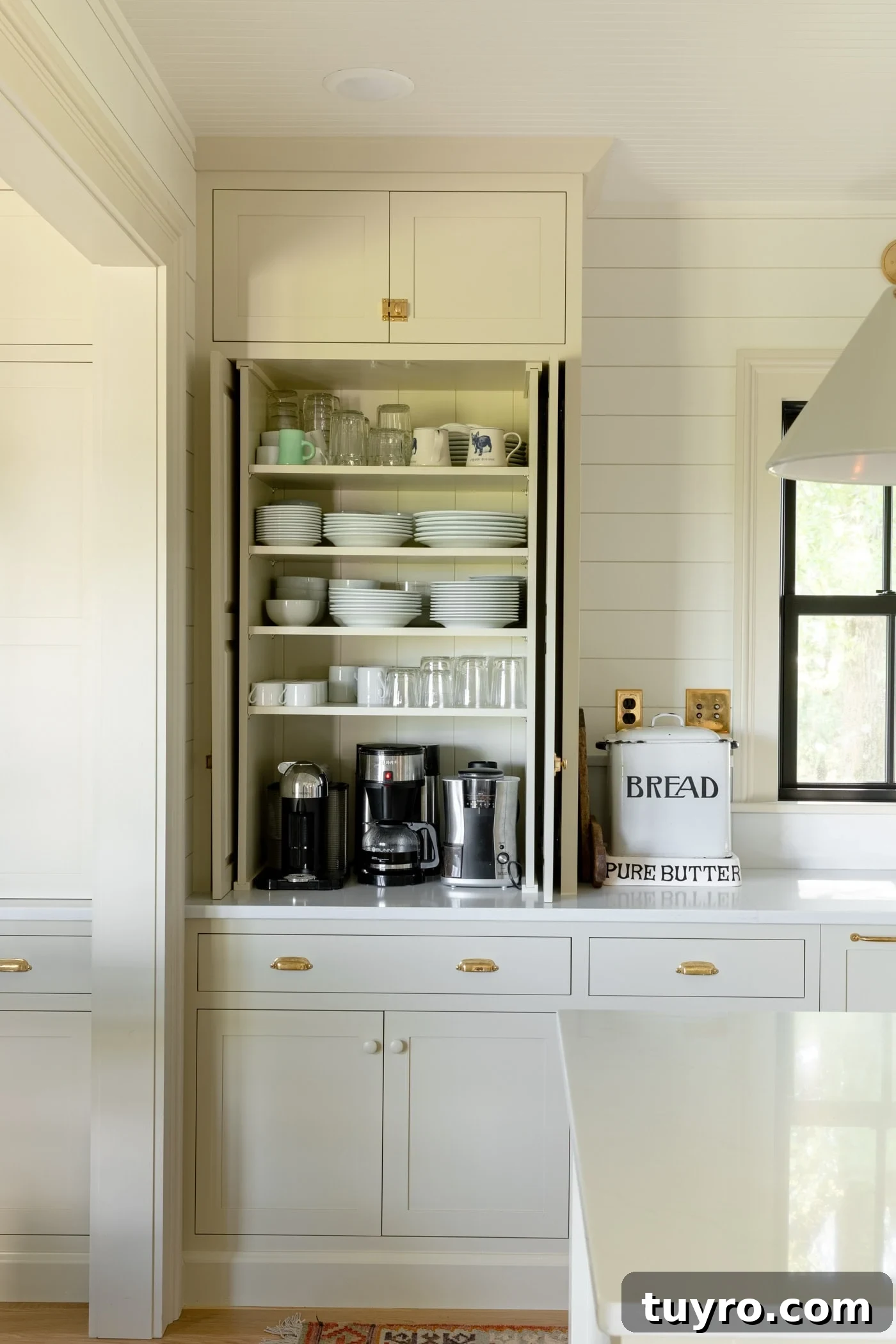
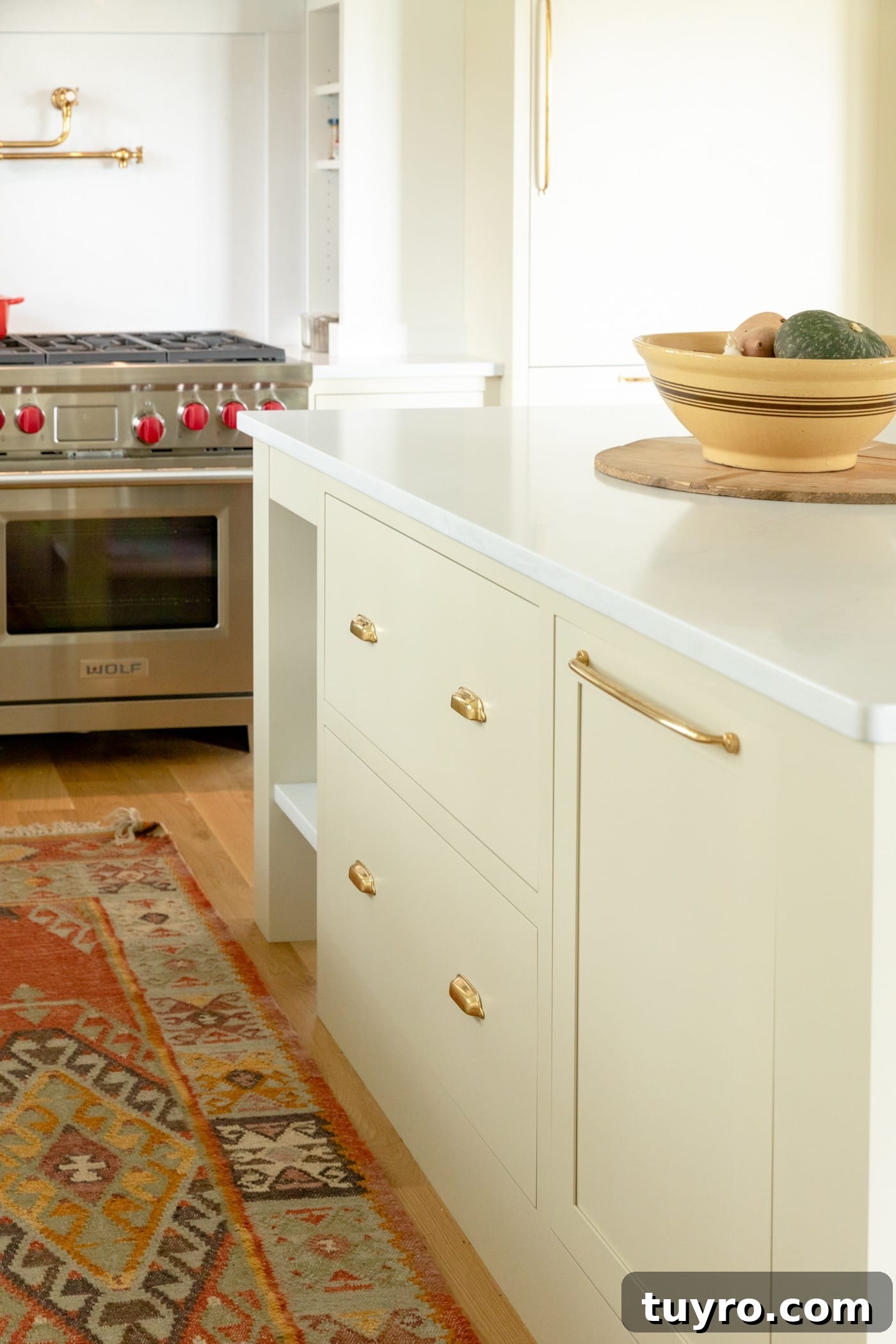
The main pantry stores glasses, plates, mugs, and the coffee maker. Instead of open shelving, doors slide on hidden tracks to tuck contents away while keeping them accessible. Columns flank the range to create a built-in hood look; the columns include narrow shelving for spices and oils. Cookbooks and decorative bowls live beside the stove, and warm wood cutting boards add texture.
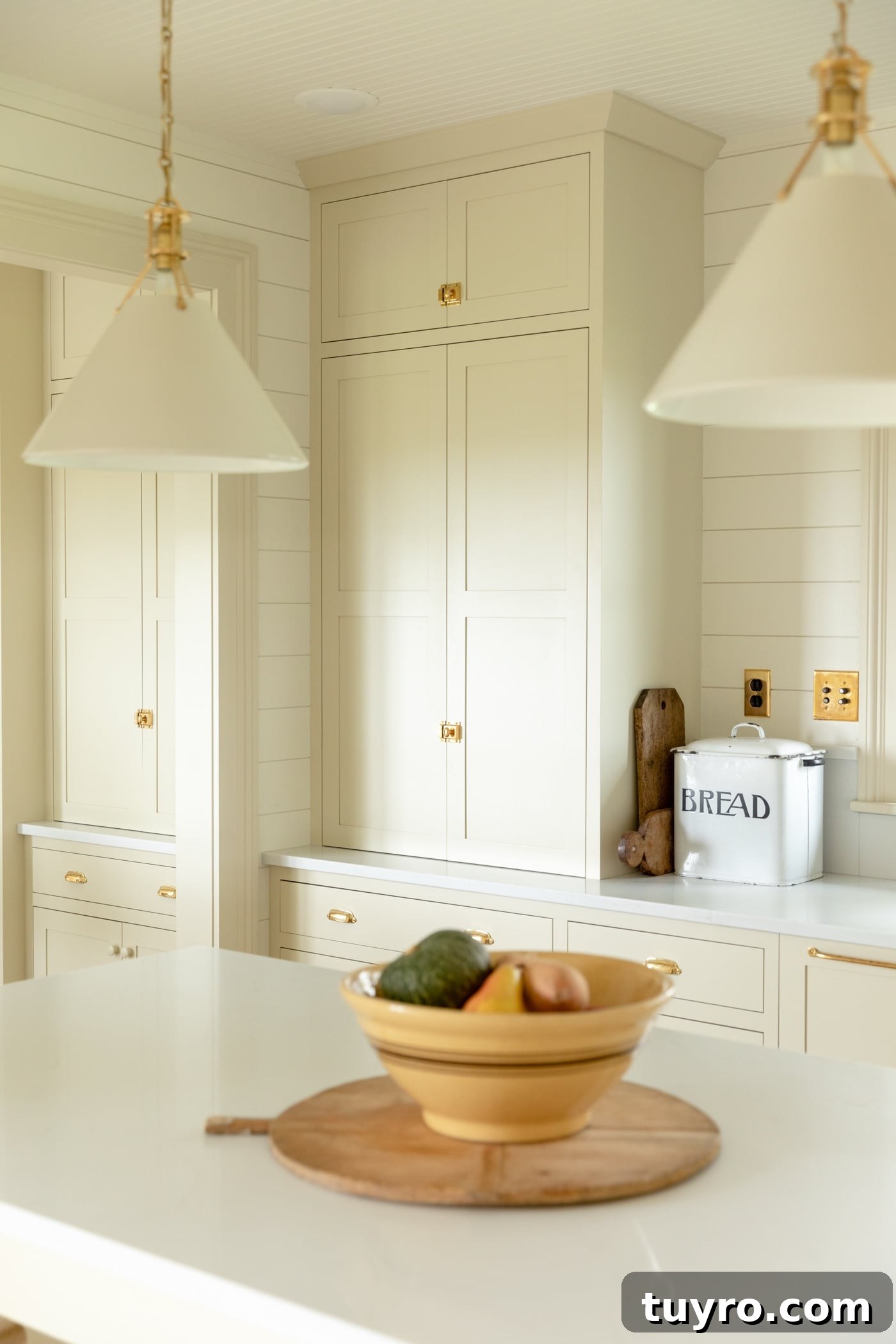
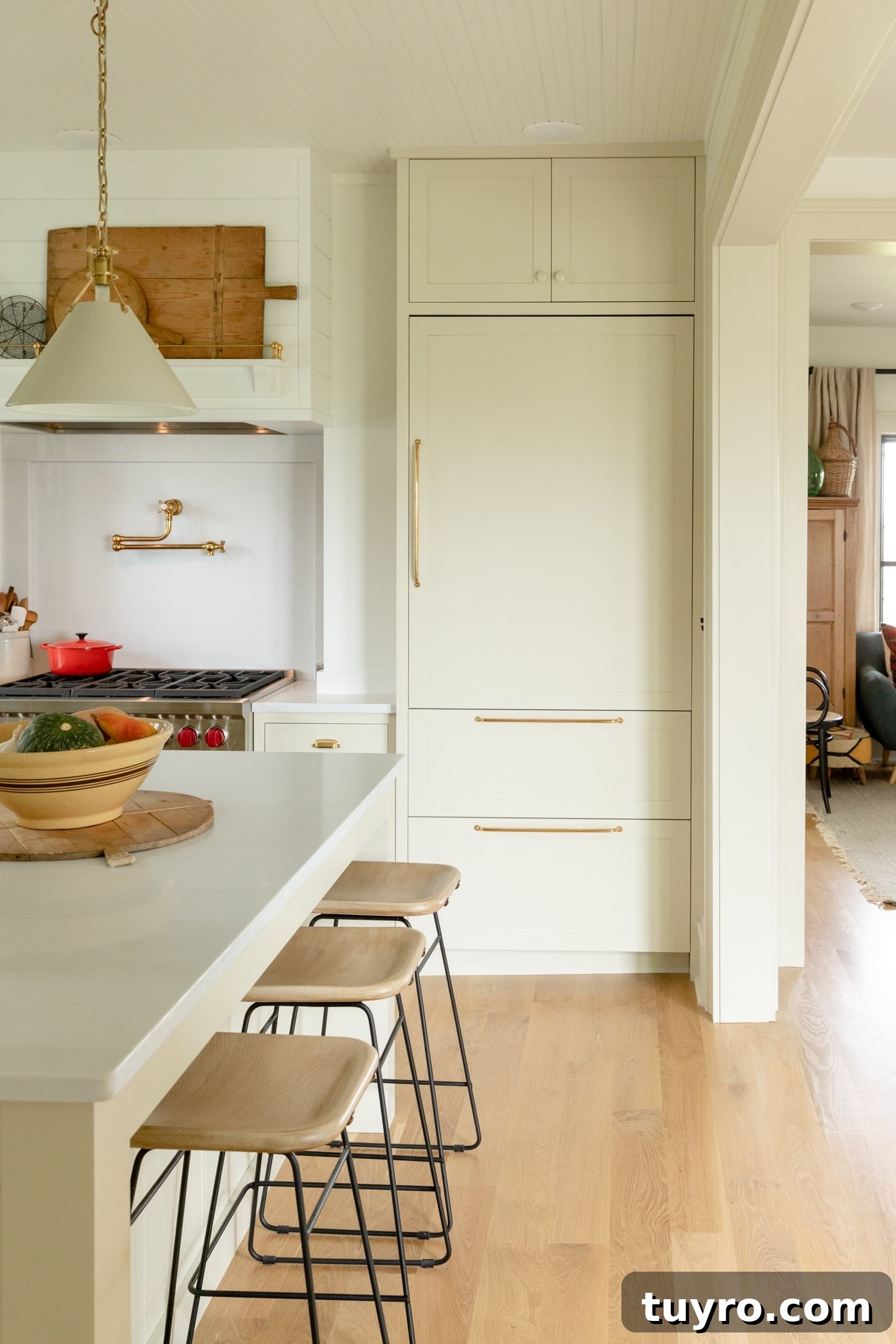
The refrigerator is panel-front to blend with cabinetry and keep sightlines calm. The island features deep drawers with a peg system for kettles and cookware, plus a concealed trash pull-out so the sink base can remain uncluttered. Countertops are a durable, warm stone that complements the cabinetry and floors.
Baking Room
A dedicated baking room, carved from part of the former mudroom, gives a compact space for mixers, flours, and ovens. I added a second island for cooling trays and prep, a wall oven, and built-in storage to keep baking supplies organized and easy to reach.
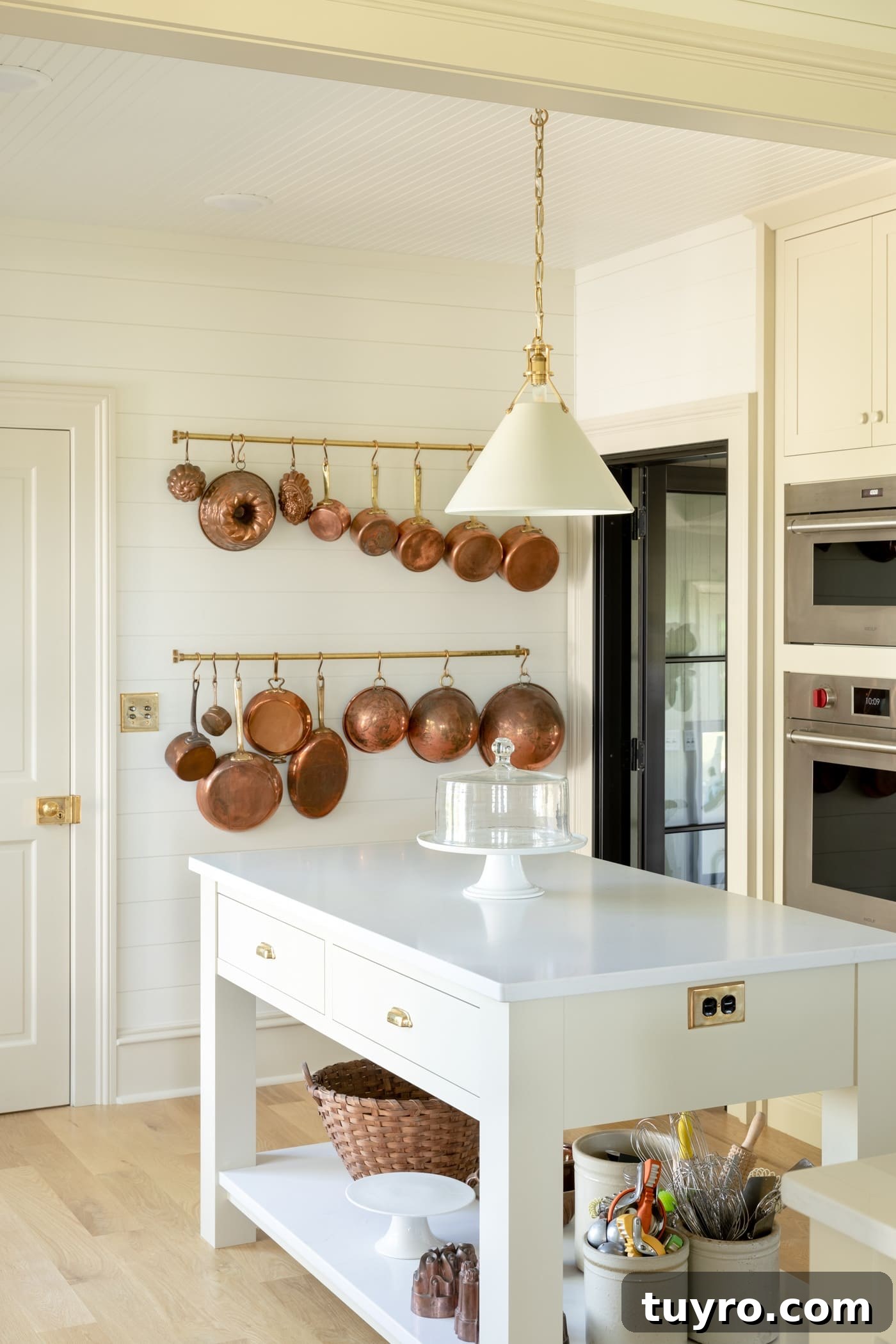
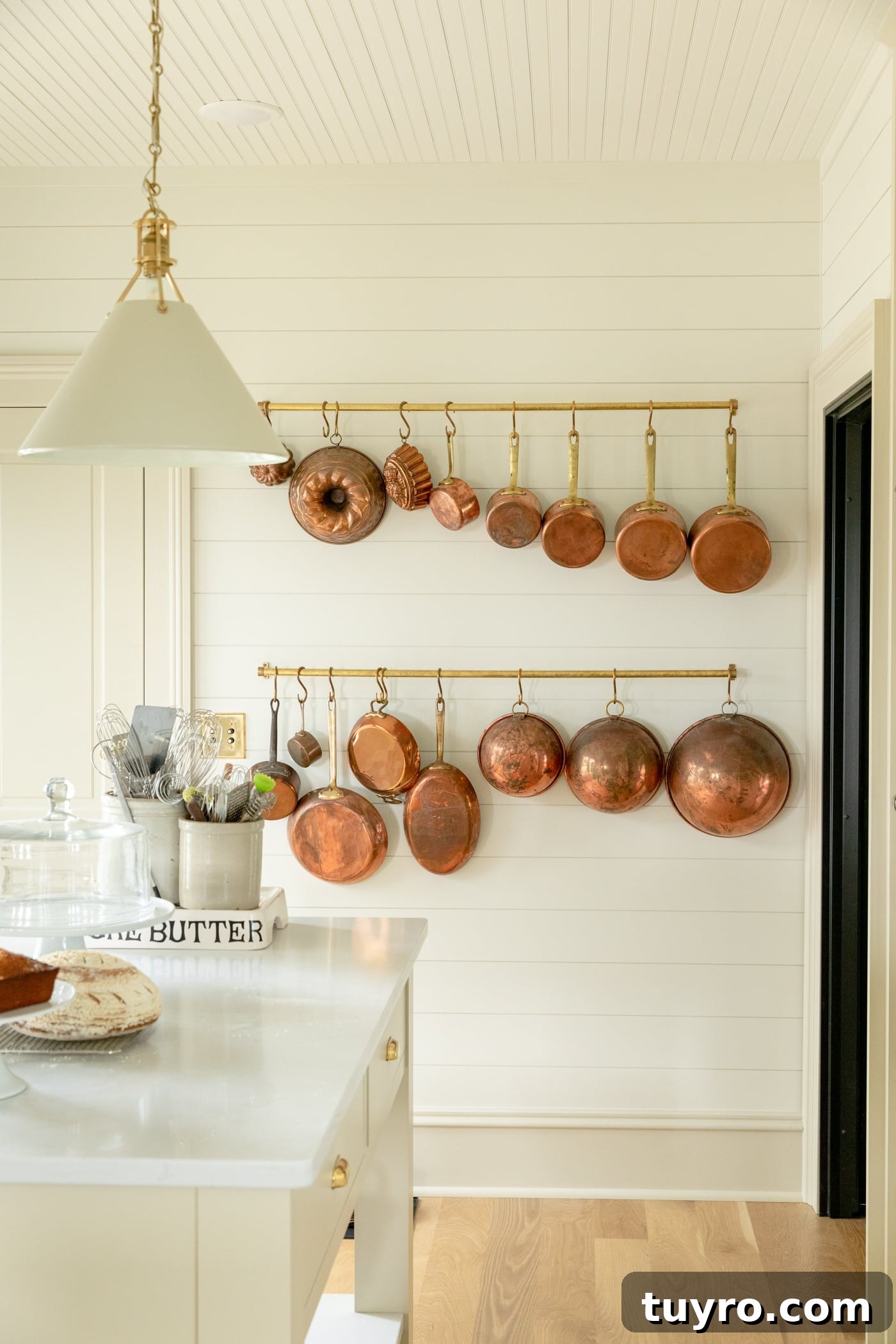
Copper pots are displayed on a brass rail with shiplap backing, bringing warmth and catching afternoon light. The baking room mirrors the pantry styling in the main kitchen to maintain a cohesive look.
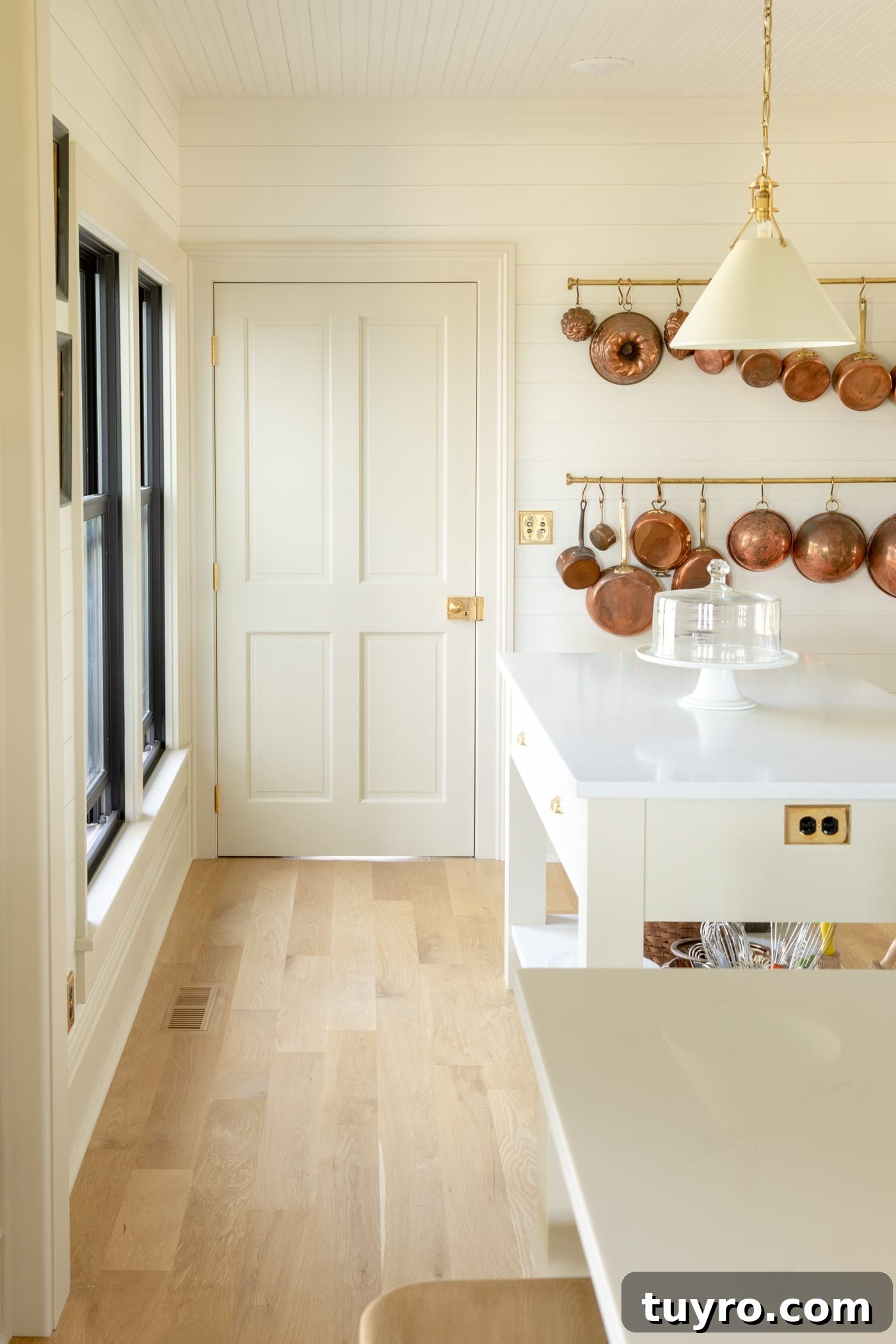
Windows are traditional farmhouse style in black, and the doors are simple four-panel with rim lock hardware that will develop character over time. Floors are 3/4″ white oak with a natural finish to keep the palette light and allow for future refinishing.
Dining Room
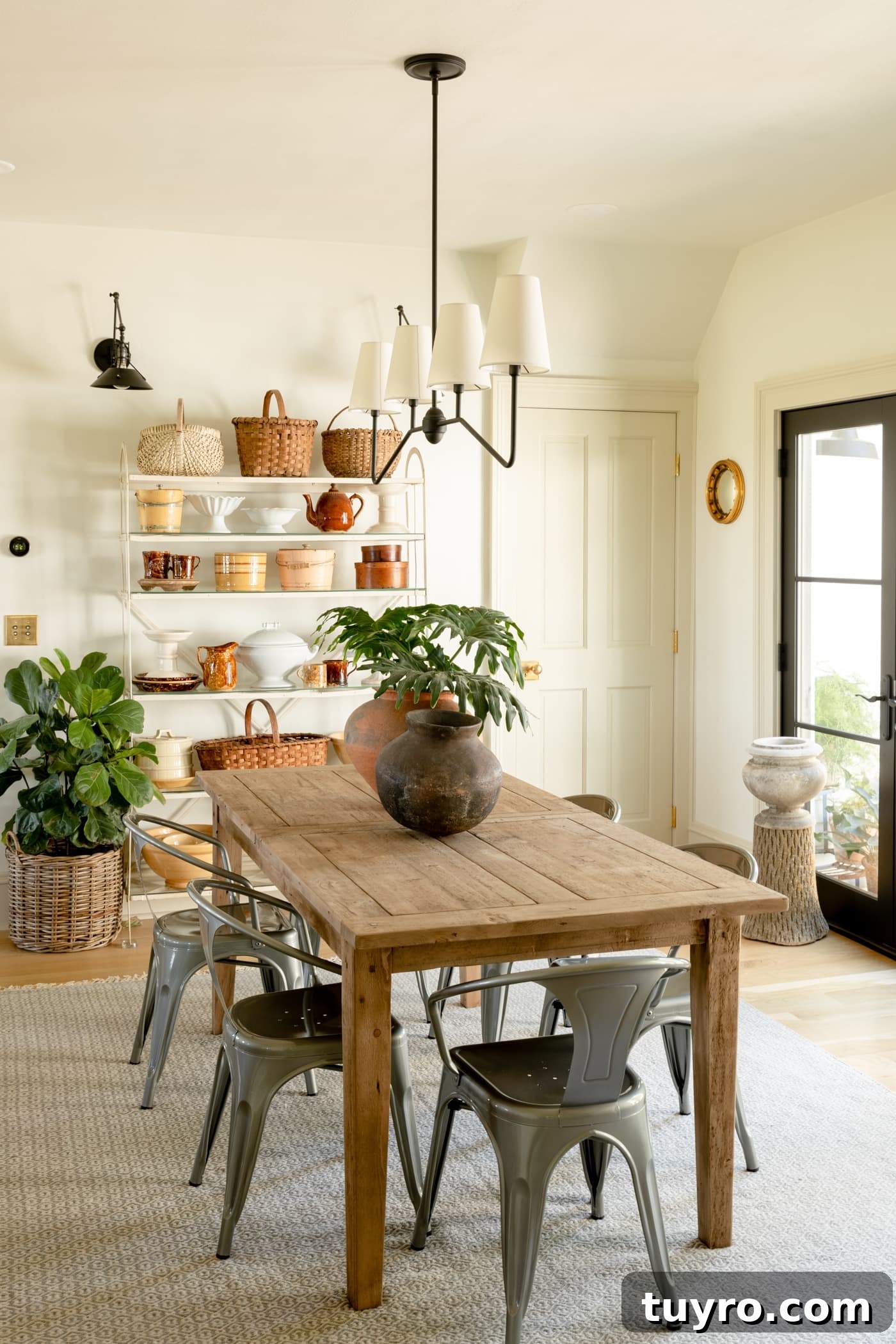
The dining room previously had a leaky bay window and felt separated from the kitchen. I replaced that with two large black French doors to the patio, improving access and enabling al fresco meals. The space now feels open to the kitchen so guests and cooks can interact easily during gatherings.
Living Room
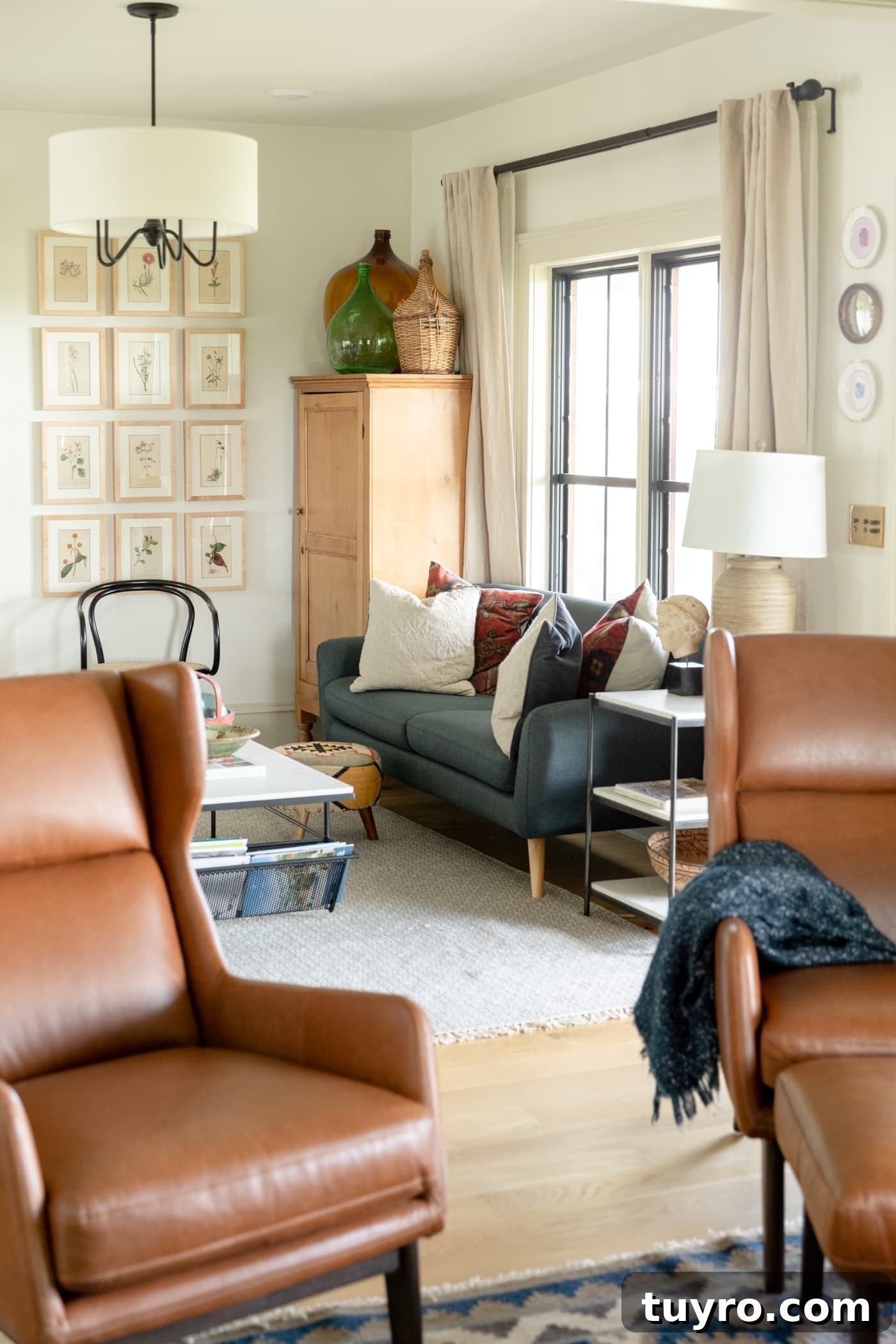
Raising ceilings to nine feet revealed a load-bearing beam. Rather than hide it, we emphasized the opening with thick casing, creating an architectural feature that feels intentional and classic.
Entry
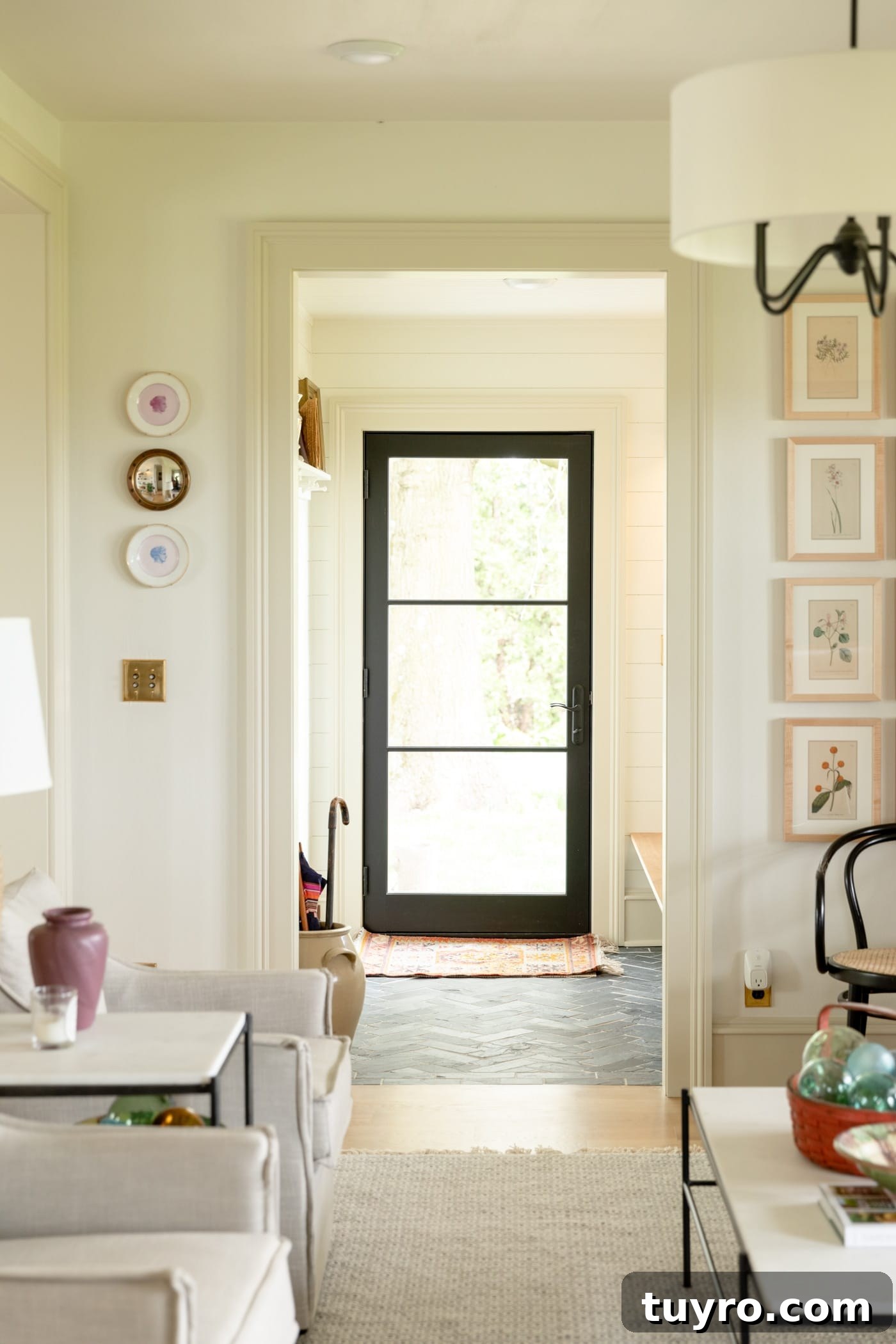
The old entry was impractical: the front door conflicted with a closet door. I relocated the door to an east wall to bring morning light into the space and removed the closet. A white oak bench and black slate floor laid in a herringbone pattern create a durable, welcoming entry. Carefully chosen sconces highlight artwork and set the tone for the rest of the house.
TV Room
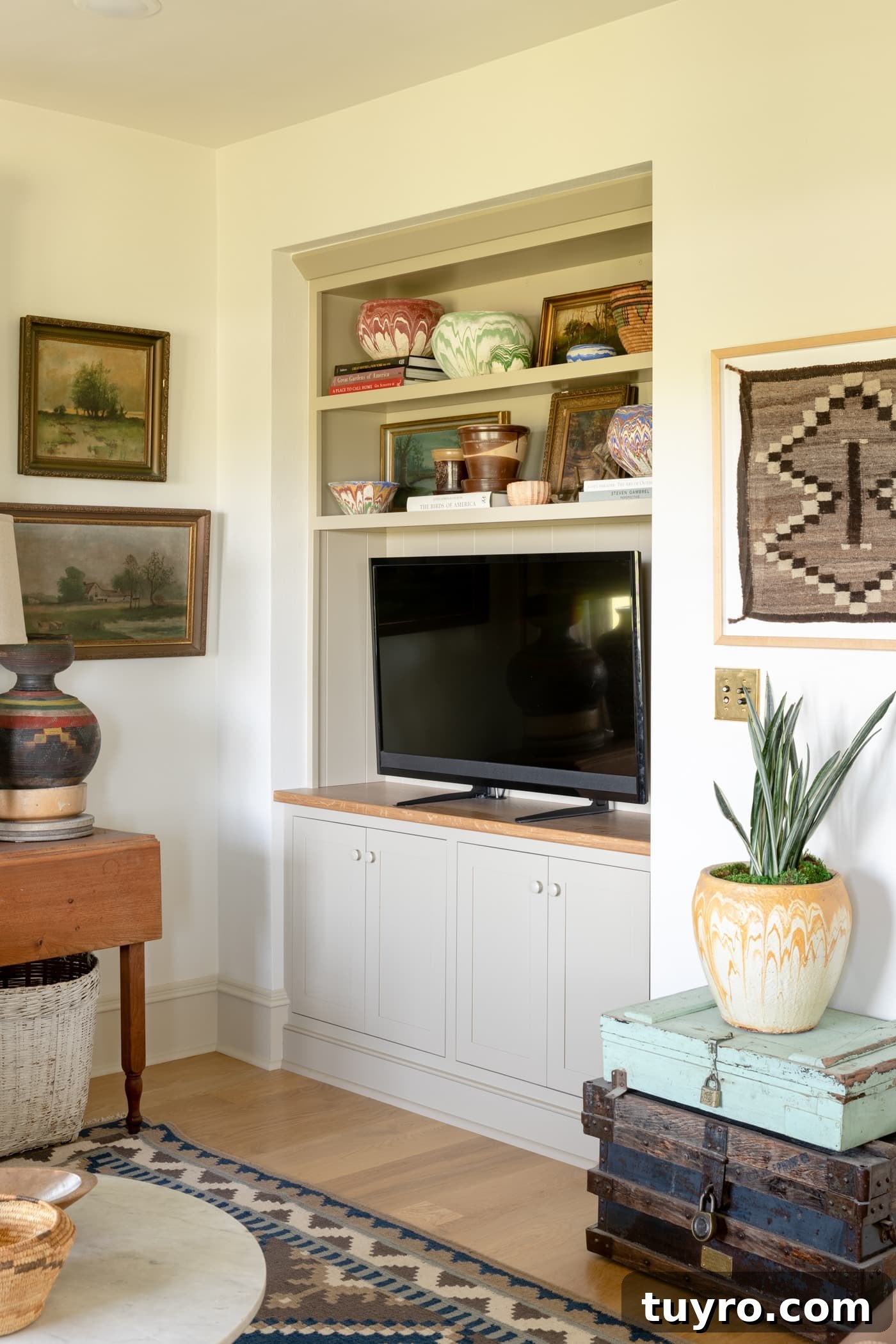
Once my grandparents’ bedroom, this cozy room became the TV room. I removed a deep closet and replaced it with a built-in TV unit and shelving for display and storage. The built-in will adapt to new TV sizes over time while providing a tidy, customized look.
Stairs
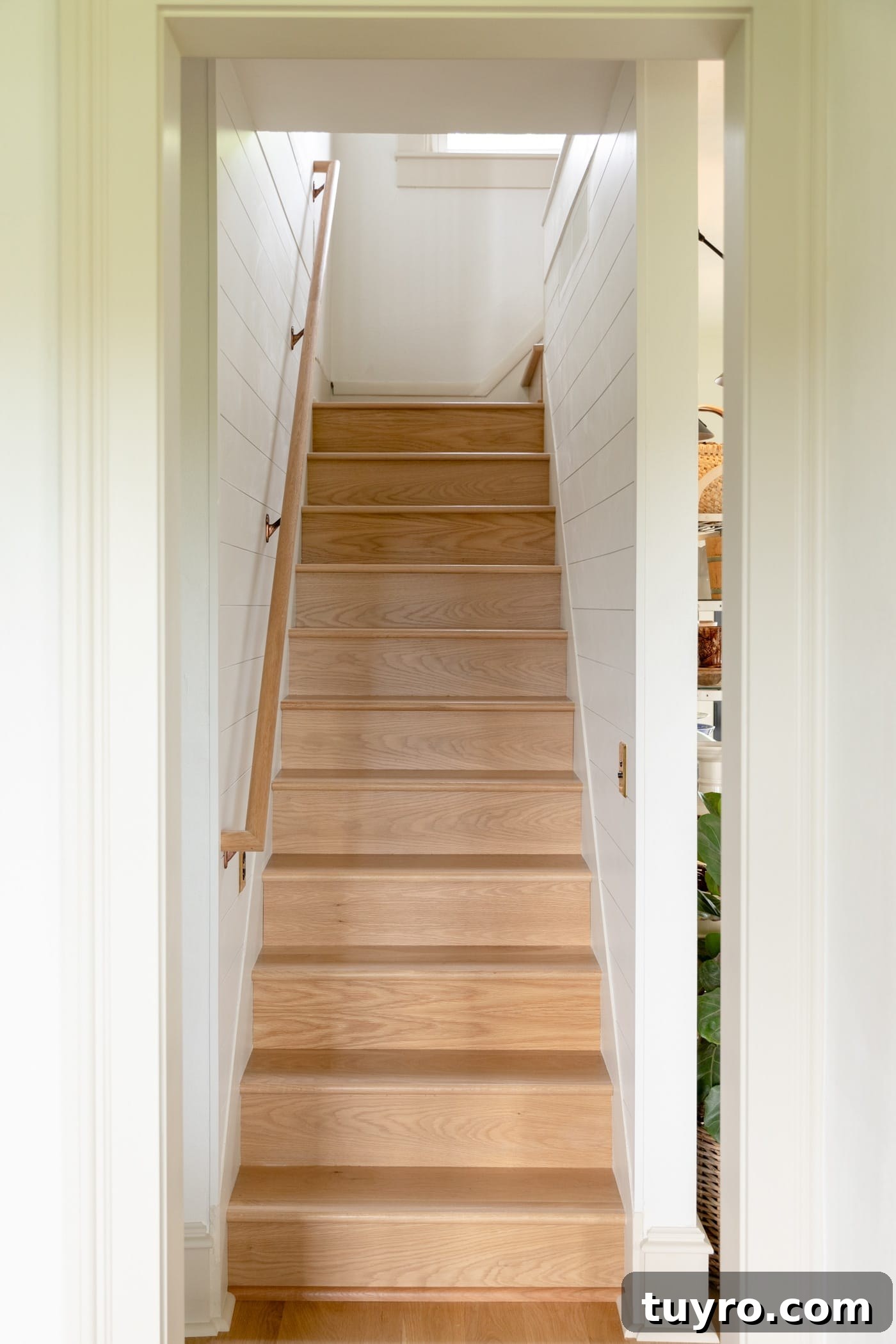
The original stairs were in poor condition, with previous repairs that exposed nails and created safety issues. Rather than replace the entire run, the carpenter installed new white oak treads and riser veneers, resulting in a like-new, cohesive appearance without the hazards of the old stairs.
What I Learned
Renovating taught me that plans evolve and preparation matters. Even after years of planning, some details will surprise you. Key lessons I learned include:
- Confirm every detail. Double- and triple-check placements — especially lighting and exterior fixtures — so you avoid surprises.
- You can’t anticipate everything. Small choices, like outlet placement, can have a big visual impact. If you want a period look, consider installing outlets lower in the baseboard when possible.
- Perfection is elusive. I served as my own general contractor and accepted a few imperfections, such as a slight hump between rooms. Decide what matters most and be prepared to live with small quirks.
- Timelines expand. Trades are often juggling multiple projects; allow extra time and stay patient and communicative.
- Restoration costs more. Recreating historic details—custom trim, matched millwork, and authentic hardware—takes time and budget. It’s worth it if authenticity matters to you.
- Work with people who understand your vision. Skilled finish carpenters and designers who care about old homes make a significant difference in the final result.
No major regrets on materials or finishes, but expect restoration-level projects to add up. The right team and clear communication made the difference in bringing the house’s character back to life.
Watch the Tour of My Kitchen Renovation
Materials and Sources
Note: Many listed items are specific products used in the renovation. I include them to help if you’re planning a similar project; availability and versions may change over time.
Paint Colors, Floors & Fixtures
- Wall color – Wool Skein at 15% strength by Sherwin-Williams
- Trim color – Wool Skein by Sherwin-Williams
- Light switch plates – Un-lacquered brass push-button plates
- Light switches – Push-button style with mother-of-pearl buttons
- Electrical outlets – Black outlet receptacles
- Door hardware – Solid brass rim lock sets
- Floors – 5-inch solid white oak, natural finish
- Doors – Swinging French doors in ebony/black
- Windows – Double-hung in black, matching door finishes
- Shiplap – Shadow gap shiplap on selected walls
- Beadboard – Pattern stock beadboard on ceiling areas
Kitchen
- Cabinet hardware – Classic brass cup pulls and cupboard latches
- Sink – Undermount single-bowl workstation sink
- Faucet – Aged brass-style kitchen tap and pot filler
- Range – 36″ dual-fuel professional range
- Refrigerator – Panel-ready integrated refrigerator/freezer
- Wall oven & microwave – Professional built-in ovens
- Dishwasher – Panel-ready dishwasher
- Countertops – Durable stone surface
- Lighting – Aged brass and off-white pendants and sconces
- Gallery rail – Brass gallery rail for utensils and displays
More Decorating Ideas
- My second-floor farmhouse renovation
- How to paint kitchen cabinets
- DIY water fountain
- How to create a spring table
- How to create a spring table without flowers