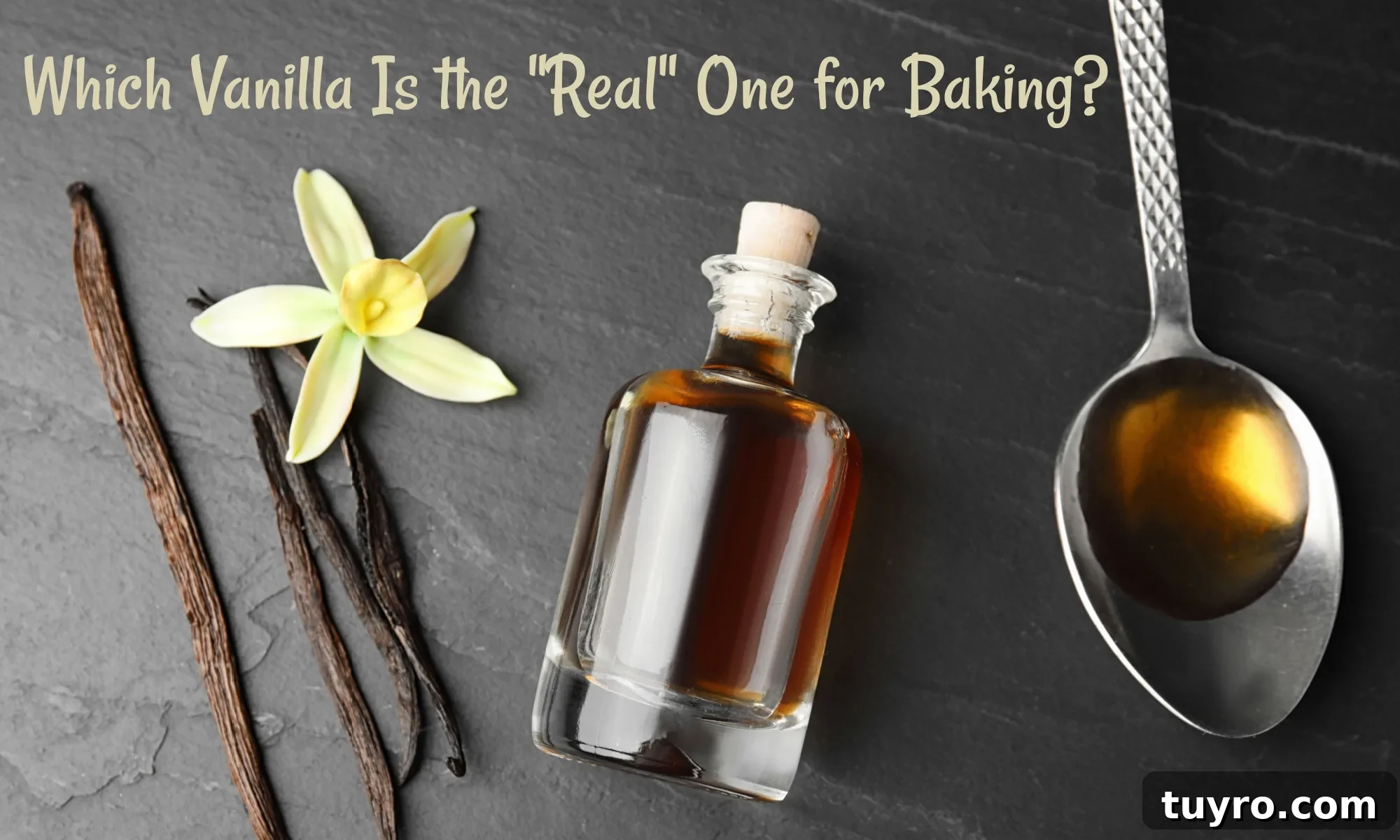
Mmm, vanilla. Whether you’re baking cookies, churning homemade ice cream, or adding warmth to other sweet treats, you’ve likely noticed several liquid vanilla options on the grocery shelf. Which of these is the “real” vanilla for baking?
“Real” vanilla—often labeled “pure vanilla extract”—is the authentic choice for baking. It’s produced by steeping vanilla beans in alcohol. You can also use whole vanilla beans or vanilla bean paste, both of which contain real vanilla. By contrast, products labeled “vanilla flavor” or “imitation vanilla” do not contain genuine vanilla.
Below is a clear look at what differentiates real vanilla from imitations and what ingredients you’ll find in non‑authentic products.
What is vanilla?
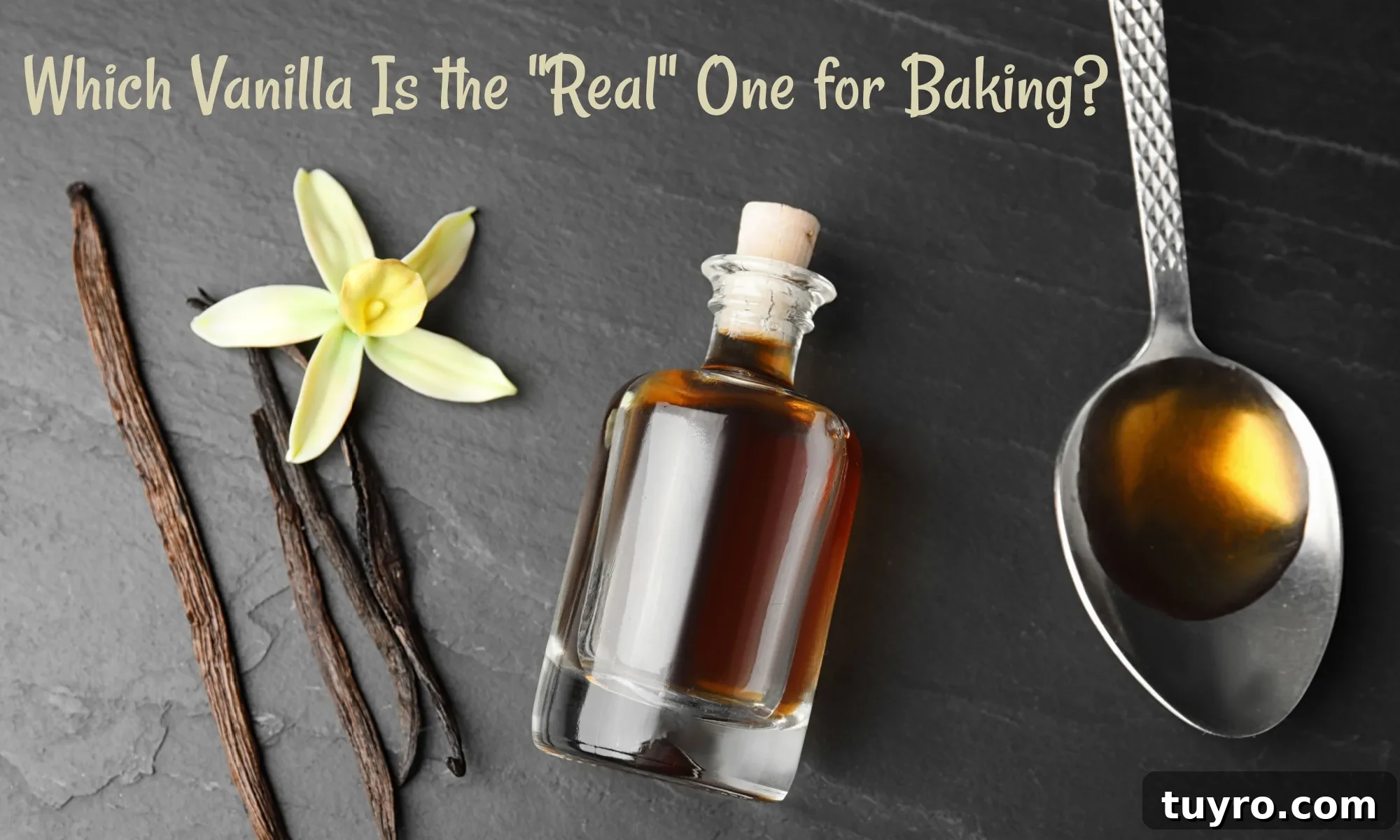
Vanilla is technically a spice derived from the pods of the vanilla orchid (Vanilla planifolia). The beans are harvested, carefully split, and cured—a labor‑intensive process that helps explain why pure vanilla is costly. The flavor is sweet and often described as marshmallow‑like, which is why vanilla is so widely used in baking, desserts, beverages, and even in some aromatherapy products.
What types of vanilla are used in baking?
Real vanilla beans
Whole vanilla beans are the most premium option. The tiny seeds inside the pods provide concentrated flavor and visible flecks when used in recipes. Beans are sold at specialty shops and online; some bakers buy them to make homemade extract or paste. Though expensive, they deliver a rich, complex vanilla profile.
Imitation vanilla
Imitation vanilla relies on synthetic compounds—most commonly vanillin—rather than extracts from real beans. It is inexpensive and consistent, but it lacks the range of flavor compounds found in natural vanilla. Packages typically say “imitation” or “vanilla flavor,” and ingredient lists are longer. Typical ingredients in an imitation vanilla product may include:
- Water
- Propylene Glycol
- Vanillin
- Caramel Color
- Preservatives such as sodium benzoate
- Flavor enhancers such as ethyl vanillin
These added ingredients contribute to a shelf‑stable, affordable product, but they are not pure vanilla.
Pure vanilla extract
Pure vanilla extract is made by extracting flavor compounds from real vanilla beans using alcohol and water. The U.S. Food and Drug Administration defines standards for labeling a product “pure vanilla extract”: it must contain a minimum amount of vanilla beans per volume and at least 35% alcohol by volume. Ingredient lists for pure extracts are short—typically “vanilla extractives in water” and “alcohol”—and the label does not include the word “imitation.”
Which vanilla is the “real” one?
For liquid options, “pure vanilla extract” is the authentic choice for baking. Whole vanilla beans and vanilla bean paste (which contains bean seeds) are also genuine forms of vanilla and can offer even deeper flavor, though at higher cost. Imitation vanilla provides a budget‑friendly alternative but does not qualify as “real” vanilla.
In most home baking, pure vanilla extract is the standard and reliable choice—balancing true vanilla flavor with practicality and price.
How many types of vanilla are there?
There are several vanilla bean varieties, each with a slightly different flavor profile, much like how different chili peppers vary in heat. The most commonly used types include:
Madagascar vanilla
Also called Bourbon vanilla, Madagascar beans are thin with a strong, sweet flavor. They’re widely used in baking and are prized for their well‑rounded vanilla character.
Mexican vanilla
Thicker than some other varieties, Mexican vanilla has a profile often described as woody or spicy in addition to the familiar vanilla sweetness.
Tahitian vanilla
Tahitian vanilla is known for its intense, floral aroma and wider, flatter pods. It tends to be more expensive and is frequently used in perfumery as well as culinary applications that benefit from its distinctive scent.
Ugandan vanilla
Rarer than other types, Ugandan vanilla is notable for its high vanillin content and chocolatey undertones, making it an excellent match for chocolate or caramel recipes.
FAQs:
Real vanilla extract is made by steeping whole vanilla beans in alcohol to draw out natural flavor compounds. Imitation vanilla uses synthetic vanillin and does not contain real vanilla beans.