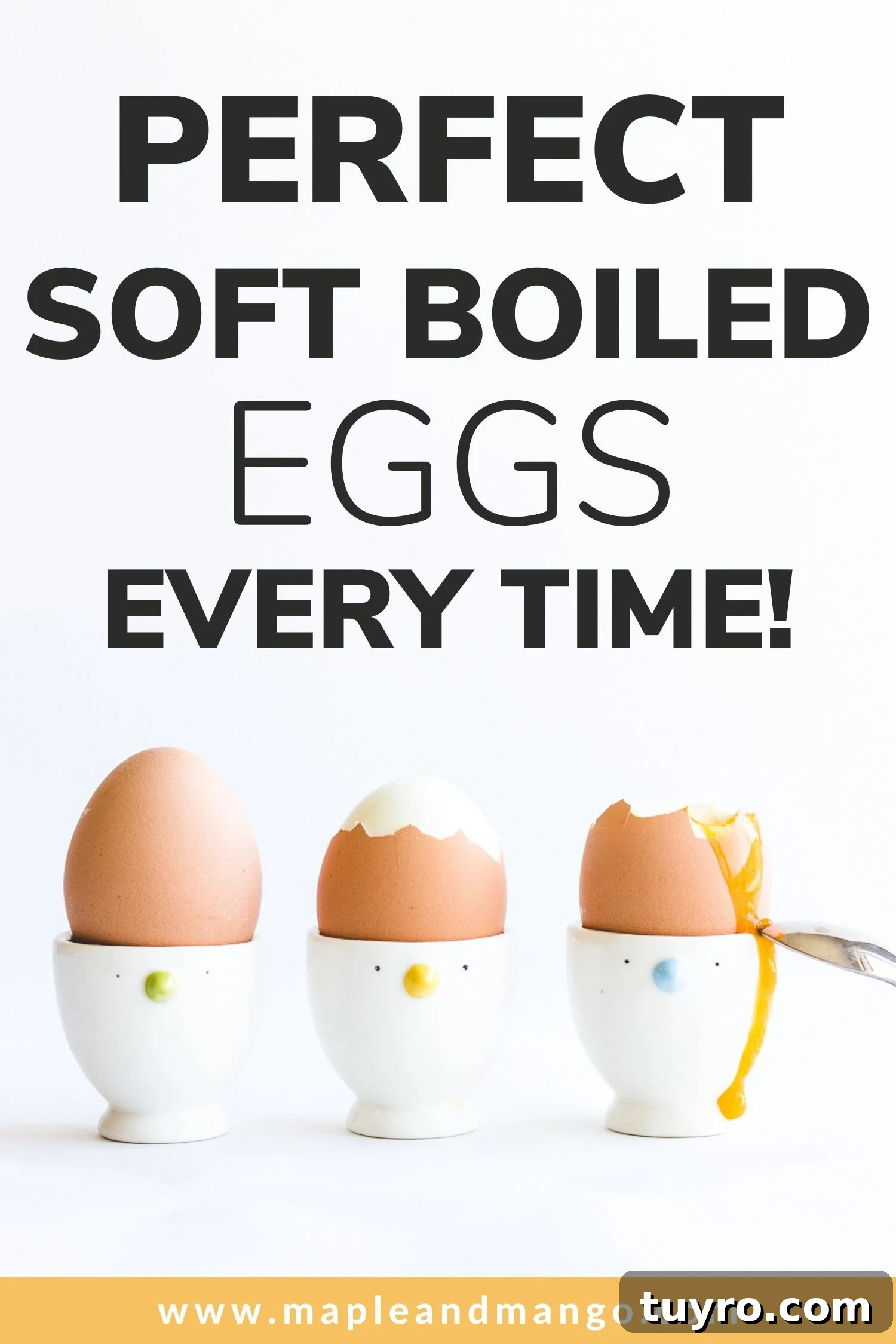
Learn how to make perfect soft boiled eggs every time with a simple, reliable method that delivers a runny yolk and tender white.

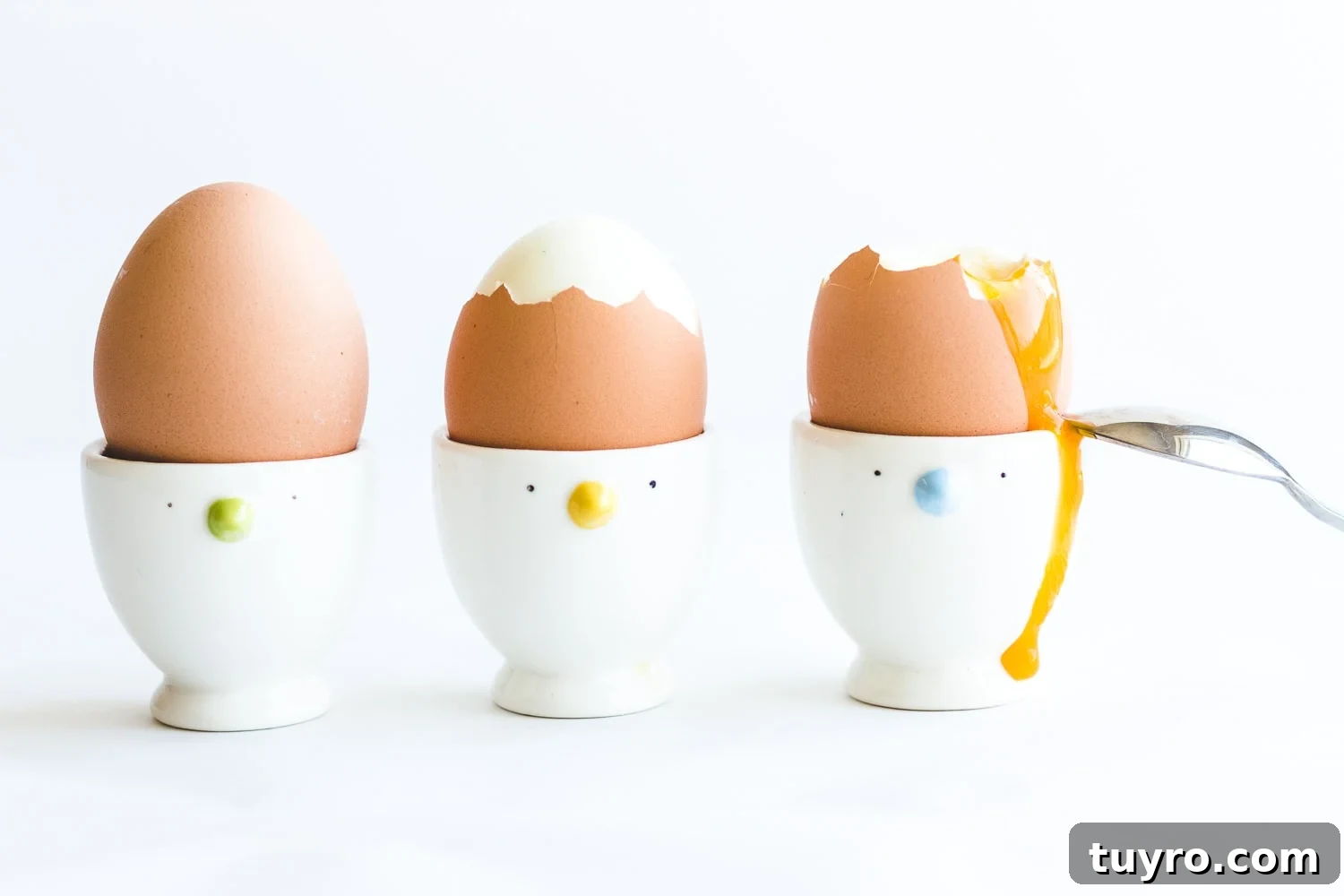
The ideal soft boiled egg has a glossy, runny yolk and a white that is set but still tender. Once you master the right technique, they become an effortless addition to breakfasts, salads, bowls and snacks.
I use the same dependable method several times a week. There are many ways to cook soft boiled eggs, but this approach gives consistent results without guesswork.
Many recipes recommend placing eggs in cold water, bringing them to a boil, then removing the pot from the heat and letting the eggs rest. That “boil-and-rest” technique can be inconsistent because stovetops, pot sizes and heat retention vary. To avoid those variables, I add eggs to water that is already gently boiling. This way the cooking time is predictable and repeatable.
Why this method works best
Placing eggs into gently boiling water removes much of the guesswork. Benefits include:
- Simple: All you need are eggs, a pot and water.
- Consistent: Starting with hot water produces reliably oozy yolks and tender whites.
- Less risk of overcooking: Because the water is already hot, you eliminate variability caused by differences in stovetops and cookware.
- Easy cleanup: No frying pans or extra mess—just the pot.
Cook time
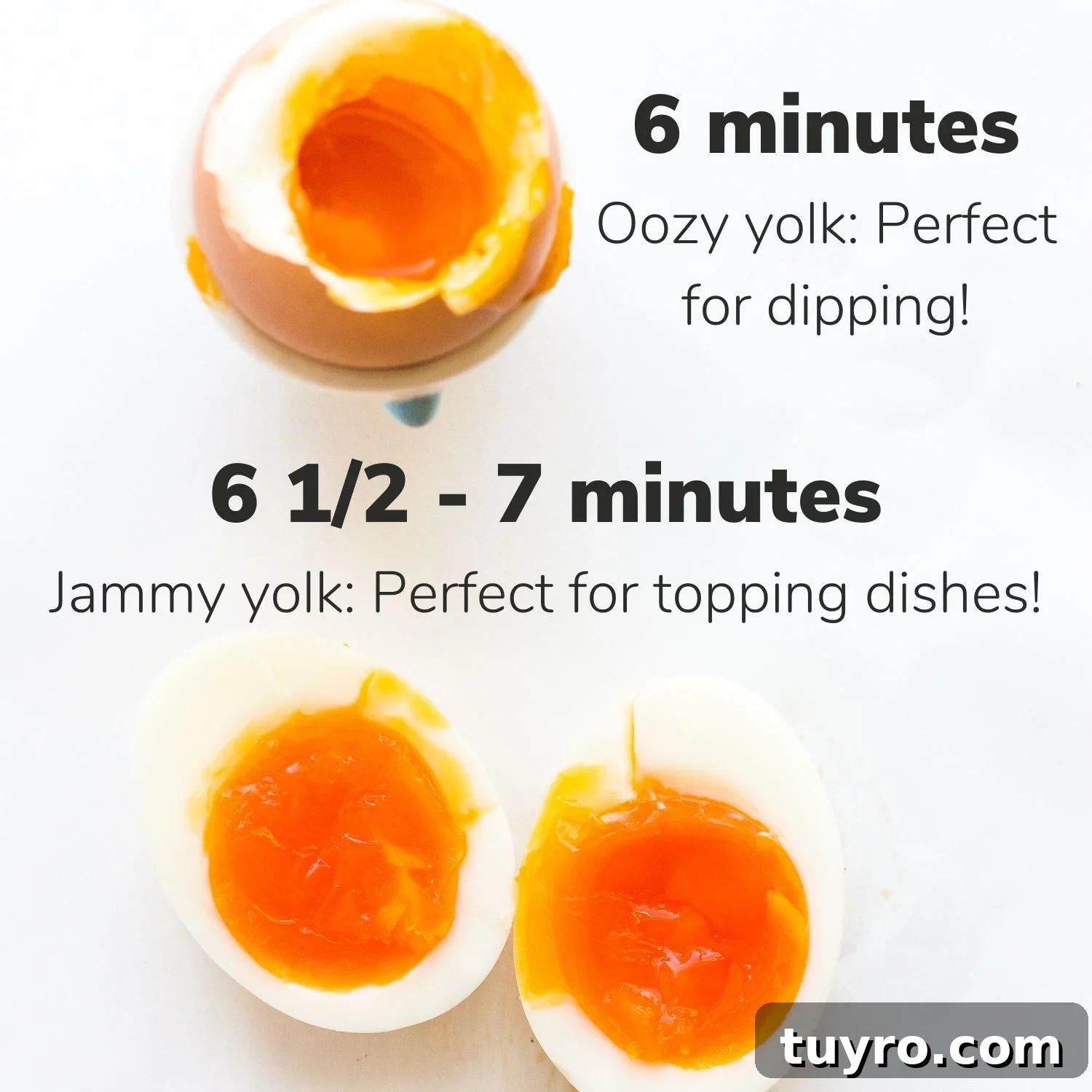
Using this method, cook times are 6 to 7 minutes for large eggs taken straight from the refrigerator:
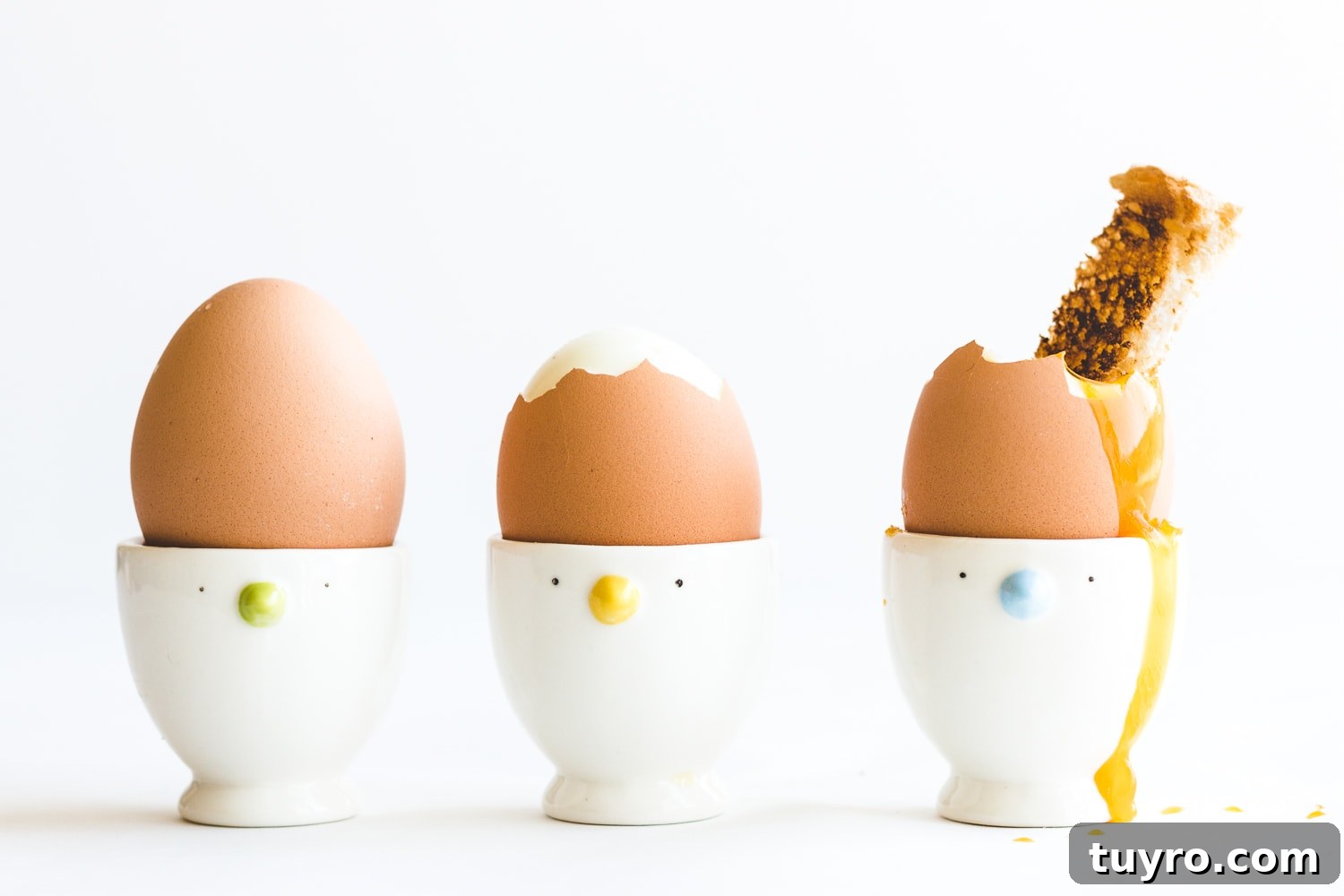
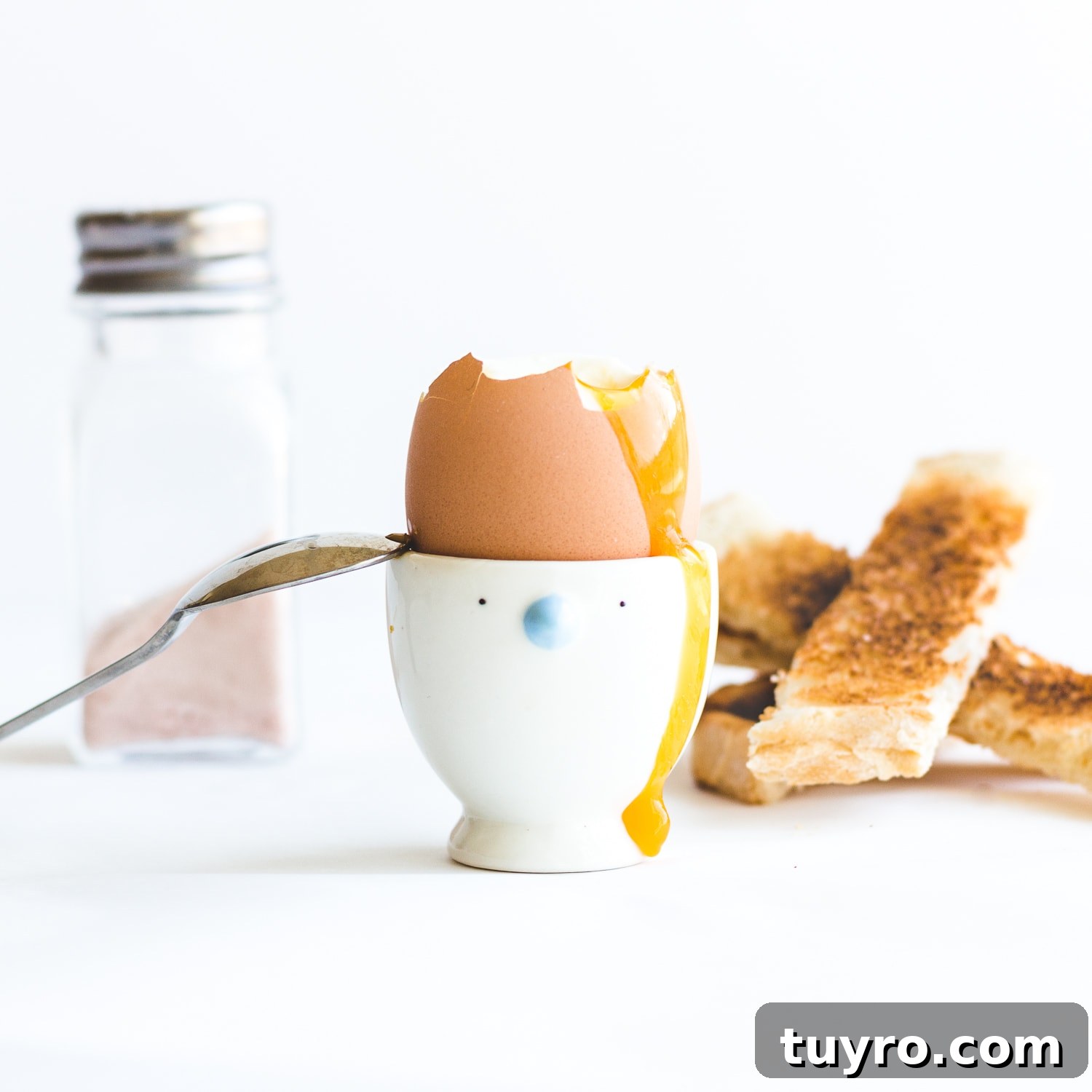
- 6 minutes: A beautifully runny, “dippy” yolk—perfect for toast soldiers, bacon or asparagus.
- 6 1/2–7 minutes: A slightly jammy yolk that slices nicely for salads, toast or bowls.
How to make perfect soft boiled eggs
This straightforward method works whether you’re cooking one egg or half a dozen—just use a pot large enough for a single layer of eggs.
Note: Times below assume large eggs straight from the fridge.
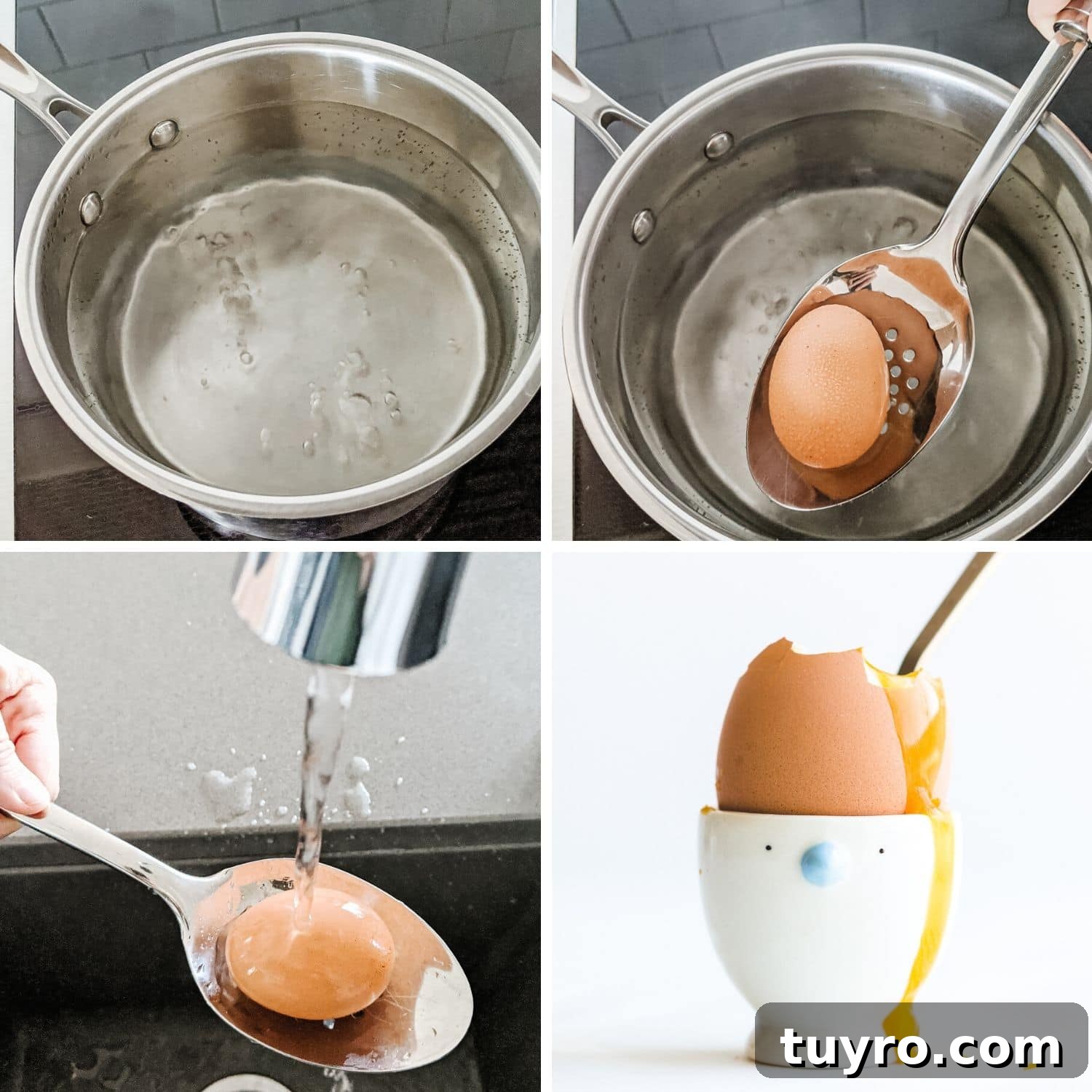
- Bring pot of water to a boil: Fill a pot about three-quarters full so the eggs will be fully submerged. Bring the water to a boil, then reduce the heat until the water is at a gentle boil—small, steady bubbles rather than a rolling boil.
- Lower the eggs in gently: Using a slotted spoon or tablespoon, lower eggs into the water one at a time. Dip each egg in and out of the water a few times before fully lowering it—this helps prevent thermal shock and reduces the chance of cracking.
- Set the timer immediately: Start timing as soon as the eggs are in the water and maintain the gentle boil. Aim for 6 minutes for a runny yolk, or 6 1/2–7 minutes for a jammy yolk.
- Remove and cool briefly: Use a slotted spoon to lift the eggs from the pot and run them under cold tap water for 10–20 seconds to stop residual cooking and make them easier to handle.
- Serve and enjoy: Eat while warm for best texture—season simply with salt or use them as a topping for toast, salads and bowls.
Storage: Soft boiled eggs are best eaten immediately, but you can store them. After cooking, submerge eggs in an ice water bath for 5 minutes to stop the cooking, then refrigerate for up to 3–4 days. Reheat gently if desired, but texture is best when fresh.
Will the eggs crack?
Eggs rarely crack when placed into gently boiling water if you follow a few simple precautions:
- Keep the boil gentle: A rapid boil can jostle eggs and cause cracks—reduce the heat until the water simmers gently.
- Dip first: Dipping the eggs in and out before fully lowering them reduces thermal shock.
- Lower carefully: Use a slotted spoon and lower each egg slowly rather than dropping it in.
- Use the right pot: Choose a pot large enough for the eggs to sit in a single layer so they don’t bump into one another while cooking.
Ways to enjoy soft boiled eggs
Here are simple serving ideas to showcase a soft boiled egg’s silky yolk:
- Classic egg cup: Place the egg in an egg cup, tap off the top, season with salt and spoon out the soft yolk.
- Dippy eggs: Use toast soldiers, strips of bacon or steamed asparagus to dip into the runny yolk—an indulgent breakfast treat.
- On toast: Halve and place on avocado toast, sourdough or buttered toast for a rich, creamy topping.
- On salads: A halved soft boiled egg adds luxurious texture to green salads or a composed asparagus-and-parmesan salad.
- On bowls: Finish rice bowls, ramen or grain bowls with a soft boiled egg for extra flavor and silkiness.
More egg tips
If you want to explore other egg preparations, try hard boiled eggs (increase cooking time and finish in an ice bath), poached eggs for runny yolks without shells, or simple scrambled and fried egg variations. Each method has its own tricks, but mastering soft boiled eggs is a great foundation.
What’s your favorite way to eat soft boiled eggs? Try this method and enjoy the perfect balance of tender white and flowing yolk every time.
⬇ PIN it for later! ⬇