I welcome questions about how to learn more about our ancestors beyond just dates and facts. Genealogy often begins with locating birth, marriage, and death records — and that is an important foundation.
But researchers frequently hit brick walls when traditional records run out. To move past those obstacles, we must broaden our approach and use sources that reveal more about daily life, community roles, and social context. Family history periodicals and community articles are excellent resources for bringing ancestors to life.
To enrich your research, ask questions such as:
Were they prominent in the community?
Were they respected, or did they have run-ins with the law?
Did they own or work on a plantation?
What stories were written about the community where they lived?
Answers to these questions often appear in family history periodicals, historical articles, ethnic publications, and even in photographs. To find those articles you need an effective finding aid — and PERSI is one of the best.
How To Use PERSI In Your Genealogy Research
PERSI — the Periodical Source Index — is an index to more than 2.5 million articles in genealogical and historical periodicals. FindMyPast currently hosts the PERSI index (it was previously hosted by the Allen County Public Library). You will need a FindMyPast subscription to run full searches.
When I first used PERSI I dived in without reading the instructions and didn’t get good results. Once I understood how PERSI is organized, my searches became far more productive. The essential point: search PERSI by subject or record type, not by individual names. The index is organized under subject headings like biographies, church records, court records, and more.
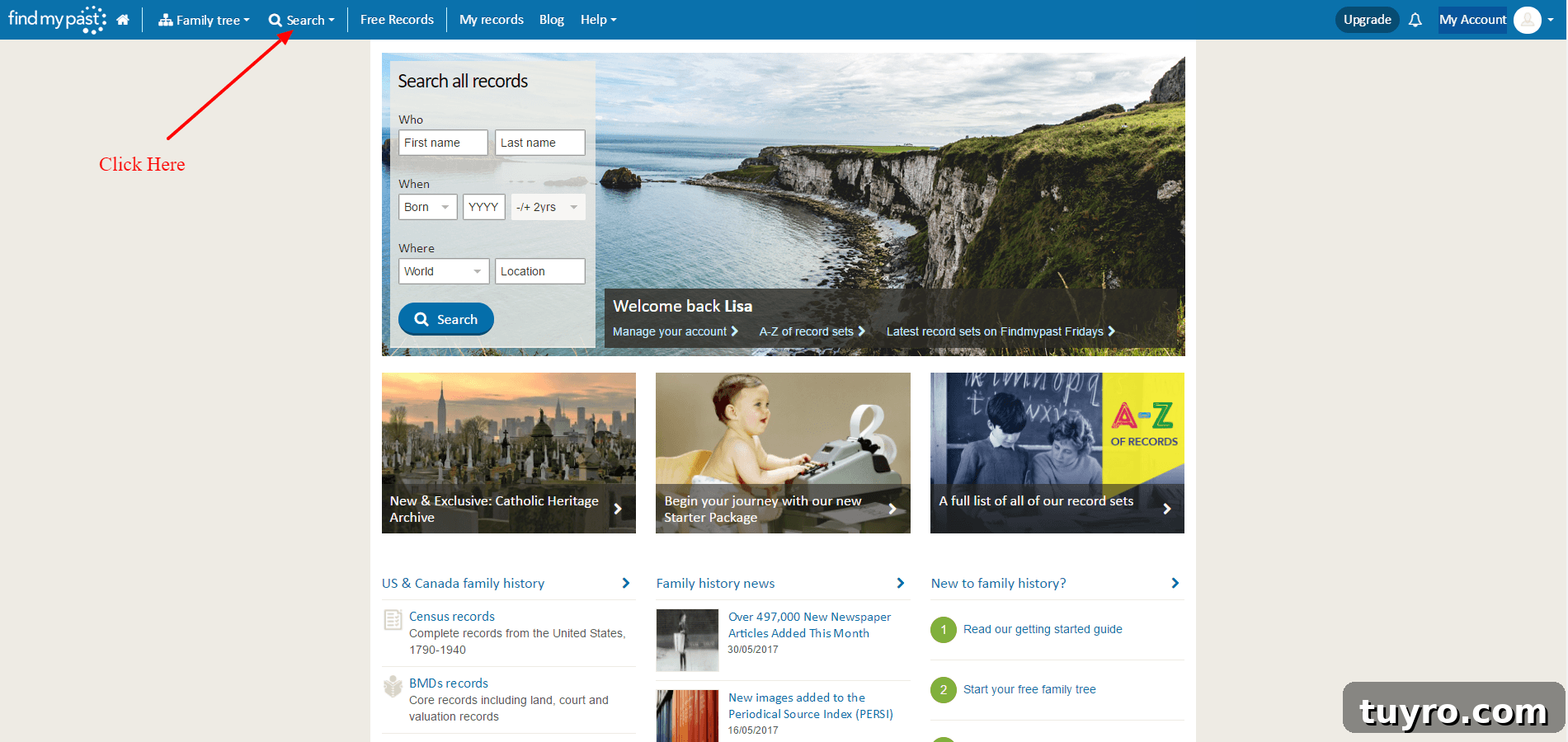
From the FindMyPast homepage, click the “Search” tab in the top toolbar, then choose “Newspapers & Periodicals” to access PERSI.
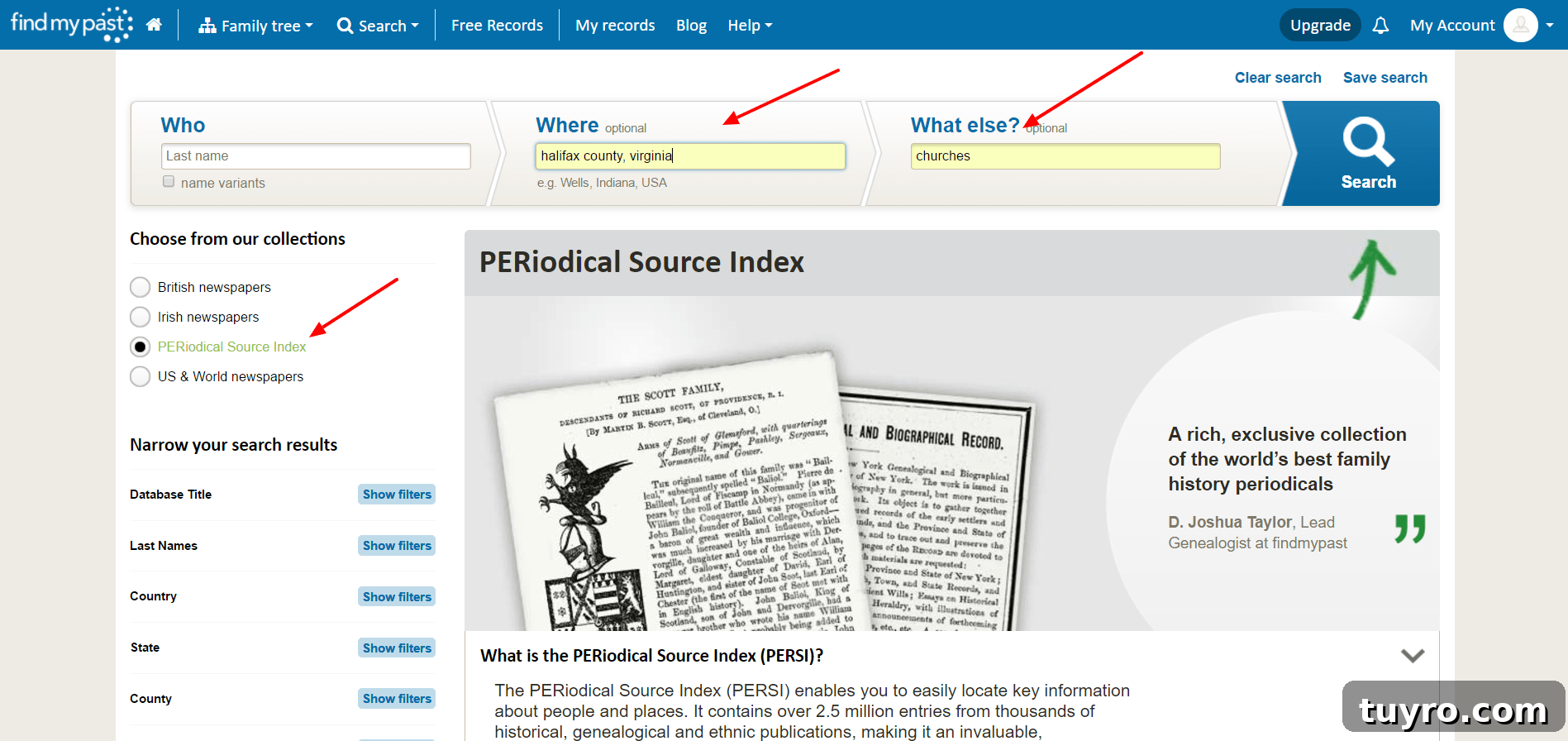
You’ll reach the PERSI search page. Click PERSI and fill in the search fields by subject and place. For example, I searched for “Halifax County, Virginia” and chose the subject “Churches.” I left the “Who” field blank to cast a broader net.
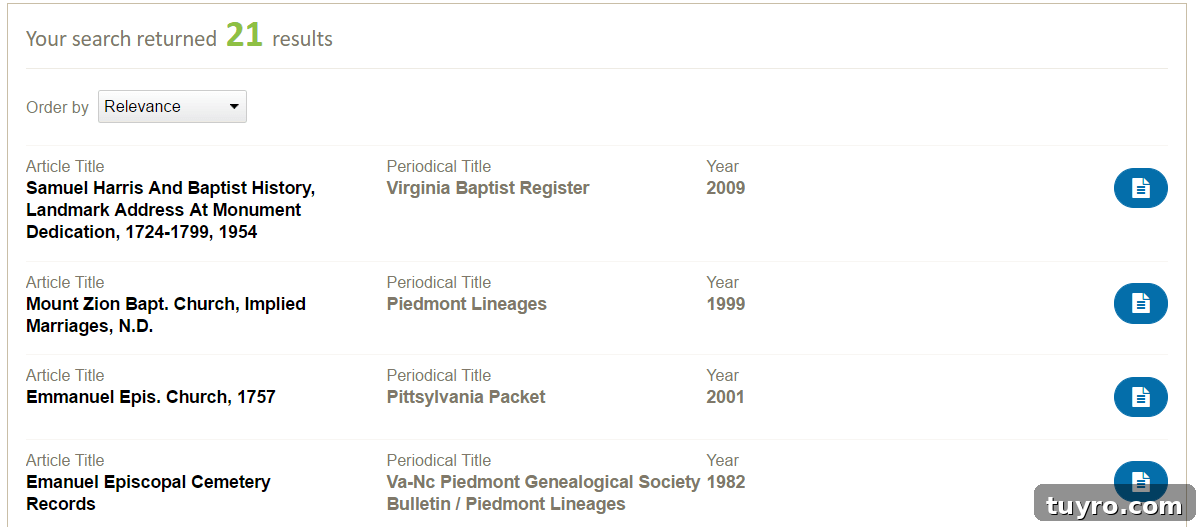
That search returned 21 results, including pieces on Baptist history, marriage records, and cemetery records. Even though I’ve researched Halifax County extensively, these were new sources for me. One focused search turned a stalled research project into several new leads.
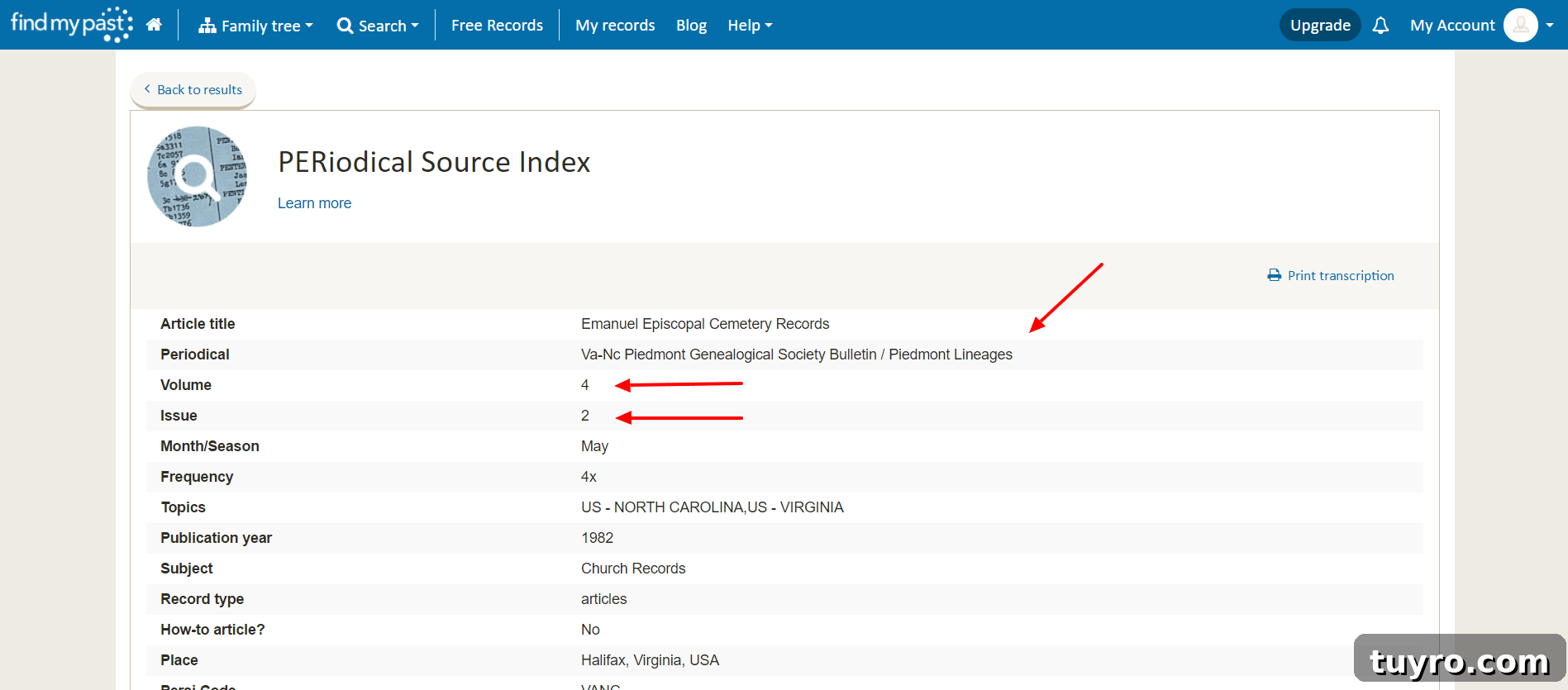
Remember: PERSI is an index, not the full text. After you identify a promising citation, click the blue icon next to the result to see the periodical title, volume, and issue. In my example the article appeared in Volume 4, Issue 2 of the VA-NC Piedmont Genealogical Society Bulletin / Piedmont Lineages.
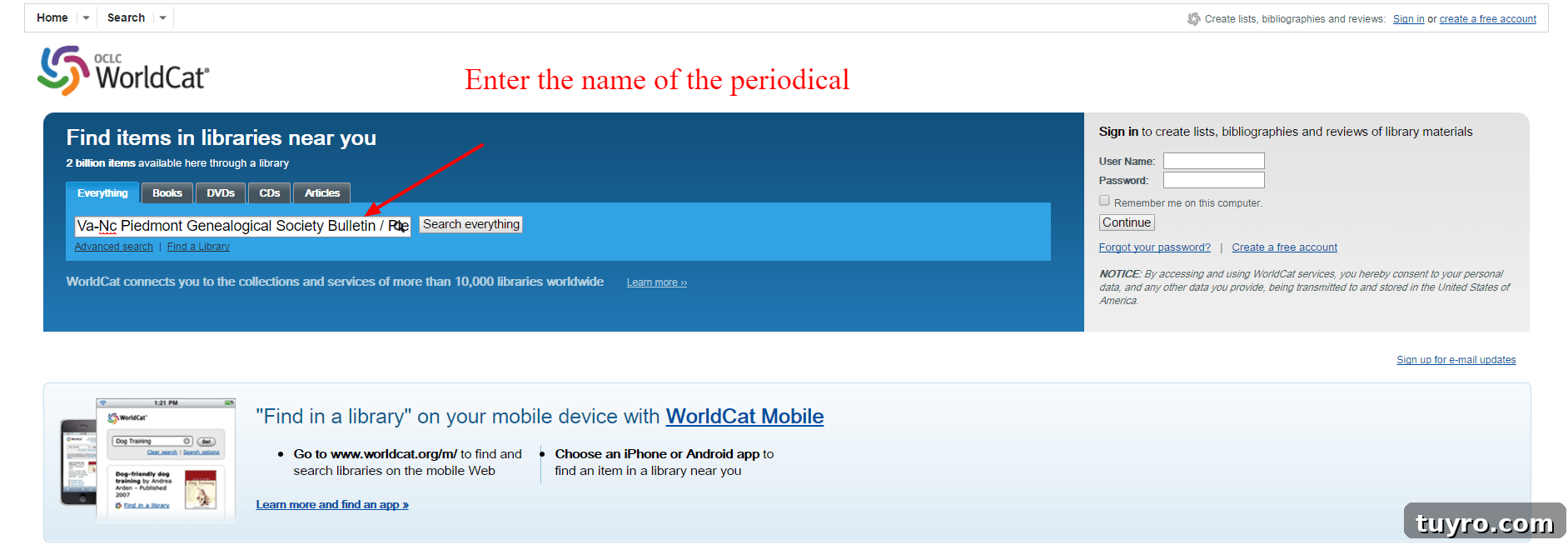
To locate the journal, open WorldCat in a new tab and search for the periodical title. Keep WorldCat handy while you search PERSI so you can quickly locate libraries that hold the publication.
In my case, WorldCat showed that my county library had the journal, so I could drive there and consult the article myself. If the nearest holding is too far, contact your local library about interlibrary loan options or requesting a copy. Librarians frequently assist with such requests.
Your Takeaway
Combine PERSI searches on FindMyPast with WorldCat to identify and obtain unique periodical articles that can open new avenues in your family history research. Searching by subject and location rather than by name will often reveal valuable community context and records you wouldn’t find through vital records alone.
Have you used PERSI in your research? What did you find?
Other Posts of Interest:
- How To Use WorldCat For Your Genealogy Research
- How To Perform Your Genealogy Searches More Successfully
- How To Find & Use Google Books For Genealogy Research