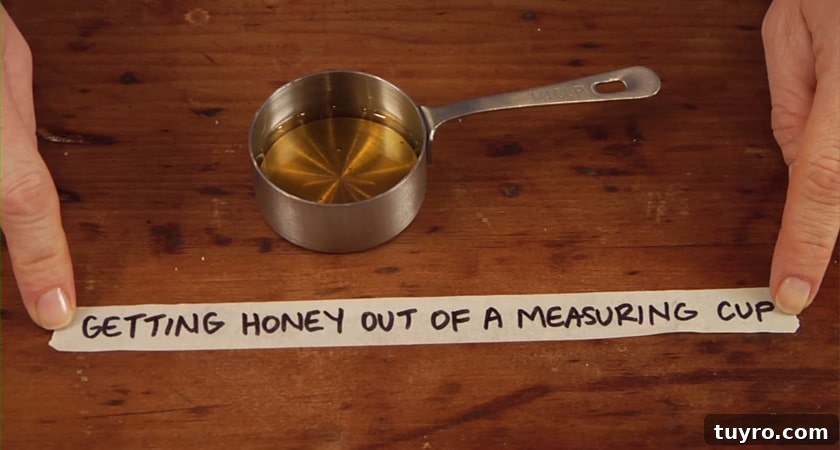
That familiar frustration—measuring a half cup of honey only to have most of it cling to the measuring cup—can be a thing of the past. Sticky liquids like honey, molasses, maple syrup and sorghum are notoriously difficult to transfer from measuring cups and spoons without leaving a thick, dripping residue behind. Fortunately, there are simple, reliable methods to measure and release sticky ingredients cleanly and with minimal waste.
The method shown in the accompanying video is straightforward and effective. Whether you’re working with tablespoons, teaspoons, or full cups, the same basic approaches will save time, reduce sticky cleanup, and ensure you add the full measured amount to your recipe.
Honey Recipes
- Roasted Winter Vegetables with Sriracha Honey Glaze
- Honey Creole Mustard Green Beans
- Red Salad with Citrus, Honey, and Thyme Vinaigrette
- Sweet Potato Spoonbread
- Chewy Molasses Cookies
- Pumpkin Gingerbread with Crystallized Ginger
More Kitchen Tips
Below are practical tips and alternative techniques you can use anytime you need to measure or transfer honey and other thick sweeteners. These suggestions are useful for both home cooks and bakers who want consistency and less mess.
- Coat the measuring cup. Lightly spray or rub a neutral oil (such as vegetable or canola oil) on the inside of the measuring cup or spoon before adding honey. The thin film reduces sticking and helps the honey slide out smoothly.
- Use warm water. If the honey is cold or crystallized, run the outside of the measuring cup under warm tap water for a few seconds. The warmth loosens viscosity and makes pouring easier. Alternatively, warm a small amount of honey in a bowl set over warm water and then measure the softened honey.
- Weigh sticky ingredients. For greatest accuracy and least waste, measure honey and syrups by weight on a kitchen scale. Weigh the empty container first, tare the scale, then add the desired weight of honey. This method eliminates the transfer problem altogether.
- Use a rubber spatula. A flexible rubber spatula quickly scrapes remaining honey from a cup or spoon and deposits it into your mixing bowl with minimal waste.
- Tap and pour. Tap the handle of the measuring spoon or cup against the side of a bowl while turning it slightly so the honey runs out. This method helps break the surface tension that holds the honey in place.
- Transfer upside down. For teaspoons and tablespoons, fill, then invert the spoon directly into the pot or pan and dab with a spatula to encourage an even release.
- Use hot water bowls for jars. Placing a honey jar in a bowl of warm water for a minute or two softens the honey and makes scooping easier when you’re measuring from the jar.
These techniques work equally well for maple syrup, molasses, sorghum, and other dense liquids. They also apply to small measurements—teaspoons and tablespoons—so you won’t have to chase drops or scrape every spoonful barehanded.
Beyond the measuring tricks, here are a few complementary kitchen practices that keep sticky ingredients tidy and convenient:
- Store honey properly. Keep honey in a sealed container at room temperature to prevent excessive crystallization. If it does crystallize, gentle warming restores pourability.
- Clean while warm. Wash measuring tools soon after use while the honey is still warm and runny; this reduces sticky buildup and makes cleanup faster.
- Designate tools. Keep a small silicone spatula and a set of measuring spoons handy specifically for syrups and honeys—silicone wipes clean easily and resists sticking.
If you enjoy short, practical demonstrations, watch the included video for a simple visual of the technique. It highlights how a small adjustment can prevent sticky frustration and help you measure accurately every time. With these tips, you’ll save ingredients, cut down on cleanup, and enjoy smoother results when working with sweet, viscous liquids.
Try a few of these methods and use whichever feels best for your routine—oil coating, warm water, weighing, and good scraping tools all reduce waste and frustration. Happy cooking!