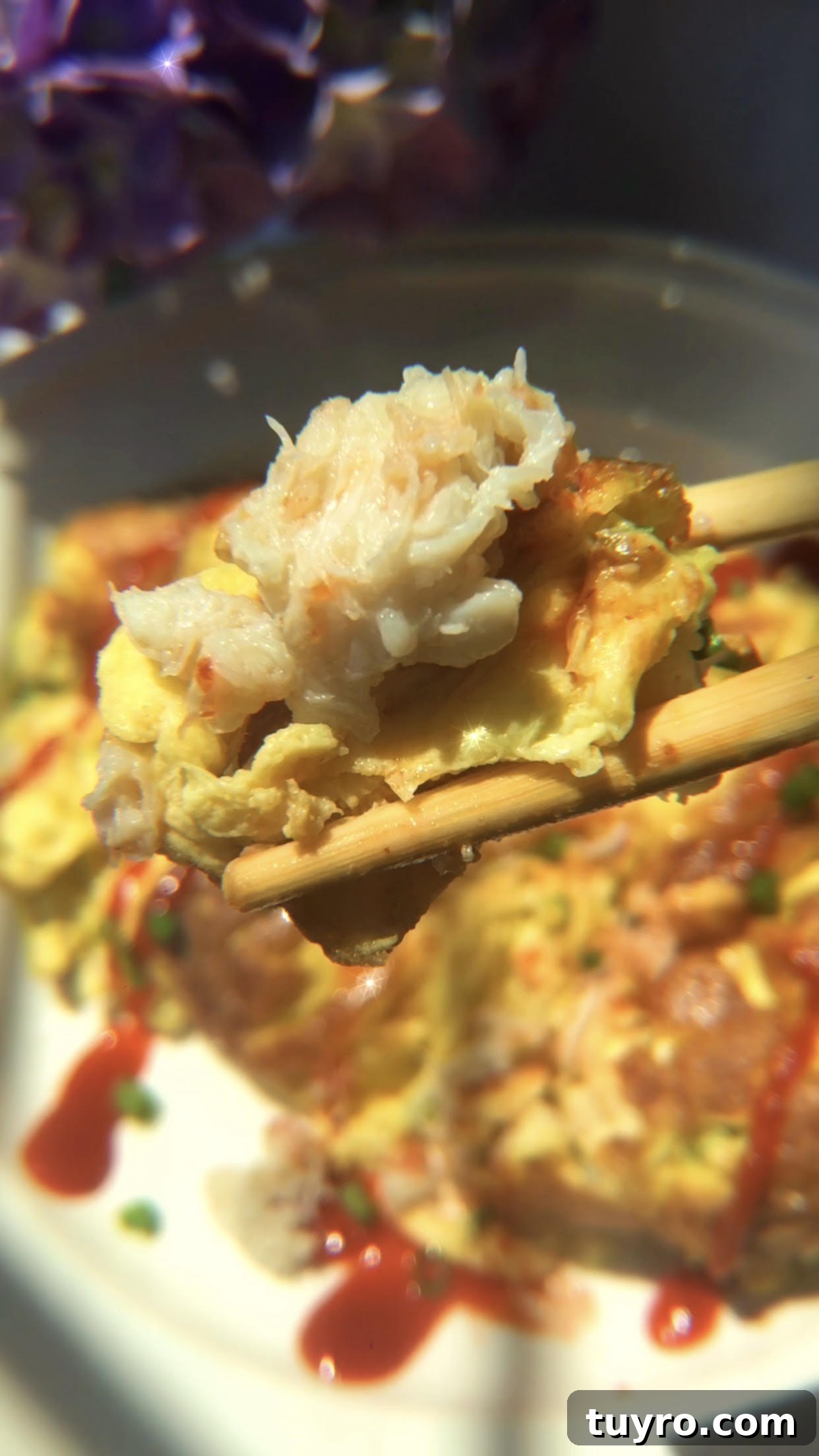
Thai Crab Egg Omelet
- Author: Jasmine and Tea
- Yield: 1 1x
This crab omelet is a simple, fast dish that comes together in about 15 minutes and highlights the sweet, delicate flavor of lump crabmeat paired with soft, fluffy eggs. It’s a popular street-food-style preparation in Thailand and makes an elegant weeknight dinner or a special brunch option when you want something quick but impressive.
The success of this dish depends largely on technique rather than complicated ingredients. Shallow-frying the eggs in a generous layer of oil creates a golden, slightly crisp exterior while keeping the interior tender and custardy. A moderate-to-high heat is essential to give you that contrast between crisp edges and a soft center. Test the oil by dipping a wooden spoon or chopstick in—if it sizzles gently, the pan is ready.
As the eggs begin to set, gently bring the cooked edges toward the center with a spatula or chopsticks so the uncooked egg runs out to the edges and cooks. This motion helps create layers and pockets of air, yielding a light texture. When the omelet is about 80–90% cooked through, fold one half over the other and transfer it to a plate—residual heat will finish the cooking without drying the eggs. Garnish with extra scallions and a drizzle of sriracha or kewpie mayo for an authentic finish.
Ingredients
- 6 eggs
- 3–6 stalks scallions (green part only), thinly sliced
- lump crab meat (use as much as you like; a few spoonfuls yields a delicate crab presence)
- oil for shallow frying (neutral oil with a high smoke point)
- salt, to taste
Instructions
- Mince the scallions fine and set them aside. This adds freshness and a mild onion flavor without overpowering the crab.
- Crack the eggs into a bowl and scramble until blended. Add the minced scallions and salt to taste. Gently fold in a few spoonfuls of lump crab meat—handle the crab carefully so it retains some texture rather than breaking up completely.
- Heat a non-stick or well-seasoned skillet over medium-high heat. Pour in enough oil to create a shallow layer that will coat the pan—this helps create a crisp, golden exterior. When the oil is hot (it should sizzle lightly when a wooden spoon or chopstick is dipped in), reduce the heat slightly if the oil is smoking.
- Pour the egg mixture into the pan. As the edges begin to set, use a spatula or chopsticks to pull the cooked outer edges toward the center; this allows uncooked egg to flow out and cook evenly along the sides. Repeat this motion around the pan while gently shaking the pan so the egg layers build up and remain fluffy.
- When the omelet is mostly set but still slightly soft in the center (about 80–90% cooked), fold one half over the other. Loosen the omelet from the pan by wiggling the handle, then slide or lift it onto a serving plate. The residual heat will finish cooking the center without overcooking.
- Garnish with extra scallions and additional crab meat if desired. Finish with a drizzle of sriracha and/or kewpie mayonnaise for a spicy, creamy contrast. Serve immediately while hot and tender.
Tips and Variations
Use fresh or high-quality lump crab meat for the best flavor. If crab is scarce or expensive, imitation or canned crab can work—just adjust quantity and drain any liquid. For a lighter version, reduce the oil and use a non-stick pan over slightly lower heat, but expect less crisping at the edges. To add more texture and color, fold in finely diced red bell pepper or a few fresh herbs like cilantro at the end.
Leftovers can be refrigerated in an airtight container for a day or two, though the texture is best when eaten fresh. Reheat gently in a pan over low heat to avoid drying out the eggs.