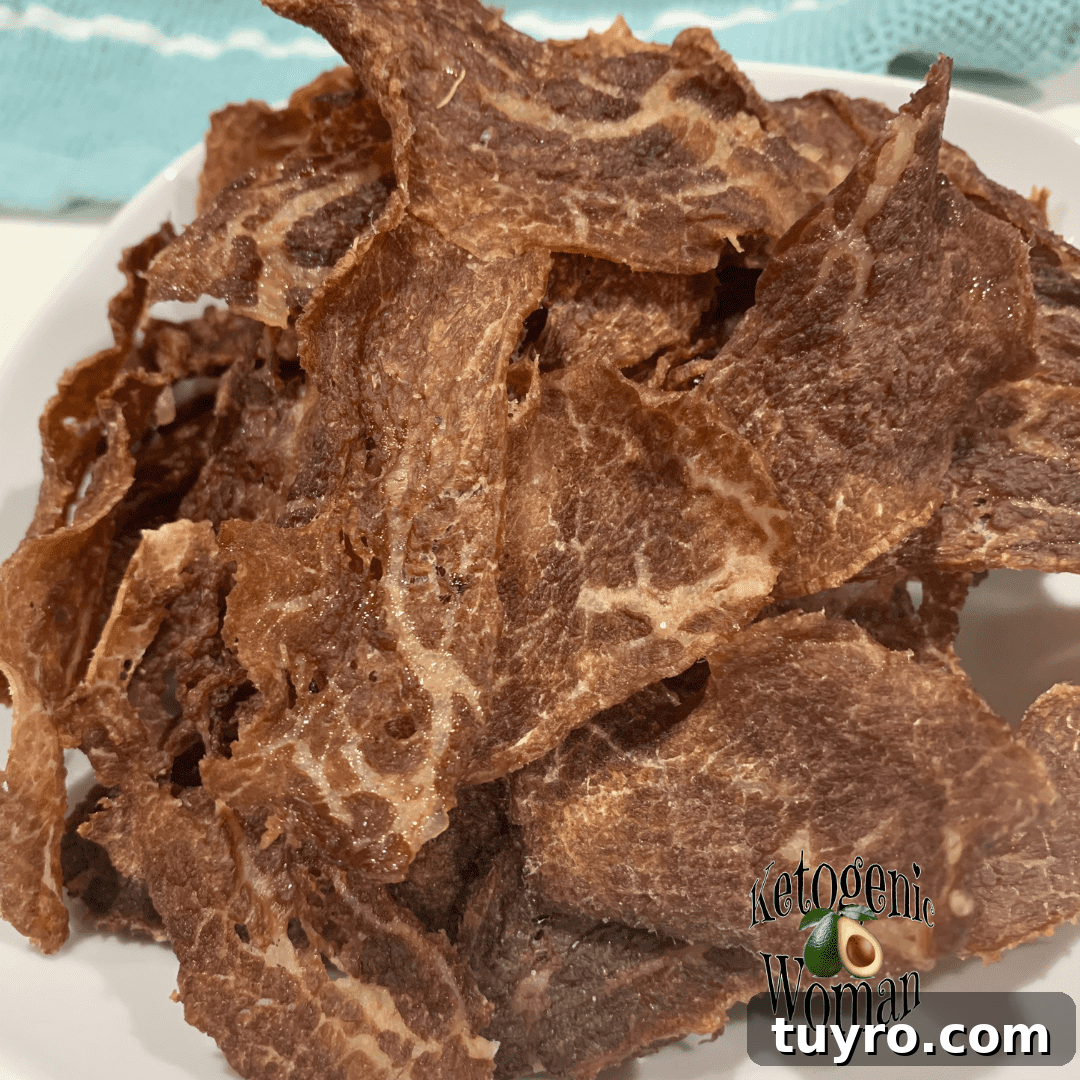
This DIY take on Carnivore Meat Chips is a great way to get that satisfying crunch without spending a lot. I made these in a food dehydrator (Excalibur) but you can easily make them in the oven instead.
Carnivore Meat Chips
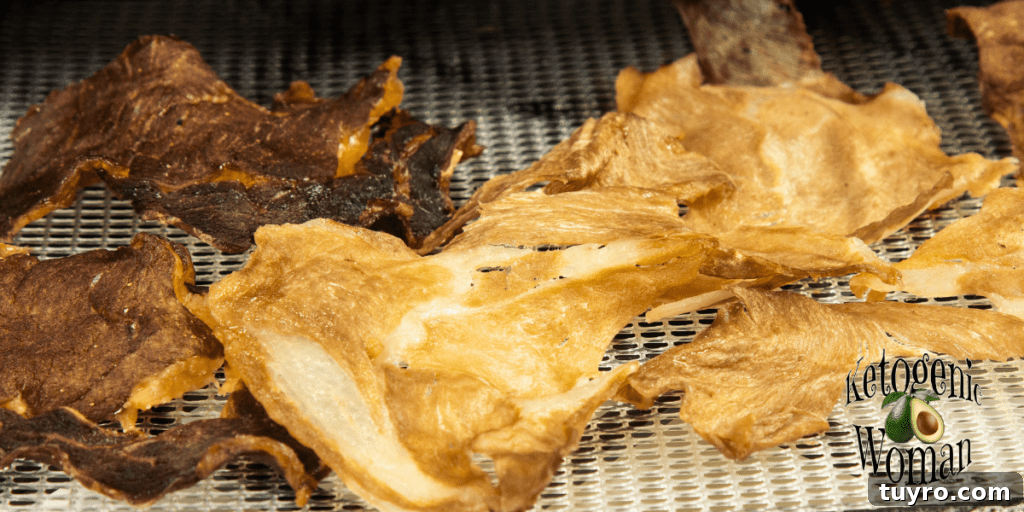
Things Needed To Make Your Own DIY Carnivore Crisps
The most important element is very thinly sliced meat. Pre-sliced deli meats often contain additives and extra ingredients, so look for clean, simple cuts. Here are a few practical options to get thin slices:
- Use a meat slicer if you have one. Set it very thin but not so thin that the slice tears when picked up. Test a single slice and adjust the dial until it holds together while still being paper-thin.
- Buy a pork loin roast or a lean beef roast from your butcher and ask them to slice it thin for you. Many butchers will slice roasts to the thickness you request.
- Visit an Asian supermarket and buy hot pot or shabu-shabu thinly sliced meat; those are cut paper-thin and work perfectly for making chips.
Important Note About Slicing the Meat for Your Chips
How you slice the meat affects texture:
- Slice against the grain for chips that will crisp and break with a crunchy snap.
- Slice with the grain if you prefer a chewier, jerky-like result.
You will also need:
- Salt — a fine sea salt or mineral salt works well for seasoning before drying.
- A dehydrator (preferred) or large baking sheets lined with parchment for oven drying.
That’s all you need to get started.
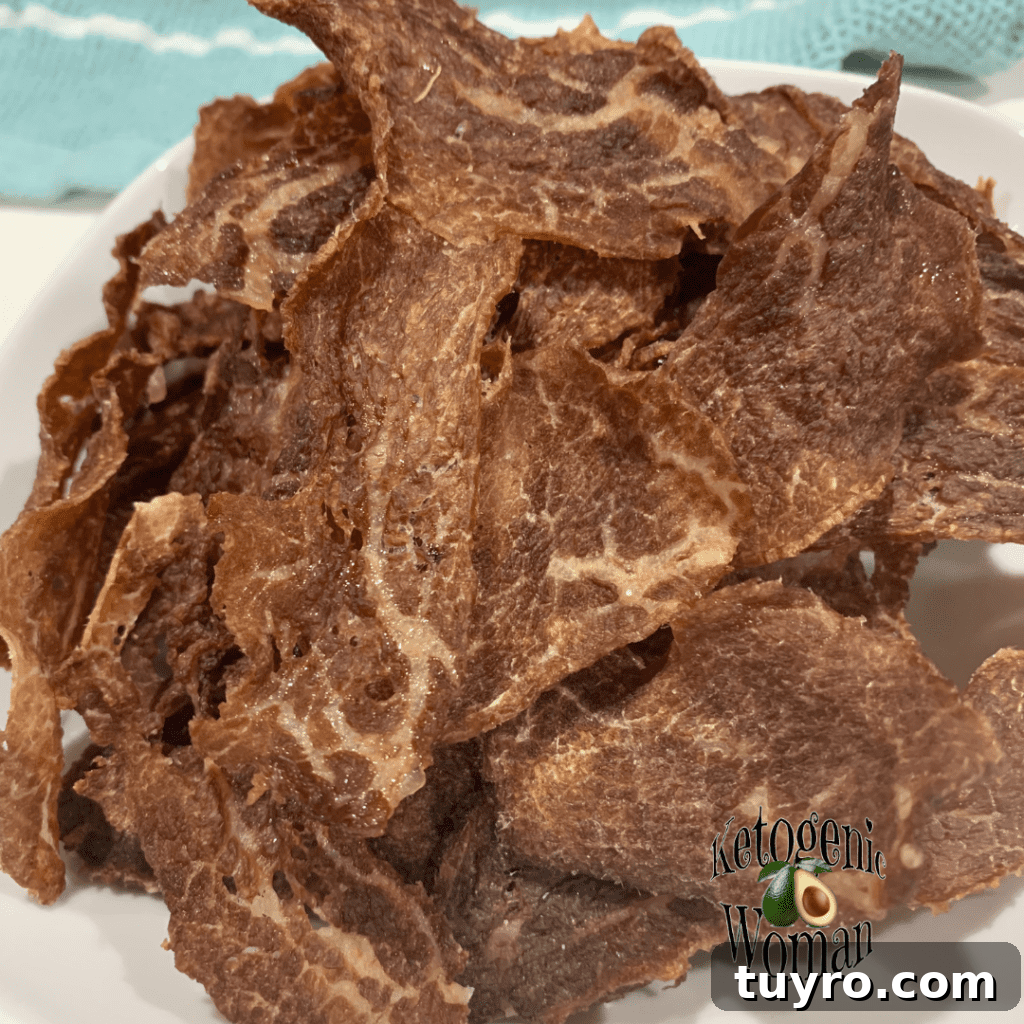
Instructions to Make Carnivore Meat Crisps in the Oven
- Obtain thinly sliced meat, trimmed of excess fat if you want a crisper chip.
- Preheat the oven to 350°F (175°C).
- Line large baking sheets with parchment paper.
- Arrange meat slices in a single layer, placing them close together but not overlapping.
- Lightly sprinkle with salt to taste.
- Bake for about 20–30 minutes. Thinner slices will finish sooner; thicker slices may need a bit more time. Check often toward the end to avoid burning.
- Remove from the oven and allow the chips to cool on the baking sheet; they will crisp further as they cool.
- Store cooled chips in an airtight container. If they were made from fat-rich cuts, refrigerate or freeze for longer storage.
Can I Just Buy Meat Chips Instead?
Yes—if you prefer convenience, prepackaged meat chips and crisps are widely available in many cuts. Buying ready-made chips is a practical option when you don’t want to slice or dry meat yourself.
Printable Recipe for Meat Chips in the Dehydrator
Below is a clear dehydrator-style recipe you can follow or print for easy reference.
Ingredients
- Lean beef roast, paper-thin slices (or other lean roast)
- Pork loin roast, paper-thin slices (optional)
- Salt, to taste
- Any other plain, thinly sliced meat you prefer
Yield & Times
- Yield: depends on amount of meat used (many chips per roast)
- Prep time: about 15 minutes (plus slicing)
- Cook/dehydrate time: 4–5 hours
- Total time: approximately 4–4.5 hours including cooling
Dehydrator Instructions
- Preheat your dehydrator to 165°F (setting for meat/fish/jerky). Preheating helps keep the temperature consistent for food safety while you arrange trays.
- If you are slicing meats yourself, slice them as thinly as possible. Paper-thin is ideal for fast, even drying.
- Carefully place meat slices on dehydrator trays in a single layer without overlap.
- Lightly salt each slice to taste, then load the trays into the dehydrator.
- Set a drying time of 4–5 hours. Thicker slices or pieces with more fat will take longer to fully dehydrate.
- When drying is complete, remove the slices and lightly dab them with a paper towel to remove any residual moisture.
- Allow the chips to cool completely so they crisp up. While warm they may feel slightly soft but will firm as they cool.
Notes
- Preheat the dehydrator to 165°F while preparing trays to maintain a steady temperature for raw meat.
- If you use higher-fat cuts, store finished chips in the refrigerator or freezer to preserve quality.
- Dehydrated meat loses moisture and weight. A useful rule: dehydrated meat weighs about one third less than raw meat. Use your macro tracking app to find the macros for 3 ounces of the raw meat you used—those values correspond roughly to 1 ounce of the finished chips.
Simple seasoning and careful slicing are the keys to success. Once you get the hang of slicing and timing, you can produce consistently crisp meat chips at home that rival many store-bought varieties.
What Are the Macros For Meat Chips?
Macros will vary by cut and cooking method. To estimate:
- Weigh the raw meat and note the nutrition facts for the raw portion you used in your macro app.
- Because dehydrated meat ends up lighter, a practical approach is to look up the macros for 3 ounces of the raw meat you used and treat that as the macro equivalent for approximately 1 ounce of finished chips.
- If you want precise tracking, weigh the finished chips and compare raw-to-finished weight to determine exact serving sizes and macros for your batch.
Enjoy making your own carnivore-style snacks—customize the cut, thickness, and crispness to suit your preference. These meat chips are portable, high in protein, and easy to scale up for snacks or meal additions.