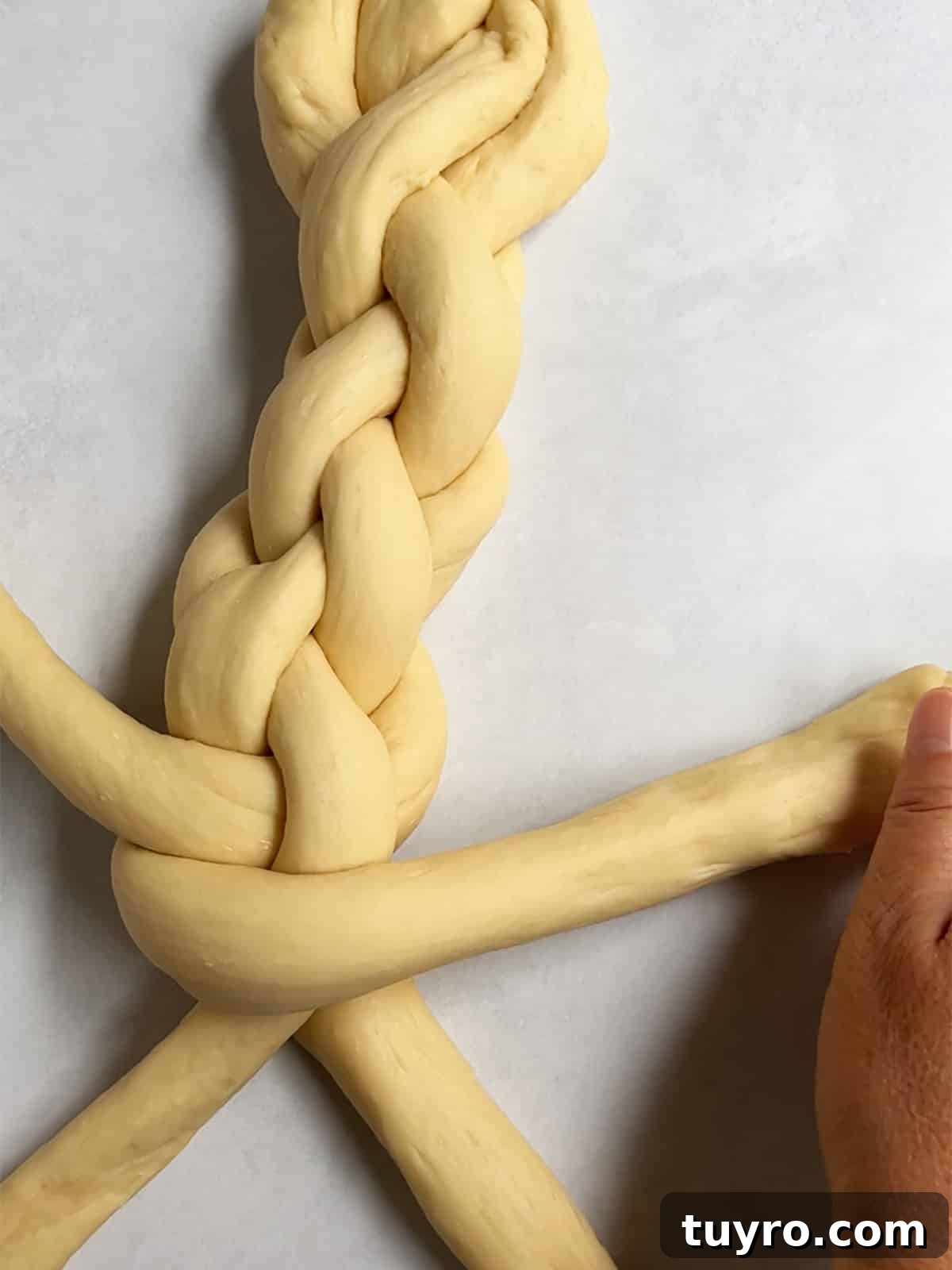
Challah braiding is easier than it looks. Whether you want a simple 3‑strand braid, a fuller 4‑ or 6‑strand loaf, a knotted roll, or a single‑strand loaf, these clear step‑by‑step instructions and photos will help you build confidence and make beautiful challah every time.
For more ideas and recipes, see my collection of Jewish recipes on the blog.
This post contains Amazon affiliate links; as an Amazon Influencer I may earn from qualifying purchases at no extra cost to you.
Braiding Challah is Fun!
Great braids start with good dough. You can use your favorite challah dough or try one of the recipes on my blog. Here are a few options to get you started:
- Easy Challah recipe — brightened with citrus and quick to rise.
- Challah Rolls — use the same dough to make rolls or pull it into braids.
- Lonni’s Round Challah Recipe — a lovely round loaf for holidays.
If you’re new to working with dough, take your time. Divide and weigh strands roughly as suggested below, give the dough short rests if it springs back, and enjoy the process.
Basic 3‑strand Braid
- Length of strands: 14–16 inches for a small loaf, 20–22 inches for a larger loaf
- Small loaf strand weight: about 150 g each
- Large loaf strand weight: about 200 g each
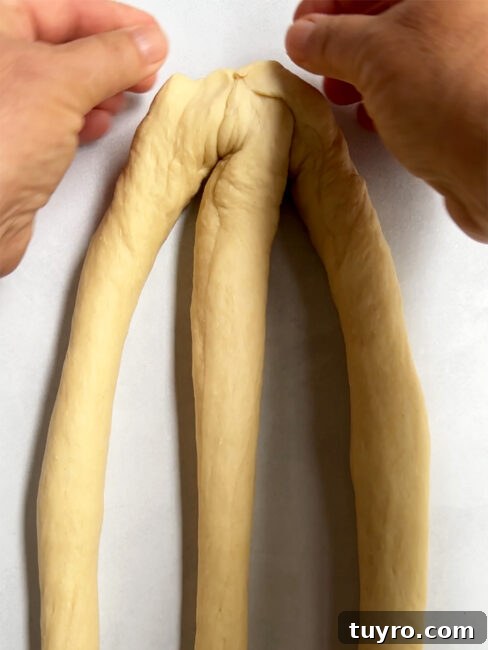
Connect the three strands together at the top and fan them out. Braid the same way you would hair: place the right strand over the middle, then the left strand over the new middle. It doesn’t matter which side you start on — as you move an outside strand over the center you create a new middle strand. Continue until the strands run out, press the ends together and tuck them under.
Basic 4‑strand Braid
- Length of strands: 14–16 inches for a small loaf, 20–22 inches for a larger loaf
- Small loaf strand weight: about 150 g each
- Large loaf strand weight: about 200 g each
The 4‑strand braid gives the loaf more height and texture. Start with the strands connected at the top. Think of working with two strands at a time: count 1,2 from the right and 1,2 from the left and remember the rhythm “2 up, 1 over.” Starting on either side, bring the second strand up and over the two strands to its left, then bring the first strand over the adjacent strand. Repeat the “2 up, 1 over” pattern from side to side until you reach the end; press and tuck the ends under.
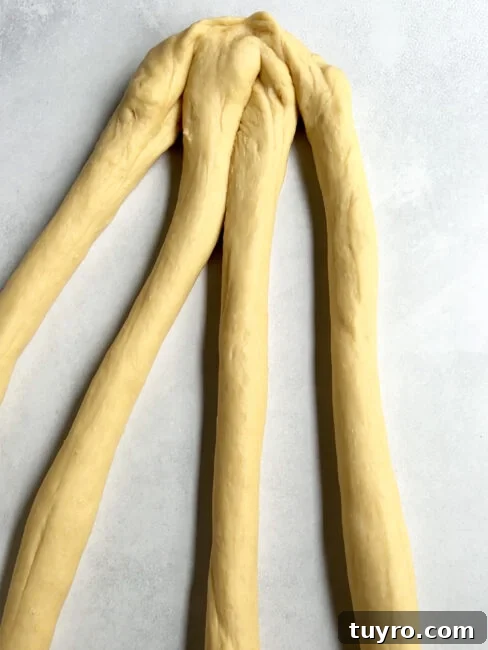
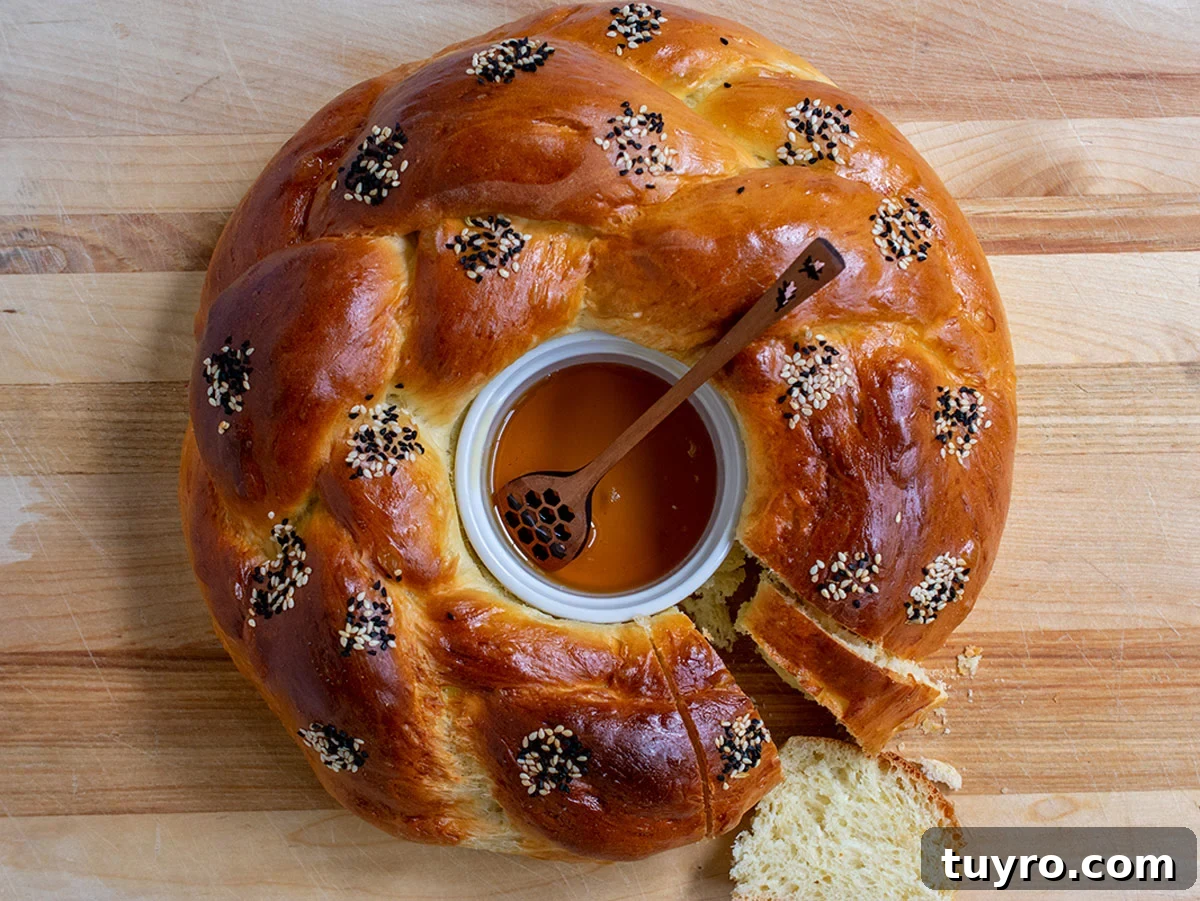
You can bake a 4‑strand as an oblong loaf, or shape it into a circle and join the ends for a round challah. For a festive touch, place an oven‑proof ramekin in the center for a honey pot.
Basic 6‑strand Braid
- Length of strands: 14–16 inches for a small loaf, 20–22 inches for a larger loaf
- Small loaf strand weight: about 150 g each
- Large loaf strand weight: about 200 g each
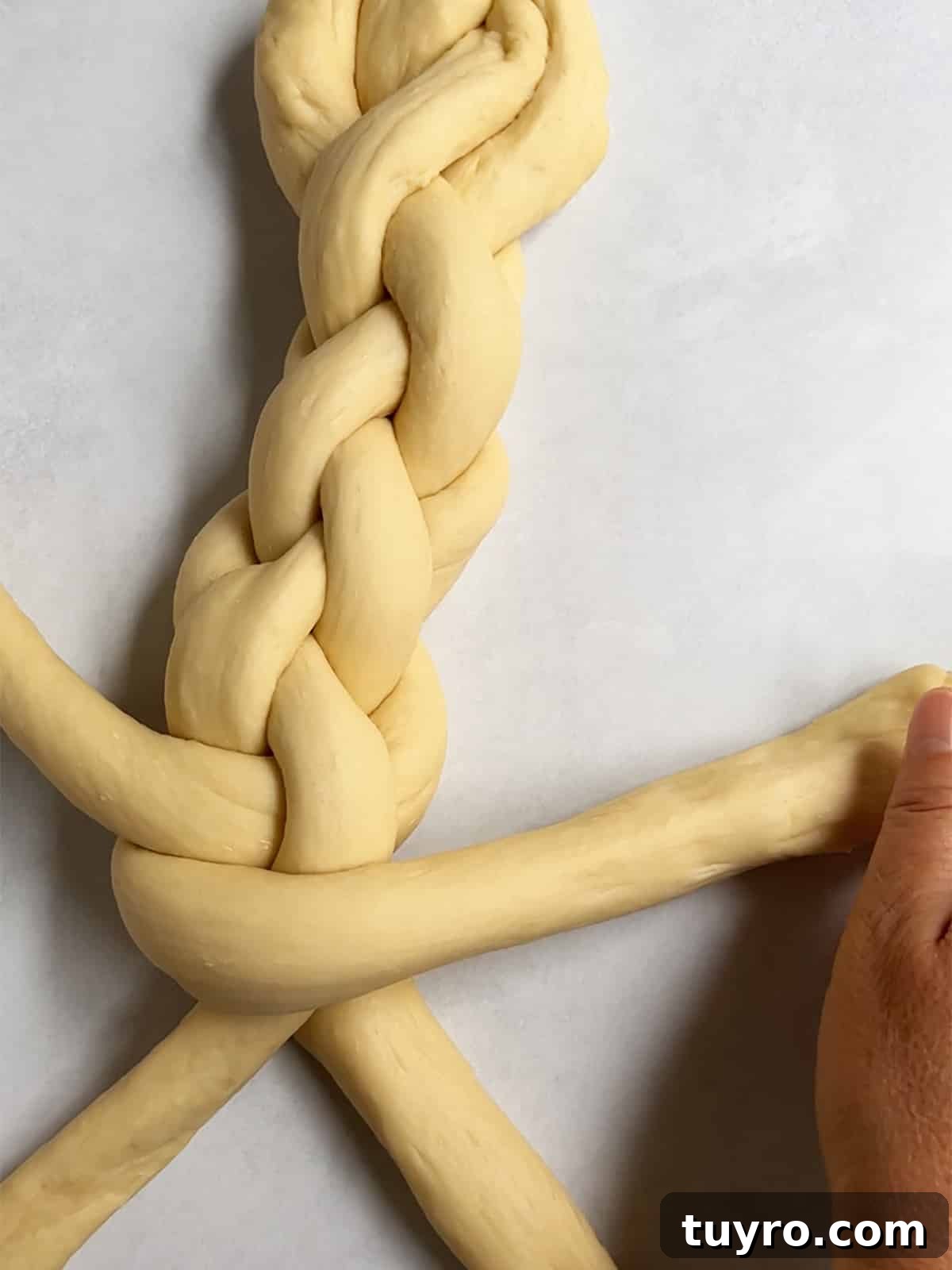
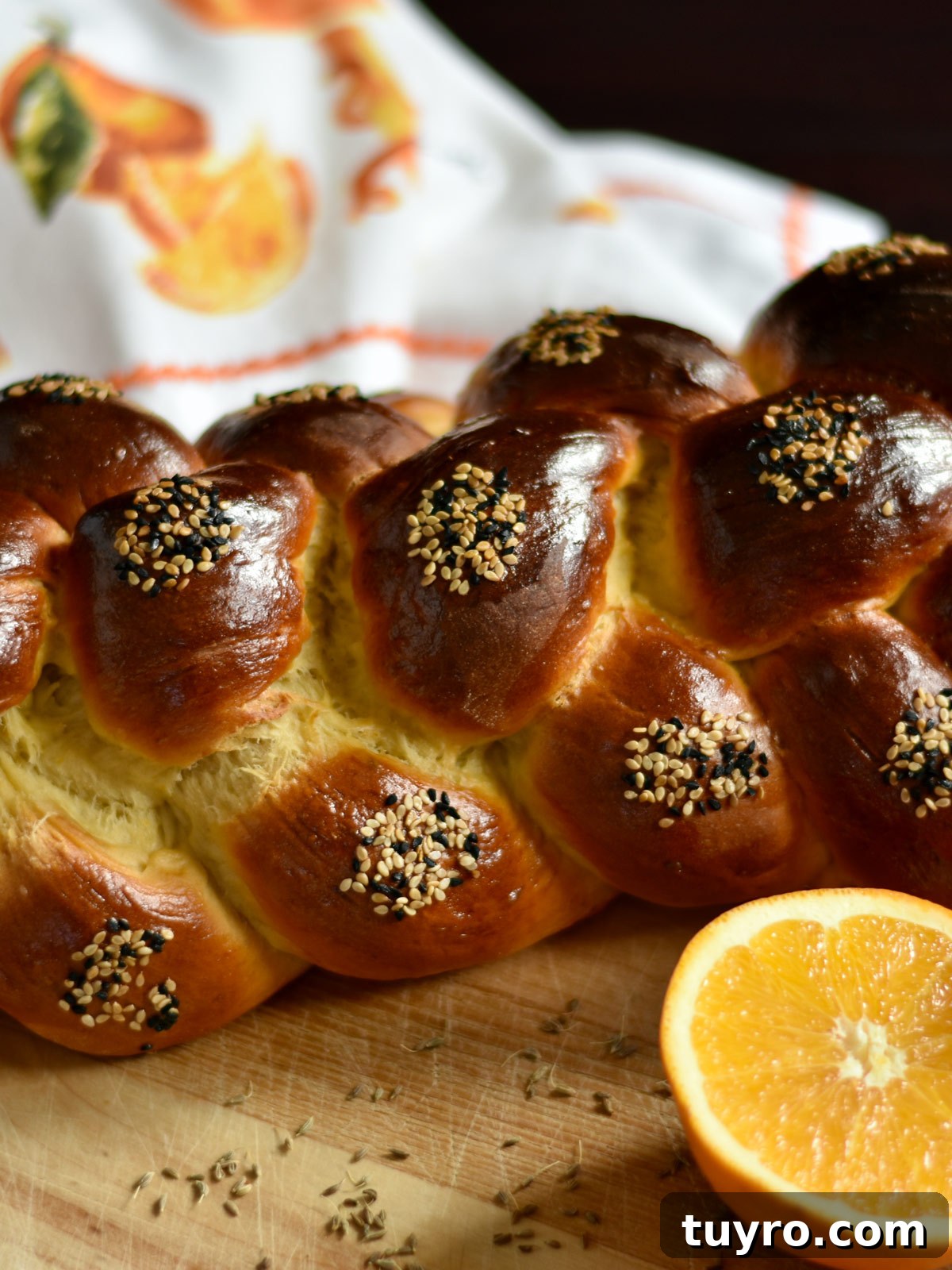
The 6‑strand braid looks especially impressive and regal. I learned a reliable two‑step approach from Joan Nathan: keep the strands spaced so you can work comfortably, then alternate these two moves — “outside over 2” (take the outside strand and lay it over the two strands next to it) and “next to the last to the outside” (take the strand that is next to last on the other side and bring it around to the outside). Repeat those two phrases until you’ve braided to the end, then press and tuck the tail under.
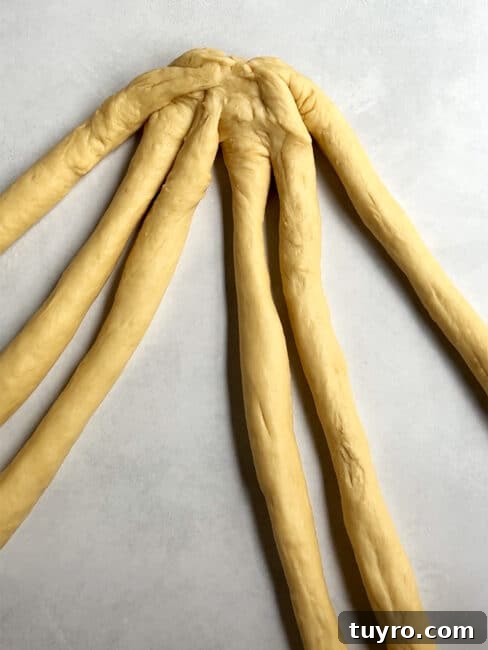
Challah Roll Knot
- Length of strand: at least 9 inches
- Strand weight: about 100 g each (halve for mini rolls)
Challah rolls are fun and versatile. Fold a single strand in half to form a ribbon, cross the right end over the left, then bring the lower end up and through the hole in the center. Pull the two ends together and tuck or press them to finish — you’ll have a neat knotted roll.
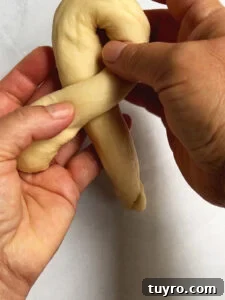
Single Strand Braid (or knot)
- Length of strand: about 24 inches
This dramatic loaf is formed from one long strand of dough and makes a beautiful individual loaf. Start by shaping the dough into a “p” shape. Tuck the leg of the “p” up and through the circle, twist the circle to a smaller loop, then pull the tucked leg into that smaller loop and press the remaining end underneath to secure. The result is a compact, braided‑looking little loaf that’s fun to bake and share.
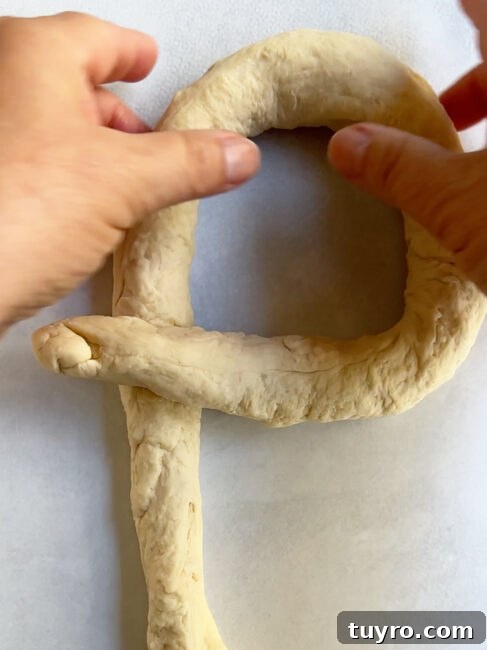
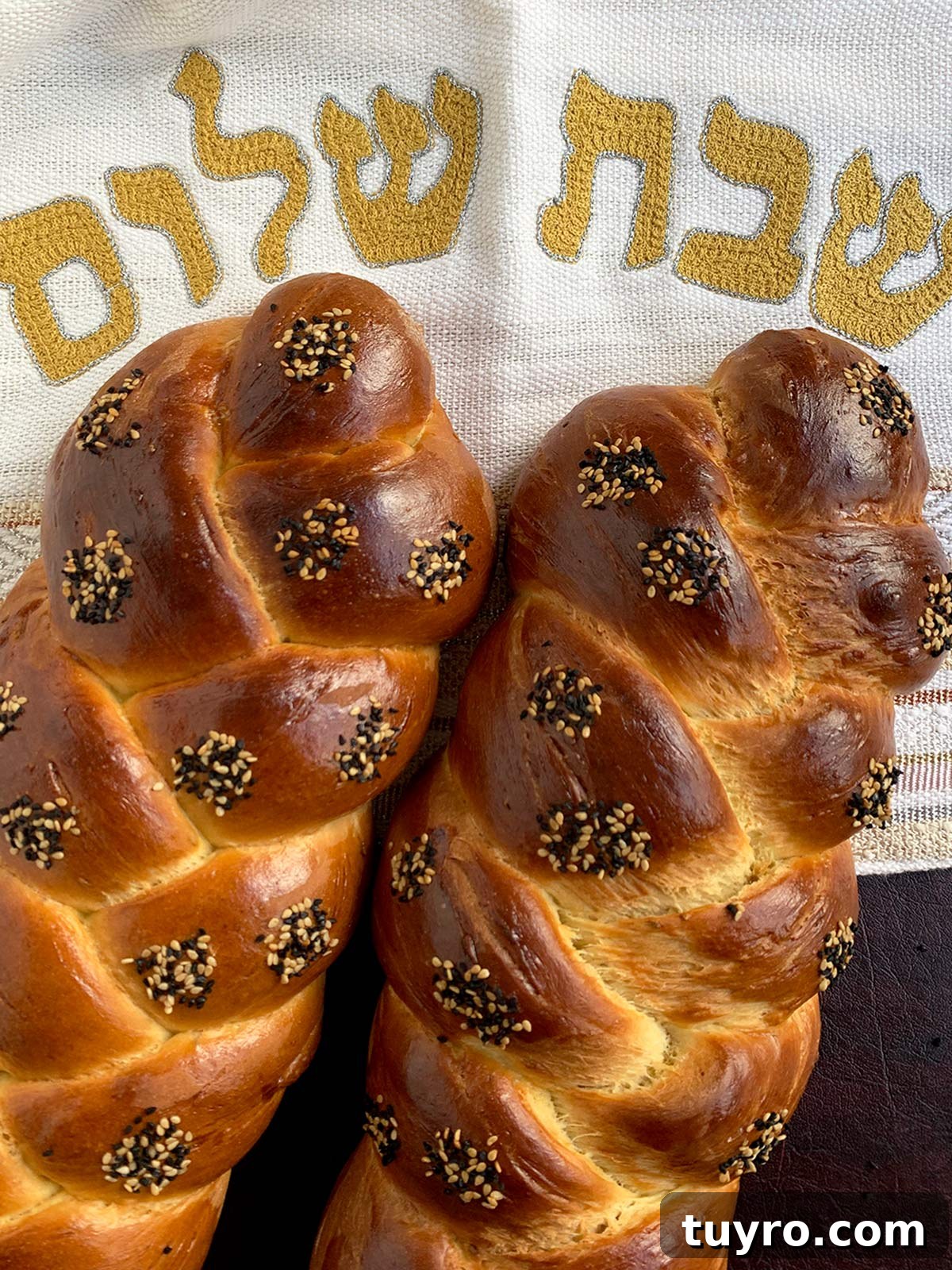
Let shaped loaves rise again, brush with egg wash, sprinkle with seeds if desired, and bake until deep golden. With good dough and a bit of practice, braiding becomes relaxing and rewarding.
Challah Braiding — Quick Reference
Ingredients
- Favorite challah dough recipe (see: Challah Dough Recipe)
- Flour for dusting, as needed
- Seeds for decorating (sesame, poppy, or your choice)
- 1 large egg + 1 tsp water (for egg wash)
Timing
- Prep time: about 30 minutes (active shaping time)
- Cook time: about 30 minutes
- Approximate rising time: 1 hr 30 mins (total rises vary by recipe)
- Total time: around 2 hrs 30 mins, depending on dough recipe
Basic Instructions — Highlights
3‑strand braid
- Connect strands at the top and fan them out.
- Right over middle, left over middle, repeat down the length.
- Seal and tuck the ends under; let rise, egg wash and bake.
4‑strand braid
- Connect strands at the top.
- Work “2 up, 1 over” rhythm to form the braid.
- Seal and tuck the ends under; shape as loaf or round.
6‑strand braid
- Connect strands at the top.
- Alternate “outside over 2” and “next to the last to the outside.”
- Seal, tuck and bake for an impressive loaf.
Knotted roll
- Fold a strand in half, cross the right over the left, then thread the lower end up through the center hole.
- Bring the remaining end to meet it and press together to secure.
Single‑strand loaf
- Form a “p” shape, tuck and twist as described above, then press the free end underneath to finish.
- Allow final rise, egg wash and bake.
Notes
- Use a little flour for dusting only if the dough is sticky; a non‑floured surface gives better traction when the dough isn’t sticky.
- If a strand keeps springing back while you roll it, let it rest for a couple of minutes to relax the gluten before continuing.
- When rolling strands, use the palms of your hands and work from the center outward. You can taper the ends or keep an even thickness — perfection isn’t necessary.
Enjoyed this post? Sign up for my email list for more recipes and baking tips.
Follow along on Pinterest, Facebook, or Instagram for photos, videos, and more ideas.