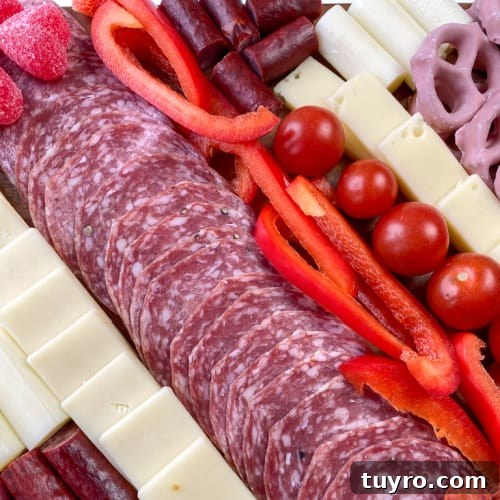
A simple charcuterie board is an attractive and easy way to serve meats, cheeses and other finger foods—perfect for a party, a snack, or a relaxed family meal.
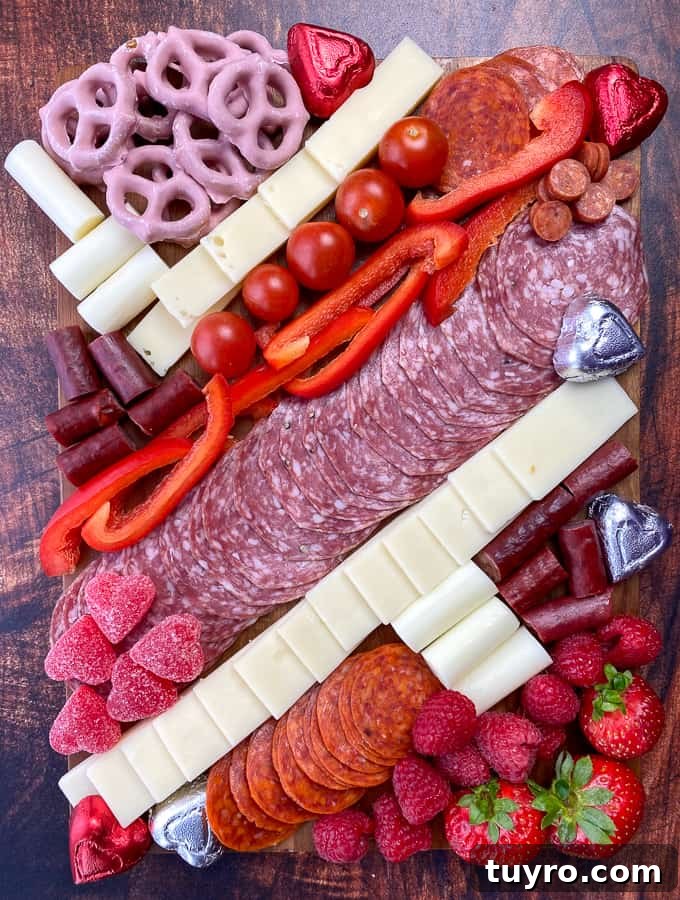
Most people picture party food when they hear “charcuterie board,” and for good reason. A board makes it simple to display a wide variety of items in an appealing way. It can also be a fun, interactive approach to lunch or dinner at home—especially when kids help assemble it.
Simple Charcuterie Board
Charcuterie boards can be as budget-friendly and casual or as elaborate and fancy as you like. We enjoy involving the kids when we build one; they’re more excited to eat when they helped put it together.
Traditional boards usually include cured meats such as salami and an assortment of cheeses. Over time we’ve learned to be flexible, creating combinations that everyone in the family enjoys. Don’t be afraid to mix classic elements with familiar favorites to suit tastes and budgets.
You don’t need to stick to a strict formula: crackers or pretzels, grapes, oranges, apples, sliced peppers, celery, tomatoes, cucumbers, pickles, olives, candies, marshmallows and small desserts all work well. Finger-friendly treats like cream cheese–filled salami roll-ups or seasoned pretzels are easy additions that kids love.
For a kid-friendly family board we typically include three to four smoked or cured meats—salami, pepperoni and beef sticks are easy choices—plus three to four cheeses such as mozzarella sticks, Swiss, Colby and cheddar. Add two fruits and two vegetables for color and balance. To fill gaps and add fun, we like gummies, cake bites or small wrapped chocolates.
Start arranging from the center of the board, placing the ingredient you have most of first. Work outward and reserve smaller items for the edges and to fill empty spaces.
As a guideline for a meal-sized board, plan on about 2–3 ounces of meat, 3 ounces of cheese, 1/2 cup of crackers and a combined 1 cup of fruit and vegetables per person. For appetizers, reduce those quantities as needed.
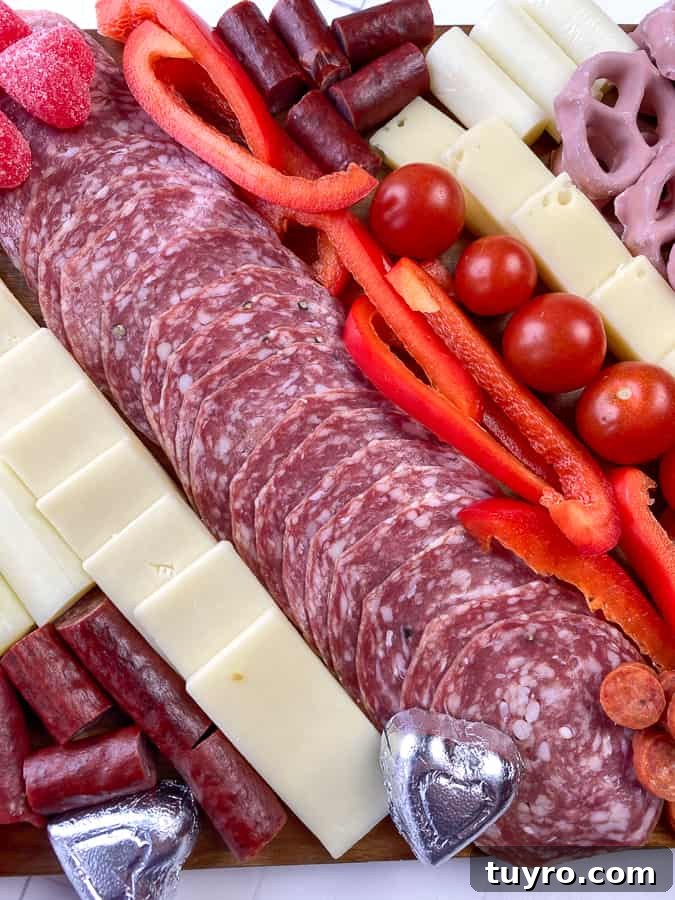
With more time spent at home lately, we’ve been leaning on simple, versatile ideas like charcuterie boards for easy family meals and kid-friendly dinners.
Our first family board became a fun lunchtime activity and remains a favorite for its simplicity and the excitement it created around the table.
What is a Charcuterie Board?
Originally, charcuterie boards showcased an artful selection of specialty cheeses and cured meats. Today the concept is broader: you can include deli meats, a range of cheeses, fresh fruit, raw vegetables and even sweets. The goal is an attractive mix of colors, textures and flavors arranged on a wooden or marble surface.
Charcuterie is pronounced shaar-koo-tree (or shar-koo-tuh-ree), and while the word sounds fancy, the boards themselves are easy to assemble.
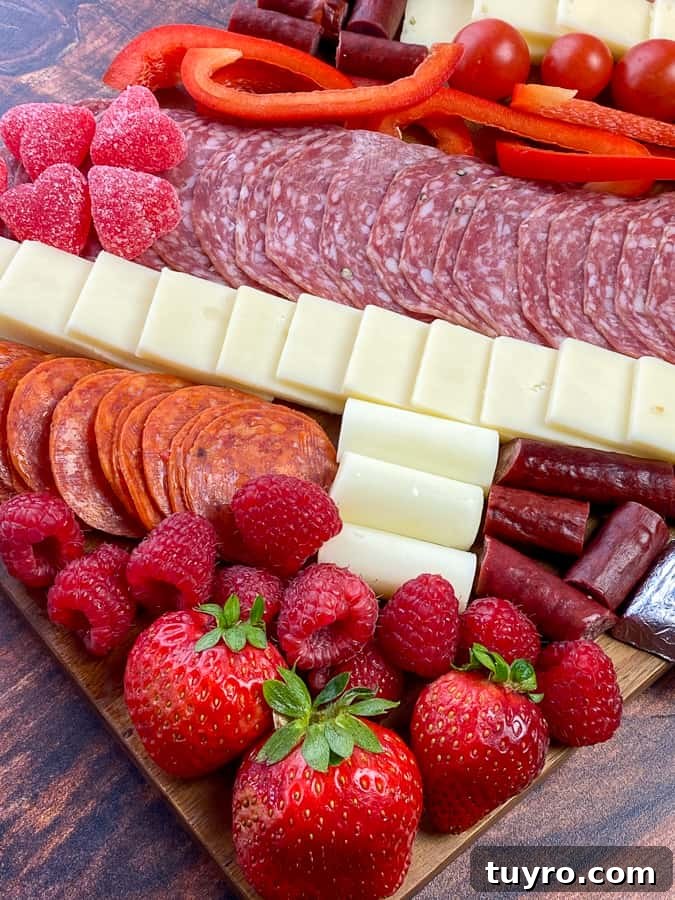
Compared with a standard fruit or vegetable tray, a charcuterie board offers a wider variety of items and is often presented on a wooden or marble board. Charcuterie boards have become a trending way to serve snacks and meals.
Make a Special Valentine’s Day Board
Holiday-themed boards are easy to create when you pick a color scheme and a purpose. For Valentine’s Day, we assembled a red-and-white lunch board and added a few silver-wrapped candies for sparkle.
Red and white items that are great to look for include:
- Grape or cherry tomatoes
- Red peppers
- Strawberries
- Raspberries
- Apples
- Salami
- Pepperoni
- Beef sticks
- Bacon
- Mini marshmallows
- Pink or red gummies
- Red heart-shaped candy
- Pink and white animal crackers
- Yogurt-dipped pretzels in pink or light red
- Chocolate kisses
- M&Ms
Our 12-year-old assembled a budget-friendly board that his sister and he loved—a reminder that simple choices and playful presentation go a long way.
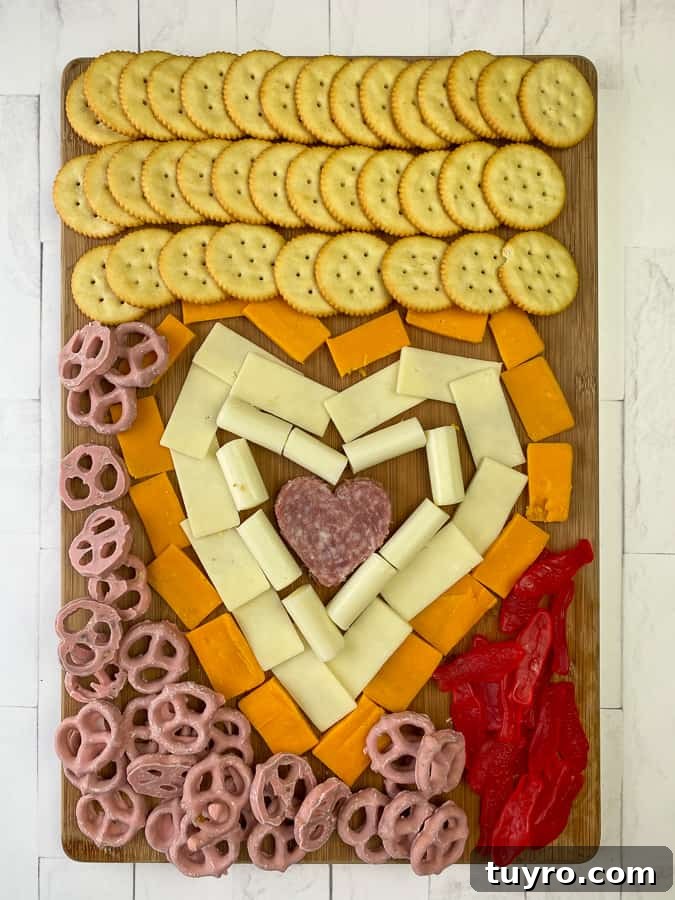
The quickest method is to simply place edible items directly on the board. That approach works especially well with young children and keeps setup and cleanup minimal.
If you want to elevate the look, use small white dishes, heart-shaped bowls, or cookie cutters laid flat to hold candies, dips or small crackers.
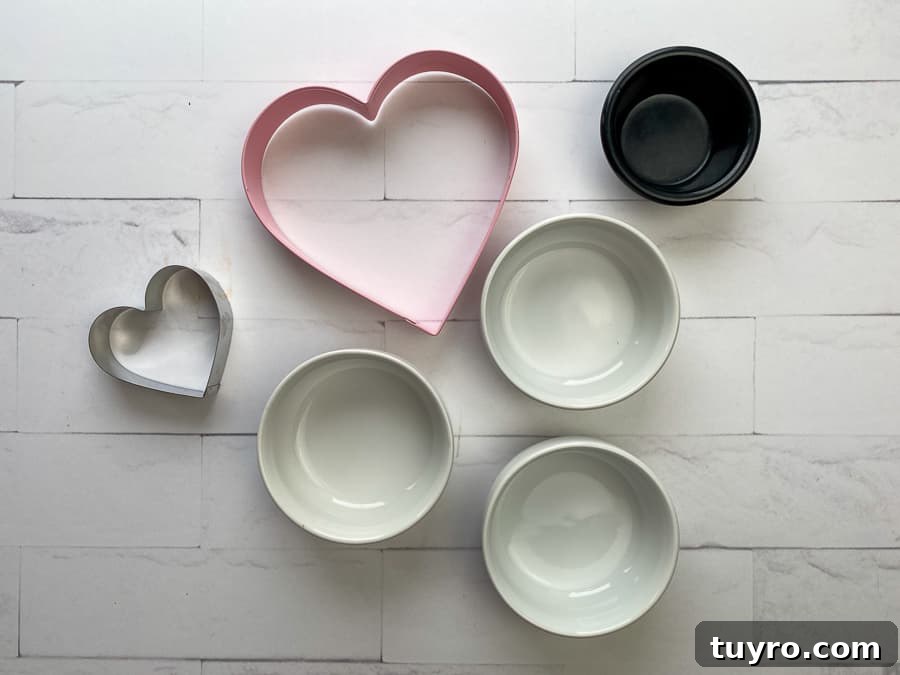
For seasonal or holiday boards, look for inexpensive themed candies and seasonal produce to keep costs down while still creating an attractive spread.
DIY Holiday & Seasonal Boards
An Easter board might feature rolled ham secured with decorative toothpicks, paired with spring fruits and cheeses. For larger gatherings, add a small dish of cheesecake dip or cinnamon fruit dip for dipping crackers and fruit.
A Halloween board can lean into black and orange items—black olives, dark chocolates, orange peppers, carrots and pumpkin candies—while a Christmas board often focuses on red and green accents with gold or silver candy touches.
Seasonal boards can highlight fresh produce, sale items or a favorite color scheme. Common staples that work year-round include grapes, peppers, oranges, pretzels, crackers, nuts, salami, pepperoni and a mix of cheeses like Colby Jack, Colby, Swiss, cheddar and mozzarella sticks.
More Easy Appetizer Recipes:
- Farmhouse Deviled Eggs or Bacon Jalapeño Deviled Eggs
- Bagel Dip
- Farmhouse Stromboli
- Cold Crab Dip
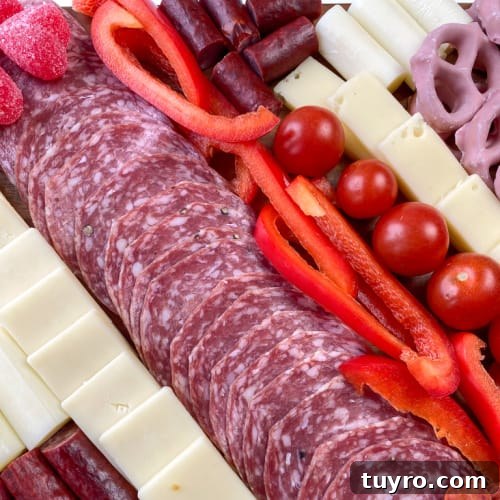
Simple Charcuterie Board
Ingredients
- 6 ounces salami
- 3 ounces pepperoni sliced
- 3 ounces beef snack sticks or summer sausage
- 4 sticks mozzarella cheese cut in half lengthwise
- 4 ounces Swiss cheese sliced
- 4 ounces white cheddar or Monterey Jack sliced
- 1 red pepper
- 1 cup cherry tomatoes
- 1 cup strawberries
- 1 cup raspberries
- 1 sleeve crackers
Instructions
-
Choose a board and set out the ingredients you plan to use.
-
Place the item you have most of in the center, then arrange contrasting colors and textures on either side to create visual balance.
-
Use slices of cheese and strips of vegetables to form lines and separate other ingredients.
-
Reserve small items like candies or berries to fill gaps and finish the edges of the board.
Notes
- Begin building the board in the center with foods you have the largest volume of, then work outward and place smaller items around the edges.
- Allow about 2–3 ounces of meat, 3 ounces of cheese, 1/2 cup of crackers and 1 cup combined of fruit and vegetables per person for a meal-sized board. For appetizers, use smaller amounts.
- If there isn’t enough room for crackers, serve them on a separate board, tray or on individual plates.
- Store leftovers in airtight containers in the refrigerator.