Understanding Pork Temperatures
Pork ribs—whether St. Louis-style spare ribs or baby back ribs—are straightforward to cook, but many home cooks and even casual grillers struggle to know precisely when they’re done. This guide explains the reliable ways to tell when your ribs are ready so you stop guessing and start serving consistently great results.
Read through this article and you’ll be able to determine with confidence when pork ribs are finished and ready to serve.
There are several common methods people use to check ribs, and conflicting advice can make it hard to choose which approach to trust. Some methods are useful as visual cues, some depend on feel, and others rely on timing. The most accurate method, however, is measuring internal temperature.
Common Methods for Checking Ribs
Popular methods to determine doneness include:
- Visual inspection — watching for the bones to pull back from the meat
- Bend test — lifting the slab and bending it slightly to see how it cracks
- Probing — inserting a thin probe or toothpick between the bones to check resistance
- Bone twisting — twisting a bone to see how it releases
- Cutting into the ribs — checking the interior color and texture (not recommended for obvious reasons)
- Cooking to a set time — following a schedule rather than testing for doneness
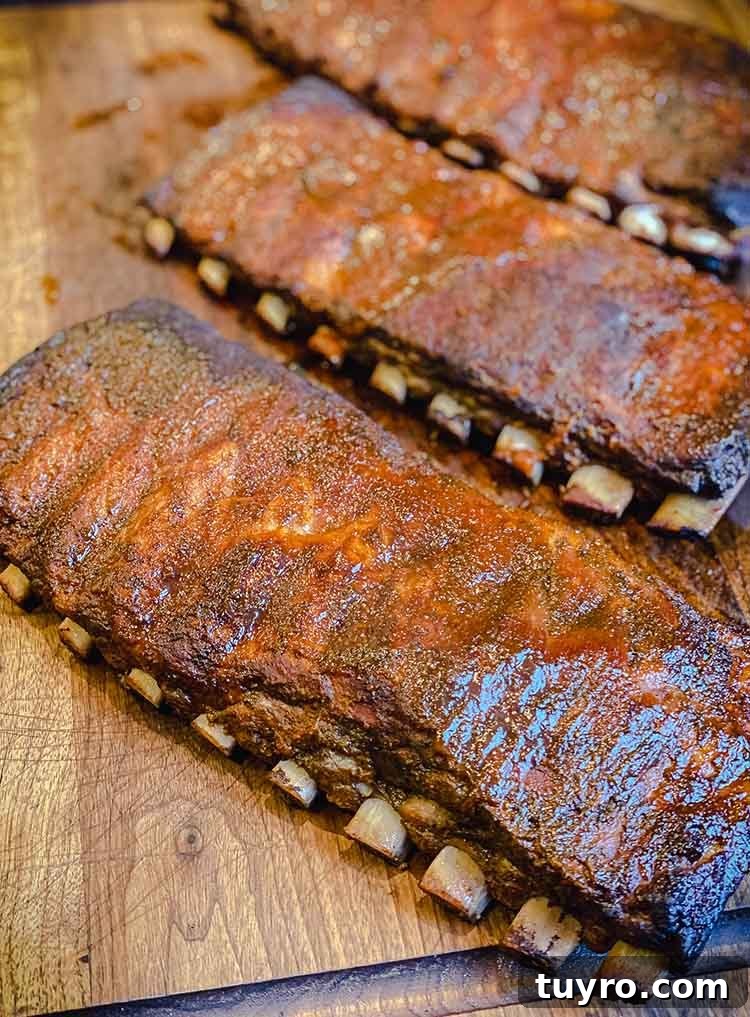
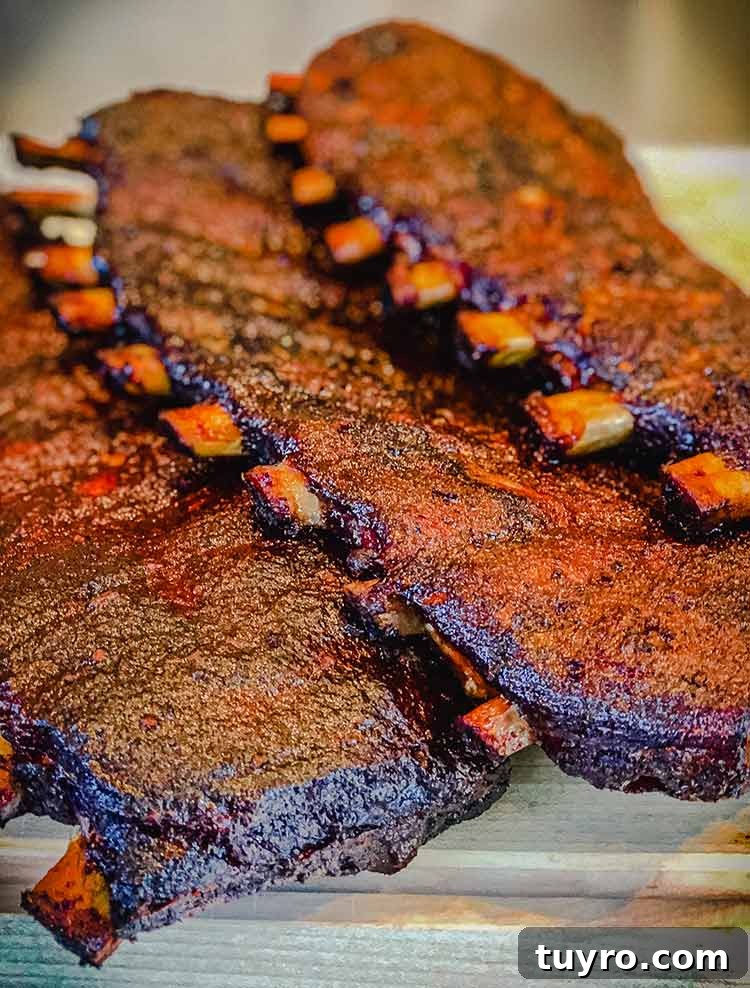
Each method has pros and cons. Visual cues like bone pullback are quick and easy: when you see about a quarter inch of bone showing along the slab, the ribs are usually nearing readiness. It’s a helpful sign but not always reliable by itself.
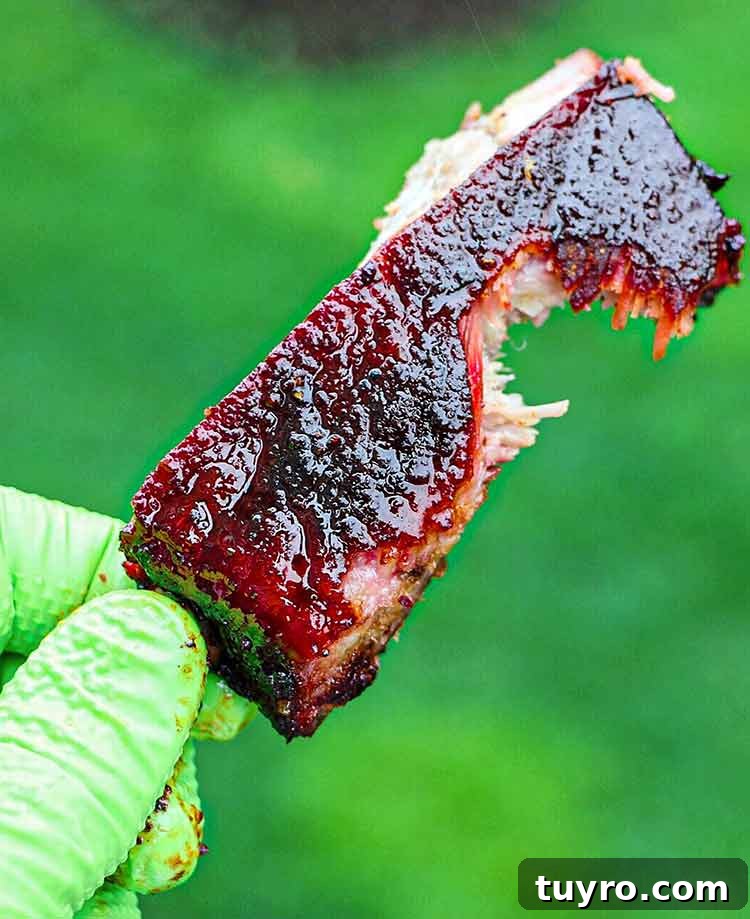
The bend test is another common technique. Using tongs or gloves, pick up the slab and bend it slightly into a U shape. If the meat cracks easily between the bones and gives noticeably, it’s a good indication the ribs are close to done. If there’s little separation and no cracking, they need more time.
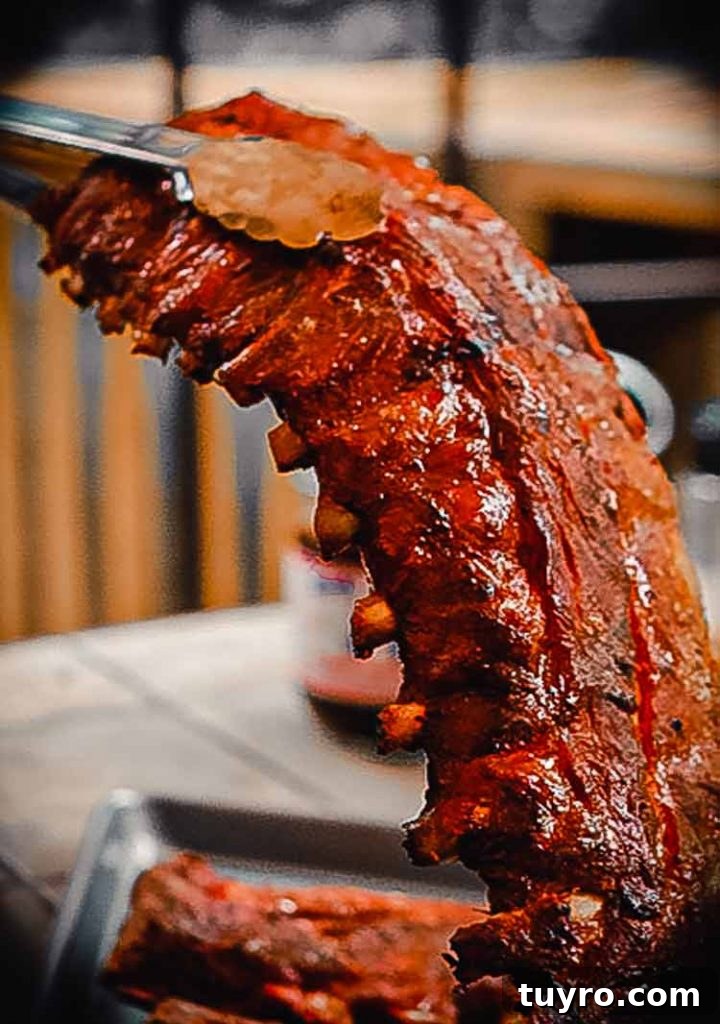
Many experienced cooks use a thin probe or toothpick to test tenderness. Slide the probe between the bones and watch how it moves: when it slides in with minimal resistance and pulls out cleanly, the ribs are typically tender and close to done.
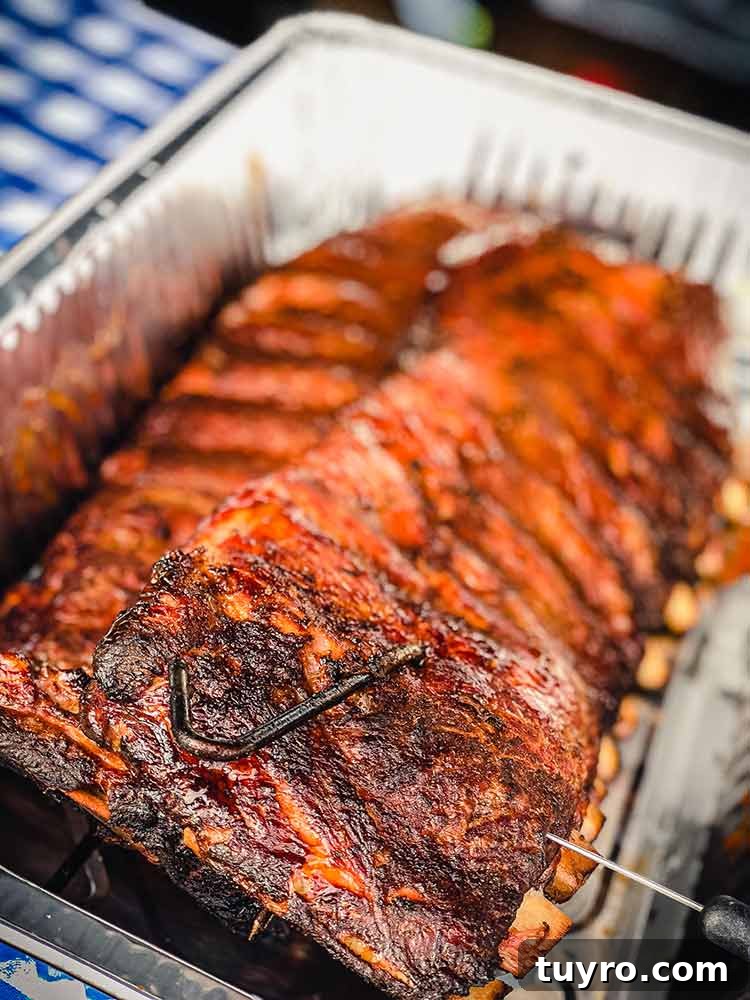
Other methods—twisting a bone, cutting into the meat, or strictly timing the cook—are used too, but each carries risks or uncertainty. Timing alone especially can be misleading due to variations in smoker temperature, rack thickness, and other factors.
What Traditional Techniques Miss: Internal Temperature
Traditional techniques are useful for progress checks but can be inconsistent. A novice might misread how much the meat should pull back, how easily a probe should slide, or how much cracking is sufficient. Additionally, some slabs won’t show pronounced bone pullback even when otherwise done.
The more important limitation is that none of these cues are perfectly reliable. If you want consistent results every time, measuring internal temperature is the best approach. It removes guesswork and protects the time and effort you invest in each cook.
At What Temperature Are Pork Ribs Done?
The USDA recommends cooking pork to an internal temperature of 145°F for safety, but that temperature leaves ribs tough and rubbery. For tender, properly rendered pork ribs, you should aim significantly higher.
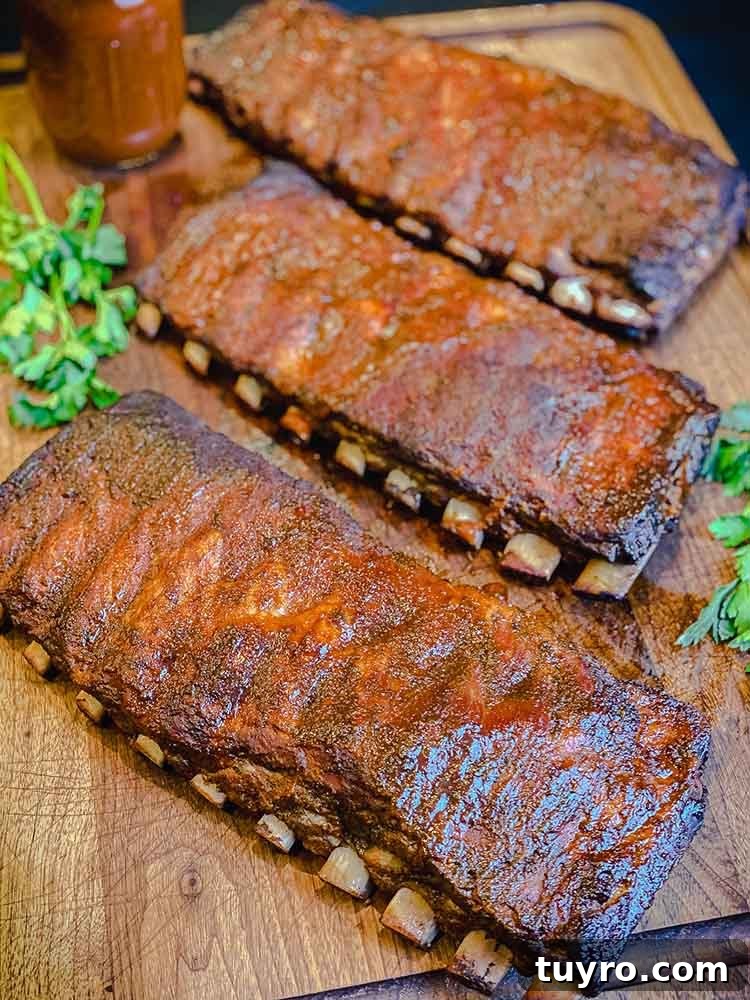
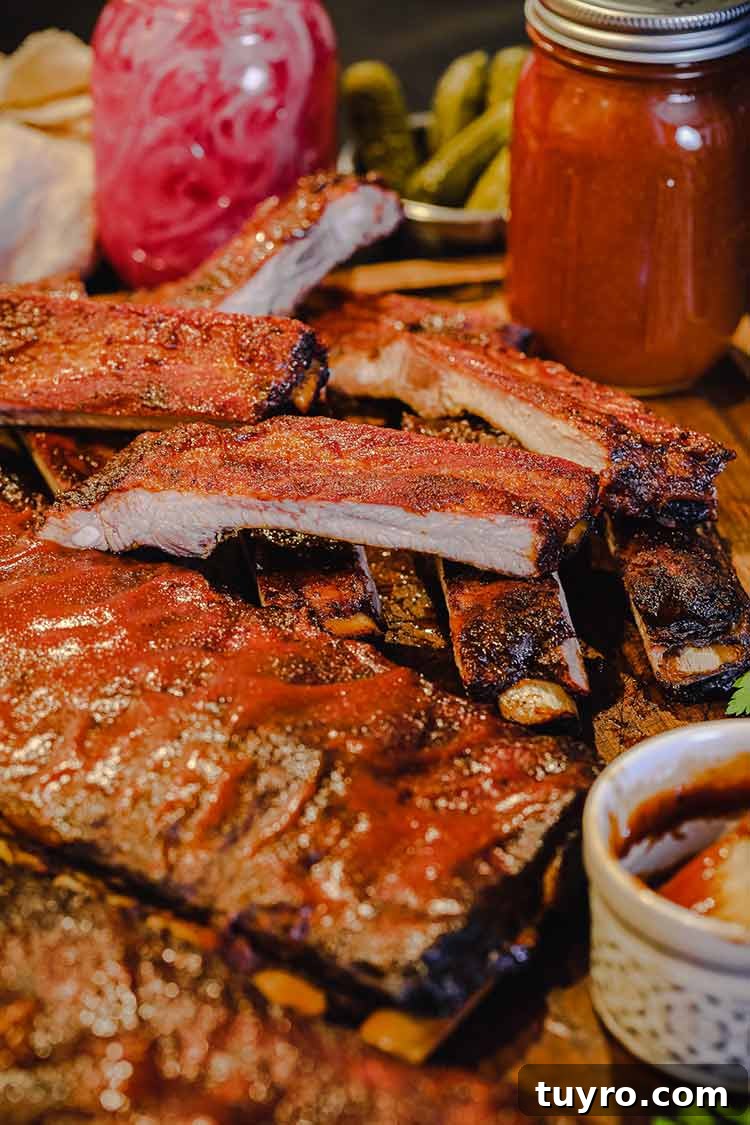
Pork ribs reach optimal tenderness when the internal temperature is between 195°F and 203°F. In this range the fat and collagen break down, producing the texture and flavor most people associate with well-cooked ribs.
My approach: when bones start to peek out and a thin probe slides in easily at about 195°F, I remove the ribs from the heat. If the probe still feels tight or bone pullback isn’t evident, I let the ribs go to 203°F before pulling them. The meat should hold together when bitten—ribs that literally fall off the bone are often overly soft and mushy, which many find less desirable.
In short: prioritize internal temperature for consistent, juicy ribs that keep diners coming back.
Can Pork Ribs Be Cooked In An Oven?
Absolutely. While you won’t get the same charcoal and smoke notes from an oven as from a smoker or grill, oven-cooked ribs can still be tender and flavorful. The method for checking doneness in the oven is the same as on the grill: use visual and tactile cues as progress indicators, but rely on internal temperature for final judgment.
Measuring Pork Temperature: The Fool-Proof Way to Know Your Ribs Are Ready
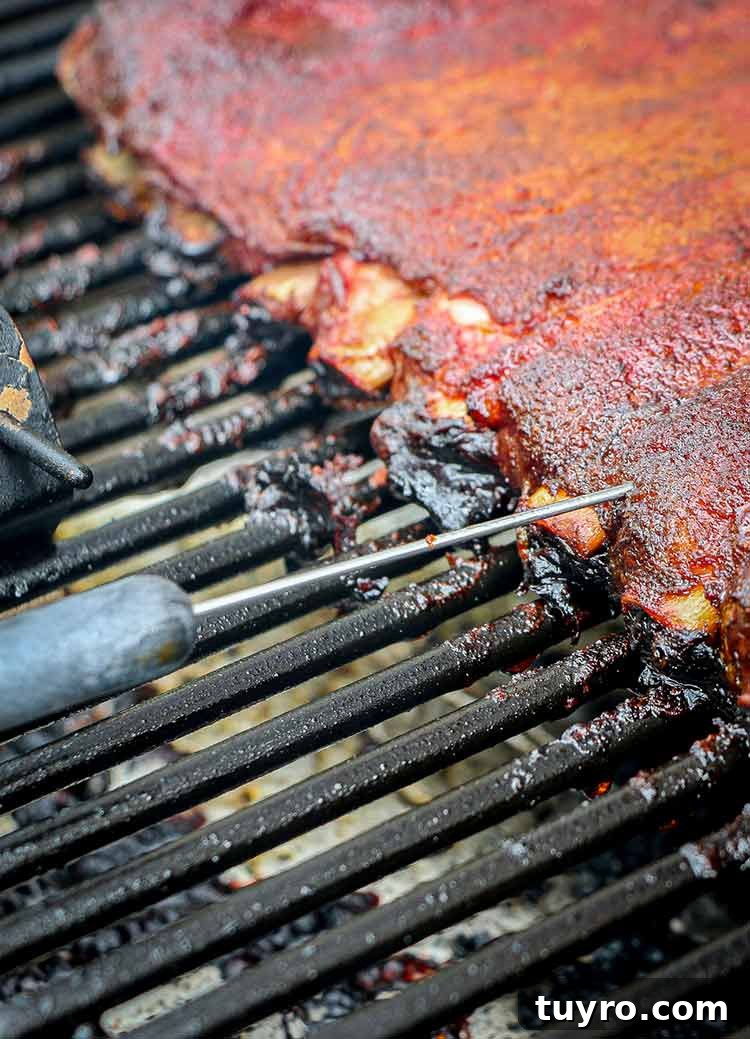
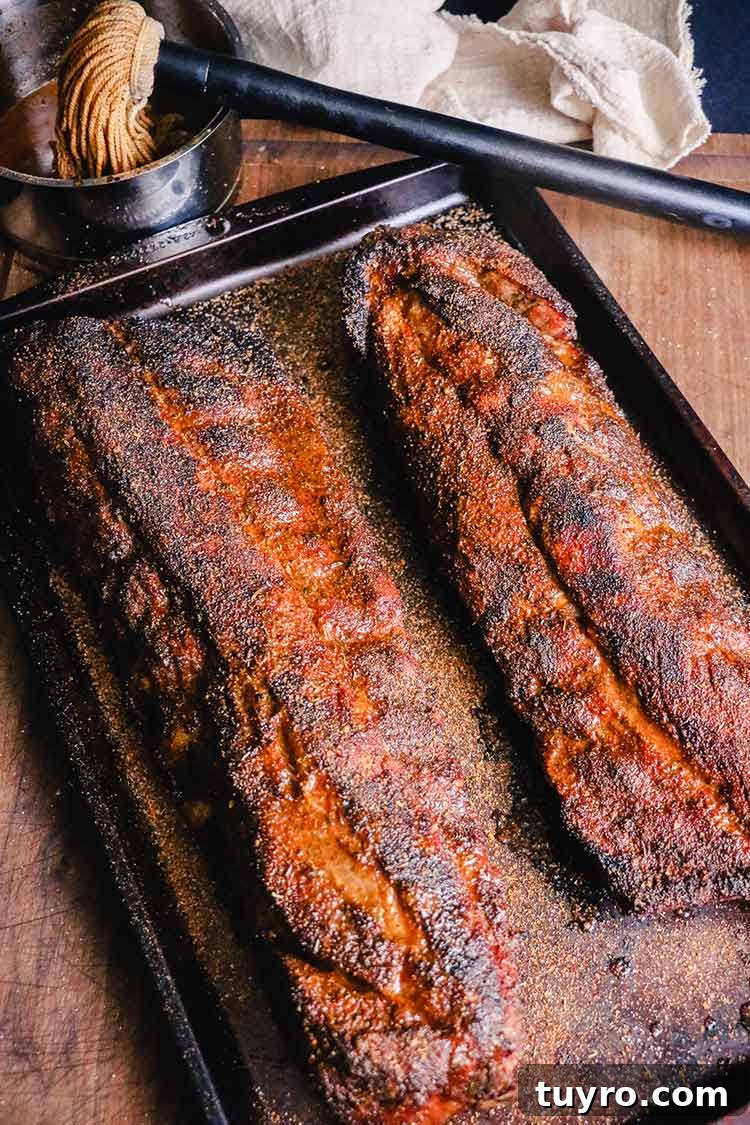
I strongly recommend prioritizing internal temperature over time or subjective tests. The challenge with many thermometers is probe thickness; thick probes can hit bone and give inaccurate readings. A thin needle-style probe is ideal for checking temperature between the bones without contacting them.
A thin-diameter probe slides easily into the meat between ribs and provides a reliable reading of the true internal temperature. Slide the probe into the center of the meat between two bones and monitor the temperature until it reaches 195°F–203°F depending on the tenderness you prefer.
Using a precise thermometer eliminates costly guesswork. Combine the thermometer with visual checks—bone pullback and the bend or probe test—to monitor progress, then trust the temperature for the final call. That’s the simplest way to achieve perfect ribs consistently.