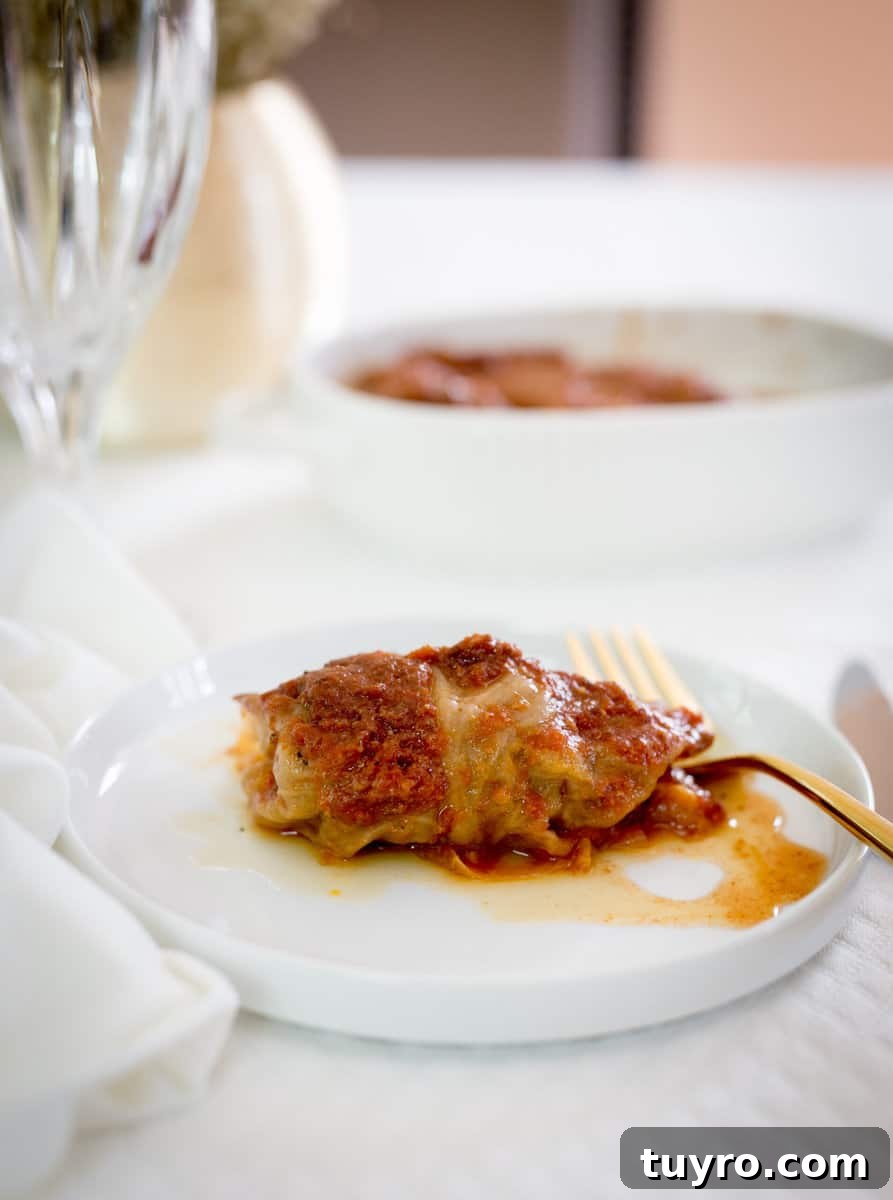
Call it what you want—stuffed cabbage is essential on Simchas Torah, and this recipe tastes just like my grandmother used to make.
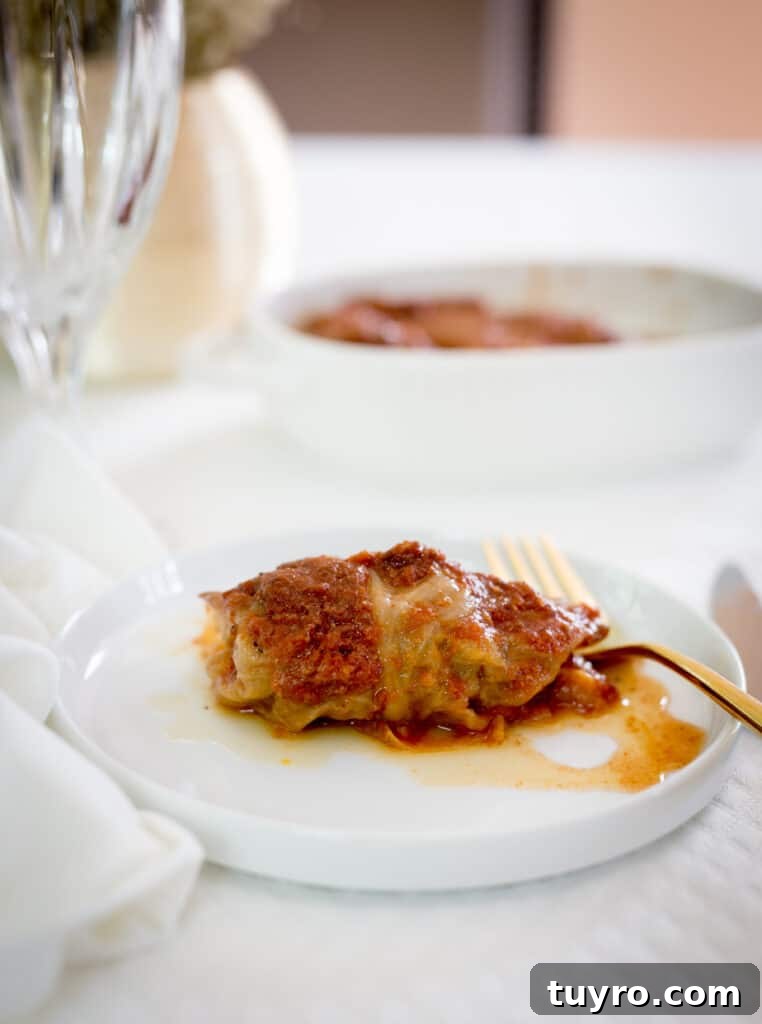
Everyone seems to have a different name and pronunciation for this dish: stuffed cabbage, chaluptches, kapusta—just a few of the variations. No matter what you call it, many families serve it on Simchas Torah night because the rolled leaves resemble the Torah scrolls we dance with.
Growing up, my grandmother always made this, and as a child I often picked the filling out and ate that first. These days, I love the cabbage leaves themselves—they’re really the star of the dish.
I used to watch my grandmother roll each cabbage leaf with such care. She made them perfectly uniform, and even when she tried to describe the technique over the phone, I couldn’t quite grasp it until I watched her in person. To help, I made a short video showing how I roll the cabbage so you can see the method step by step.
This is a true labor of love. It’s not a quick one-bowl meal, but it’s worth the effort and it freezes exceptionally well. I’ve even served cabbage rolls that were frozen from the previous year—guests raved about them, and they were surprised when I revealed how old they were.
Many traditional recipes use uncooked rice in the filling, but I found the rice often didn’t cook through even after long braising. I now use pre-cooked rice for reliably tender results and a better texture.
Although stuffed cabbage is commonly simmered on the stovetop, I prefer baking it in an oven-safe, oven-to-table dish. Baking frees you from standing at the stove, produces the same deep flavor, and looks attractive on the table—plus there’s one less pot to wash.
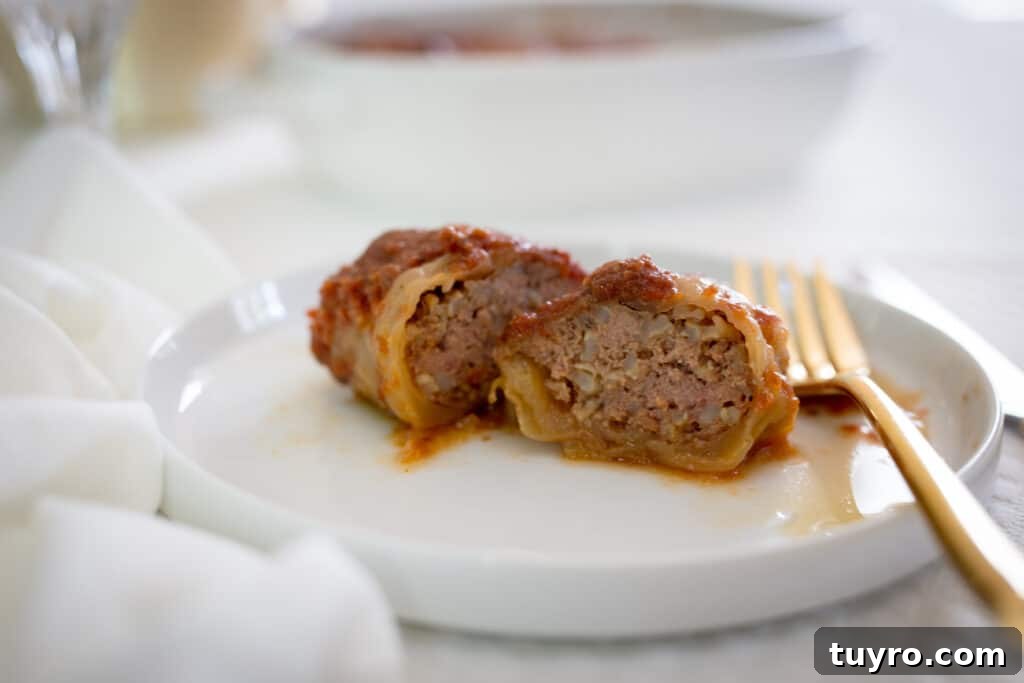
Homemade Stuffed Cabbage
Ingredients
- 1 large head of cabbage
Meat Filling
- 1¼ cups cooked rice
- 1 egg
- 2½ lbs. ground beef (approx.)
- Salt and pepper, to taste
- 1 small onion, minced
- 2 garlic cloves, minced
- ½ tsp cinnamon
- ½ tsp cumin
- 1 tsp onion powder
- 1 tsp garlic powder
Sauce
- 1 24-oz. can crushed tomatoes (or tomato sauce*)
- 1 8-oz. can tomato sauce
- 1 tsp onion powder
- 1 tsp garlic powder
- Salt and pepper, to taste
Instructions
-
Freeze the whole head of cabbage for 24–48 hours; the longer the better. Allow it to fully defrost before using—this helps soften the leaves for rolling.
-
Preheat the oven: 350°F for regular baking, or 200°F if you plan to bake overnight.
-
Remove the outer 4–6 leaves and discard. Gently separate the remaining leaves, taking care not to tear them.
-
In a bowl, combine the cooked rice, egg, ground beef, minced onion, minced garlic, cinnamon, cumin, onion powder, garlic powder, and salt and pepper to taste. Mix until evenly combined.
-
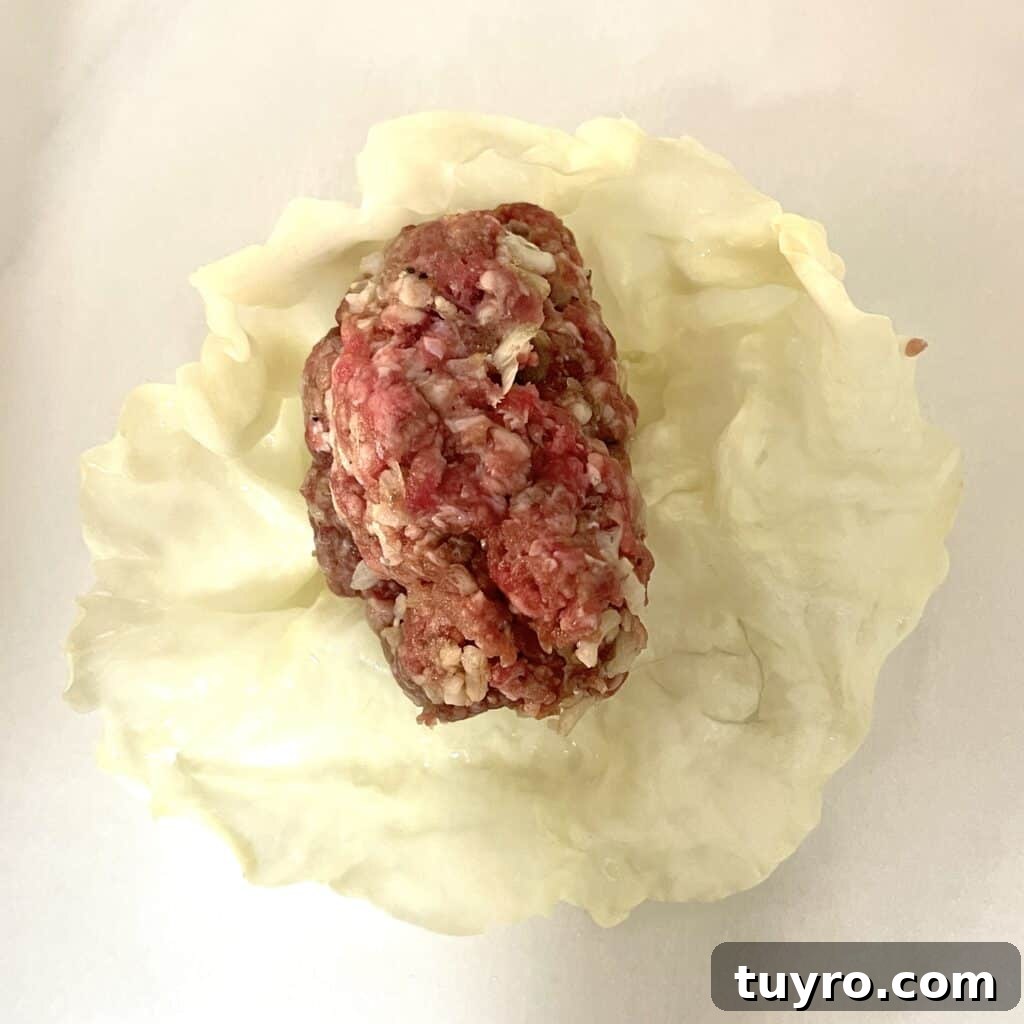
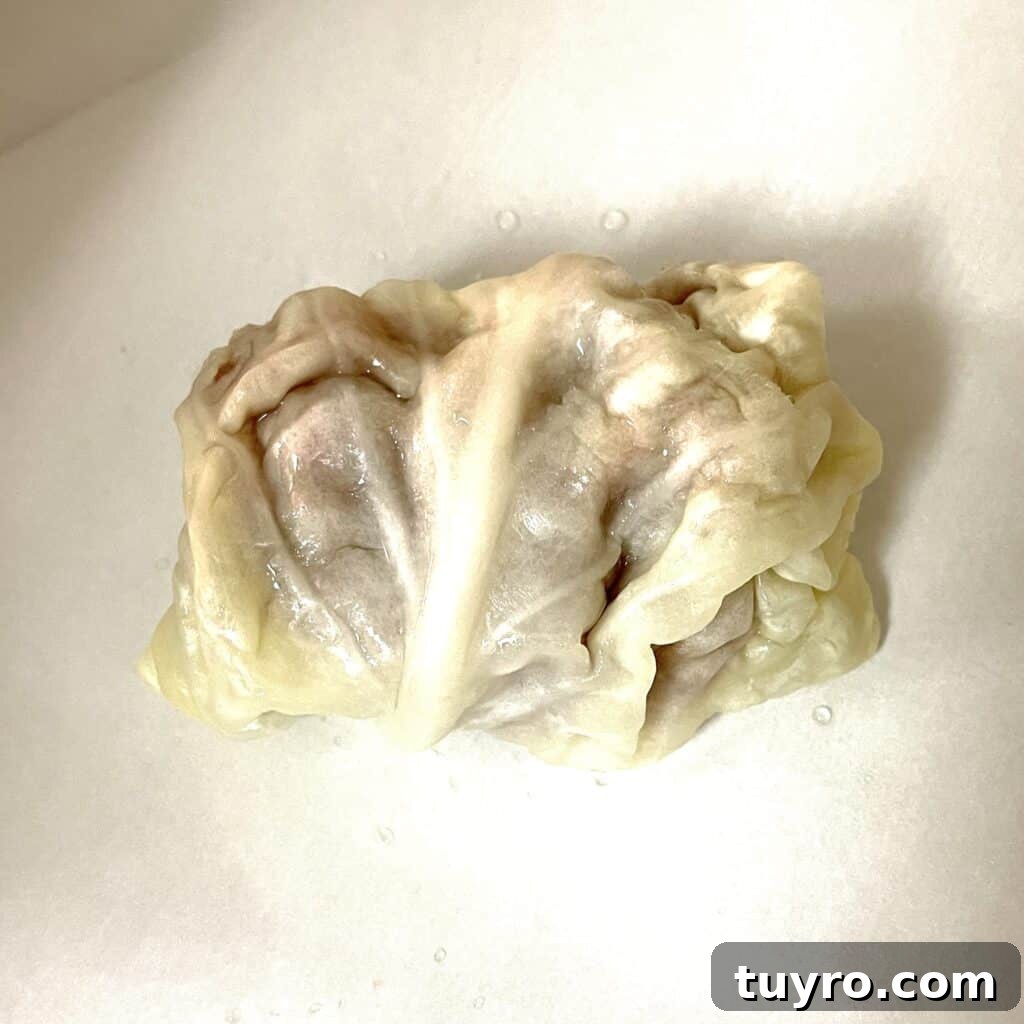
Place a small handful of filling in the center of each cabbage leaf, fold in the sides, and roll up tightly.
-
Arrange the rolls snugly in an oven-safe pan or oven-to-table dish.
-
In a large bowl, whisk together the crushed tomatoes, tomato sauce, onion powder, garlic powder, and salt and pepper to taste. Pour the sauce evenly over the cabbage rolls.
-
Cover the dish tightly and bake at 350°F for about 2 hours. For a deeper, richer flavor, bake covered overnight at 200°F for about 8 hours.
Notes

Recipe by Faigy Murray