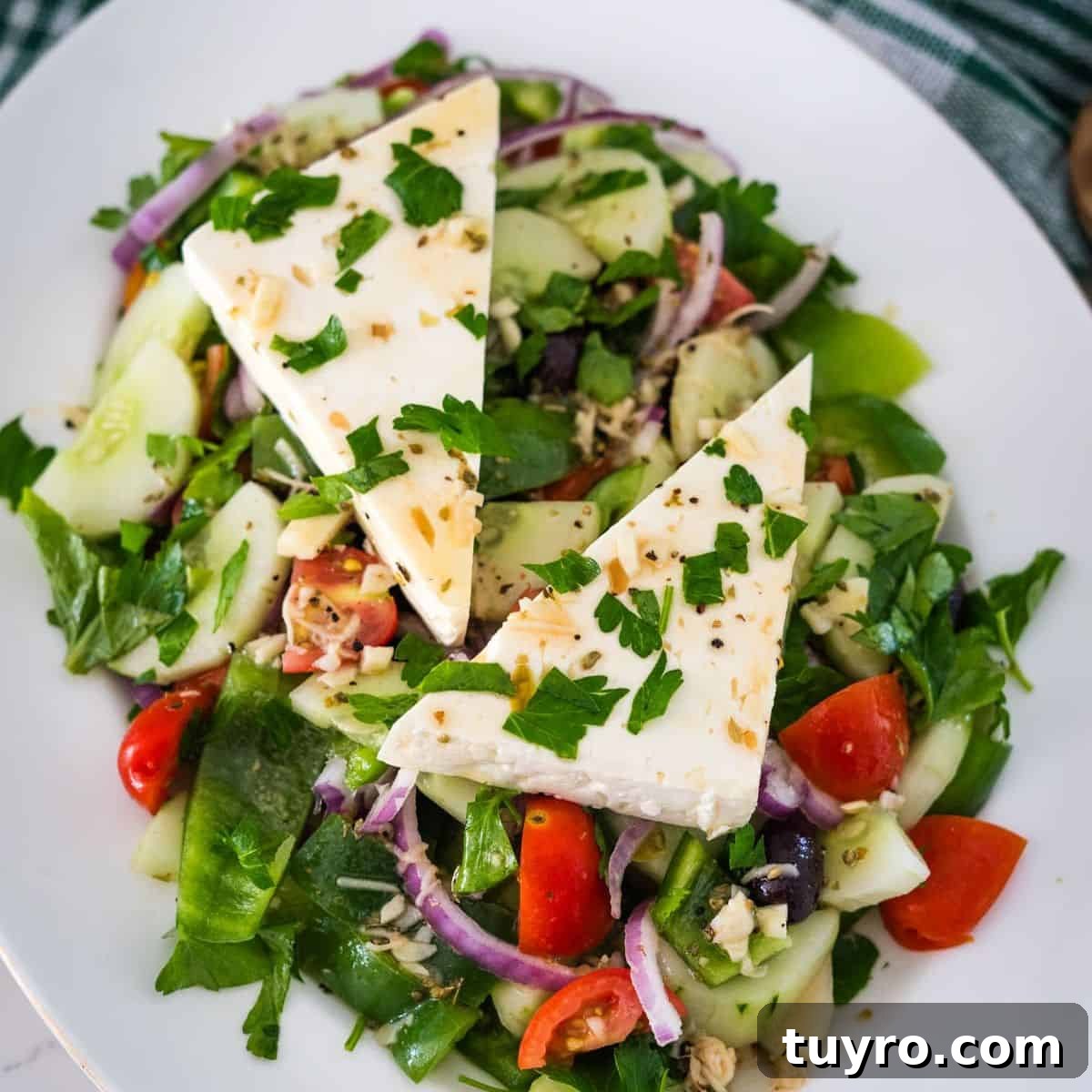
Greek village salad, also called Horiatiki salad, is a classic Mediterranean dish that celebrates the fresh, simple flavors of Greece. Ideal for warm weather, it works well as a light main course or a refreshing side. The salad is known for its bold colors, contrasting textures, and a balance of savory, tangy, and briny notes.
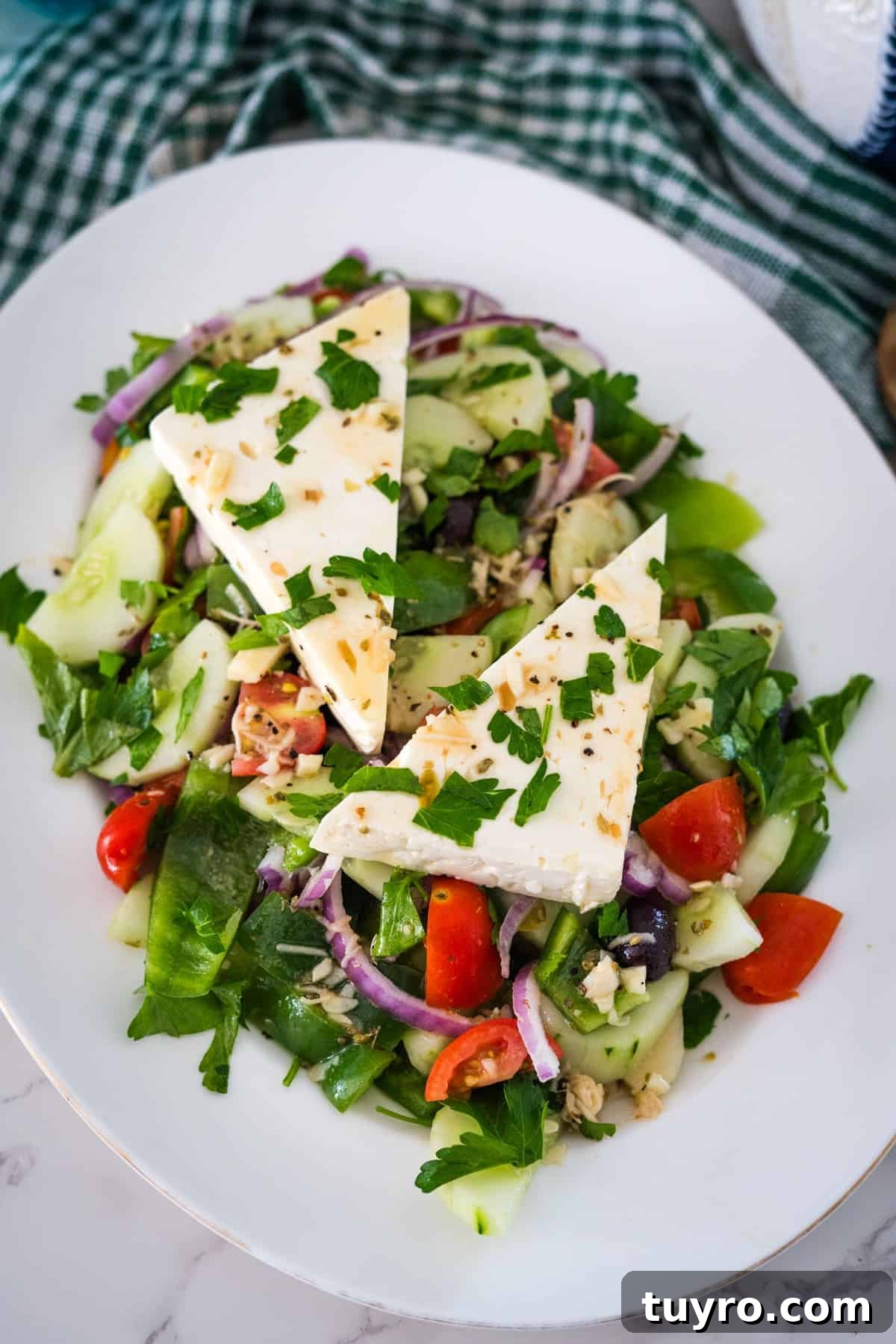
Perfect for summer, this salad requires no lettuce yet delivers satisfying crunch and flavor in every bite.
Use the table of contents below to jump to any section. The jump-to-recipe link will take you directly to the recipe card.
What is a Greek Village Salad?
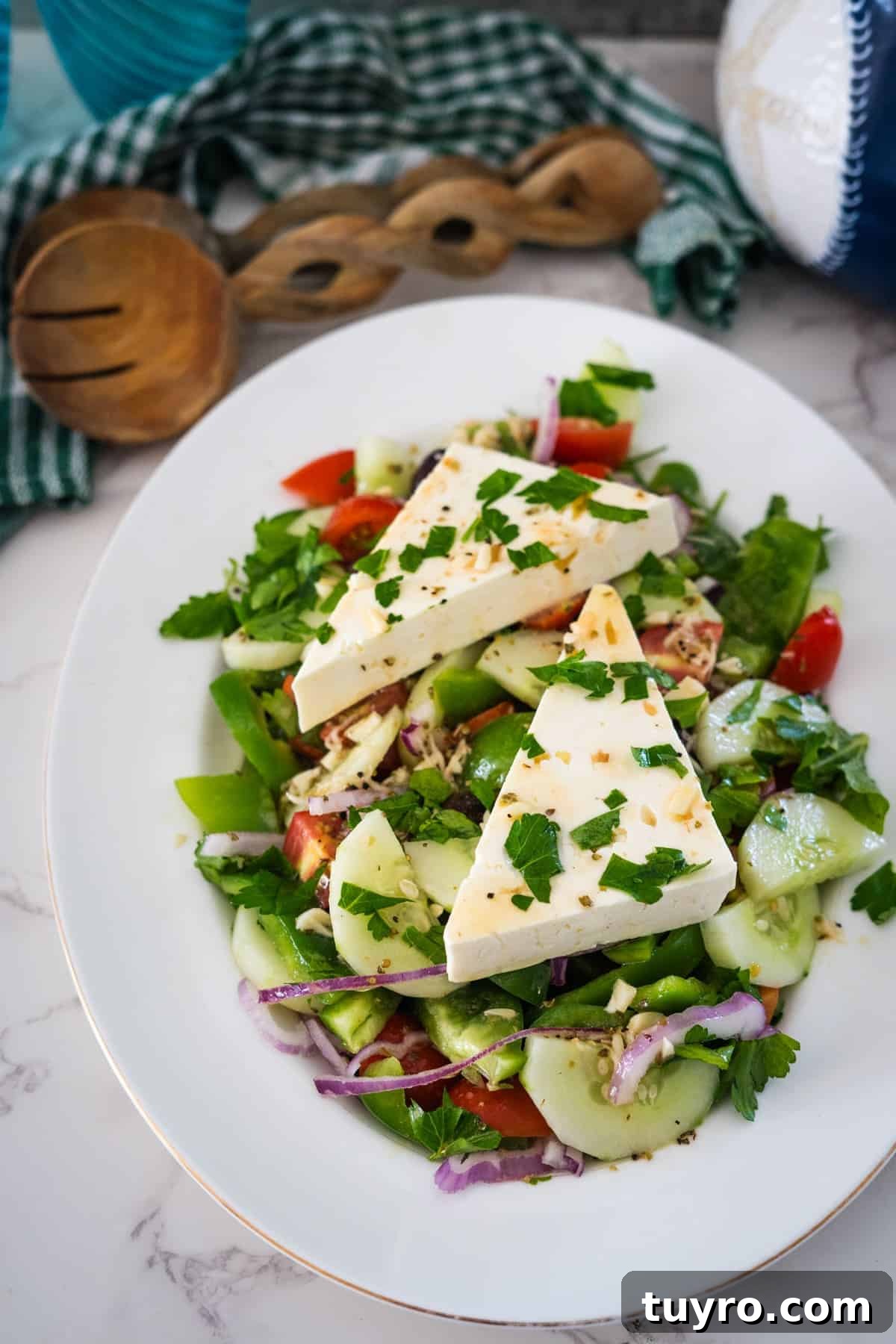
Horiatiki, meaning “village” or “peasant” salad, is the traditional Greek version made without lettuce. Typical ingredients include ripe tomatoes, cucumbers, red onion, green bell pepper, Kalamata olives, and a large slab of feta cheese. It’s dressed simply with extra virgin olive oil and dried oregano. Vegetables are generally cut into larger, rustic pieces to showcase their texture and flavor.
The term “Greek salad” is used more broadly outside Greece and can sometimes include lettuce and crumbled feta. The main distinctions are the presence of lettuce in some international versions and the presentation of the feta—either crumbled or as a block—along with how finely the ingredients are chopped.
Why You Will Love This Salad
This salad is beloved for its bright, uncomplicated flavors. Ripe tomatoes deliver sweetness and acidity, cucumbers add cooling crunch, red onion provides a sharp bite, green pepper contributes fresh crispness, and Kalamata olives bring a briny depth. A generous slab of feta adds creamy, salty richness that ties everything together.
A simple dressing of olive oil, red wine vinegar, oregano and a touch of mustard (optional) enhances the ingredients without overpowering them. The result is a vibrant, satisfying dish that feels light yet filling.
Ingredients
This version includes a couple of optional, non-traditional items for extra flavor—omit them if you prefer a more classic Horiatiki.
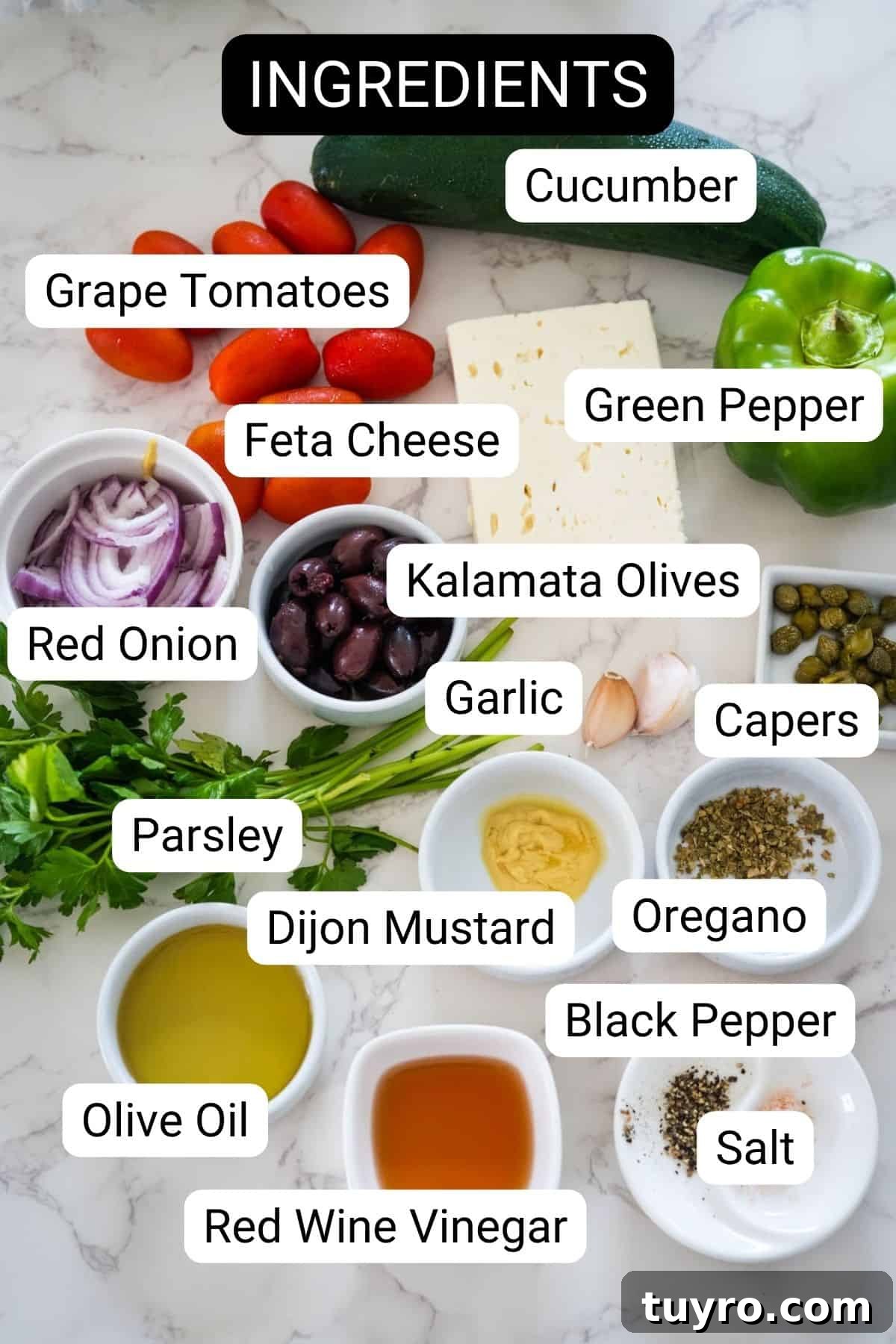
- Cucumber – Persian or English cucumbers are best, with thin skins and crisp texture.
- Tomatoes – vine-ripened, heirloom, or cherry/grape tomatoes work well.
- Green Bell Pepper – adds mild sweetness and crunch.
- Kalamata Olives – briny and tangy, a Greek staple.
- Feta Cheese – choose authentic Greek feta (sheep’s milk or mixed) for creaminess and saltiness.
- Red Onion – thinly sliced; soaking in cold water for a few minutes mellows sharpness.
- Dried Oregano – the classic herb for Horiatiki.
- Extra Virgin Olive Oil – use a high-quality oil for the best flavor.
- Red Wine Vinegar – provides brightness and balance.
- Capers – optional; add a tangy, briny note that complements the olives.
- Dijon Mustard – optional in the dressing for subtle complexity.
- Flat Leaf Parsley – optional garnish for freshness.
- Garlic – optional, minced into the dressing for extra zing.
How to Make Greek Village Salad
Follow these straightforward steps to assemble a vibrant, flavorful salad.
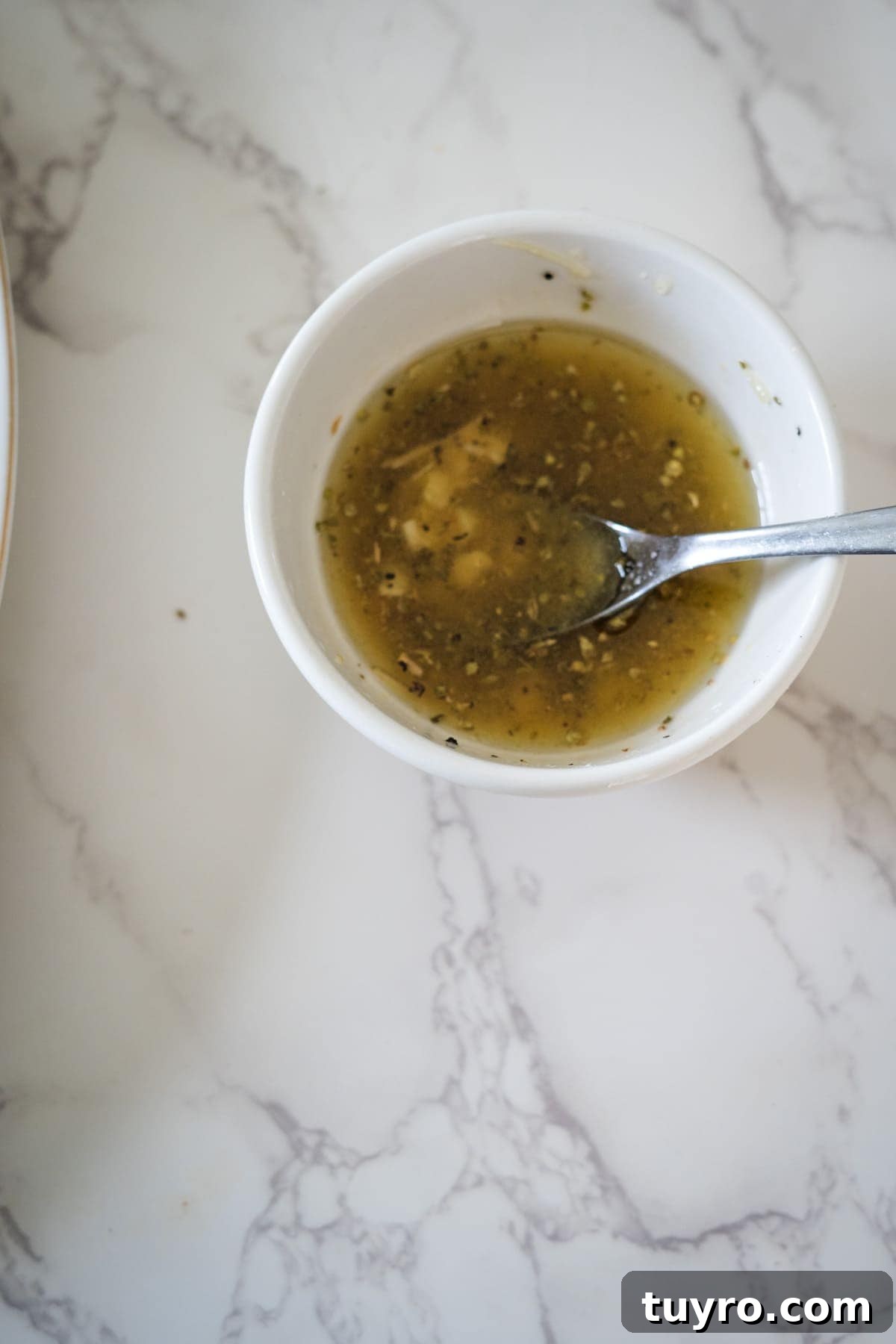
Whisk the dressing ingredients together in a small bowl until well combined.
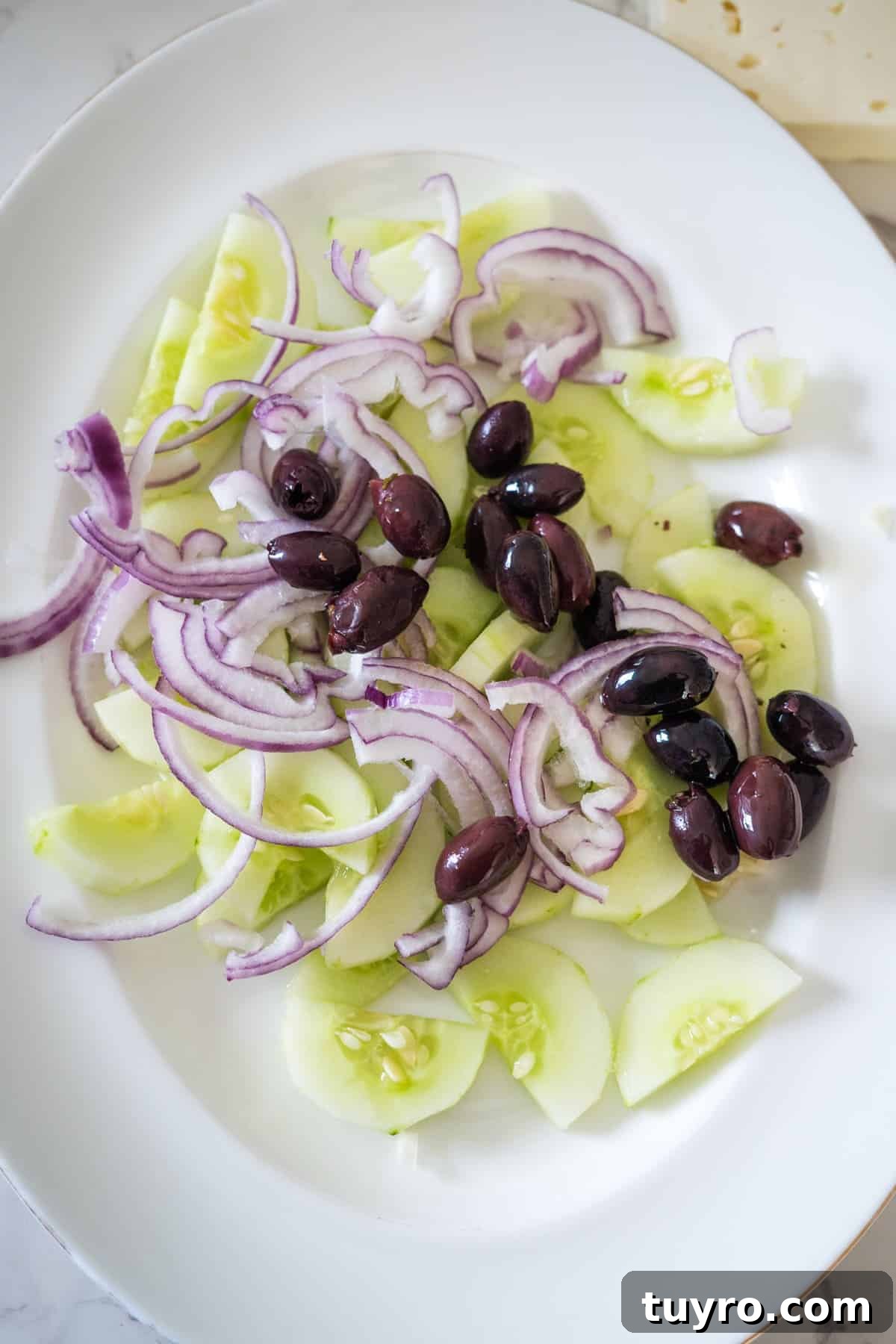
Chop the vegetables into rustic, bite-sized pieces and arrange them in a large serving dish.
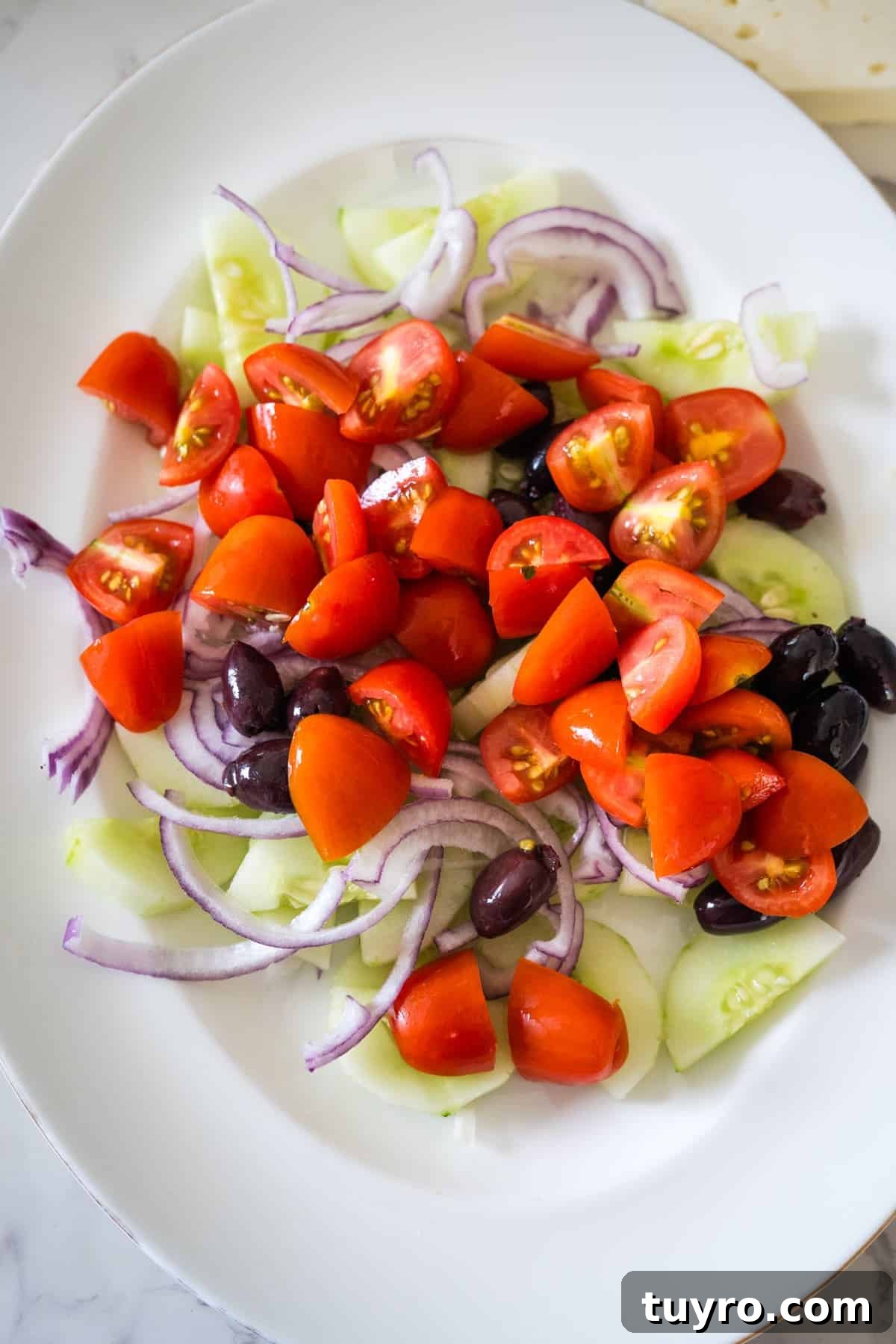
Add the chopped tomatoes to the serving dish.
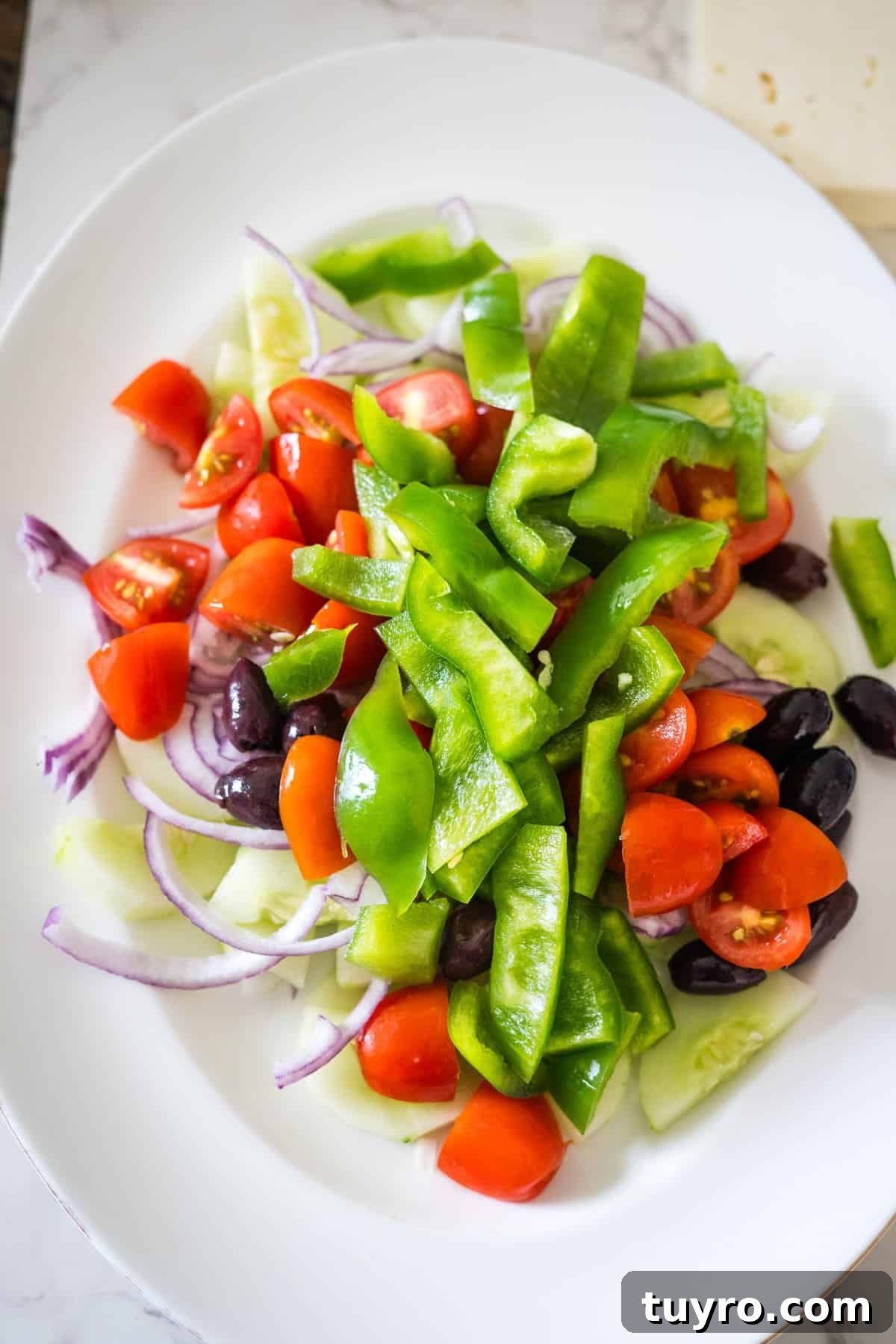
Include the chopped green bell pepper and olives.
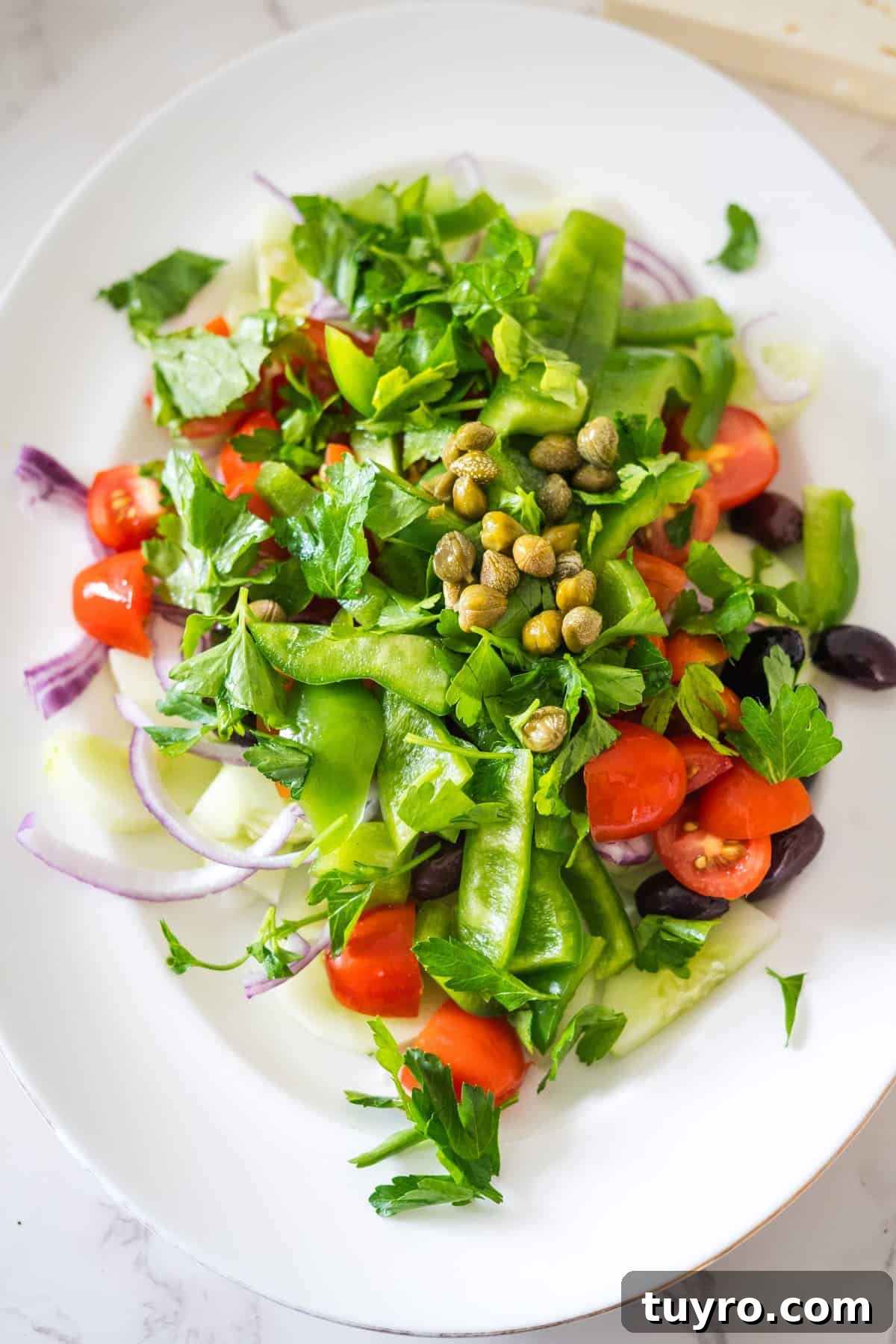
Sprinkle capers and chopped parsley over the vegetables, if using.
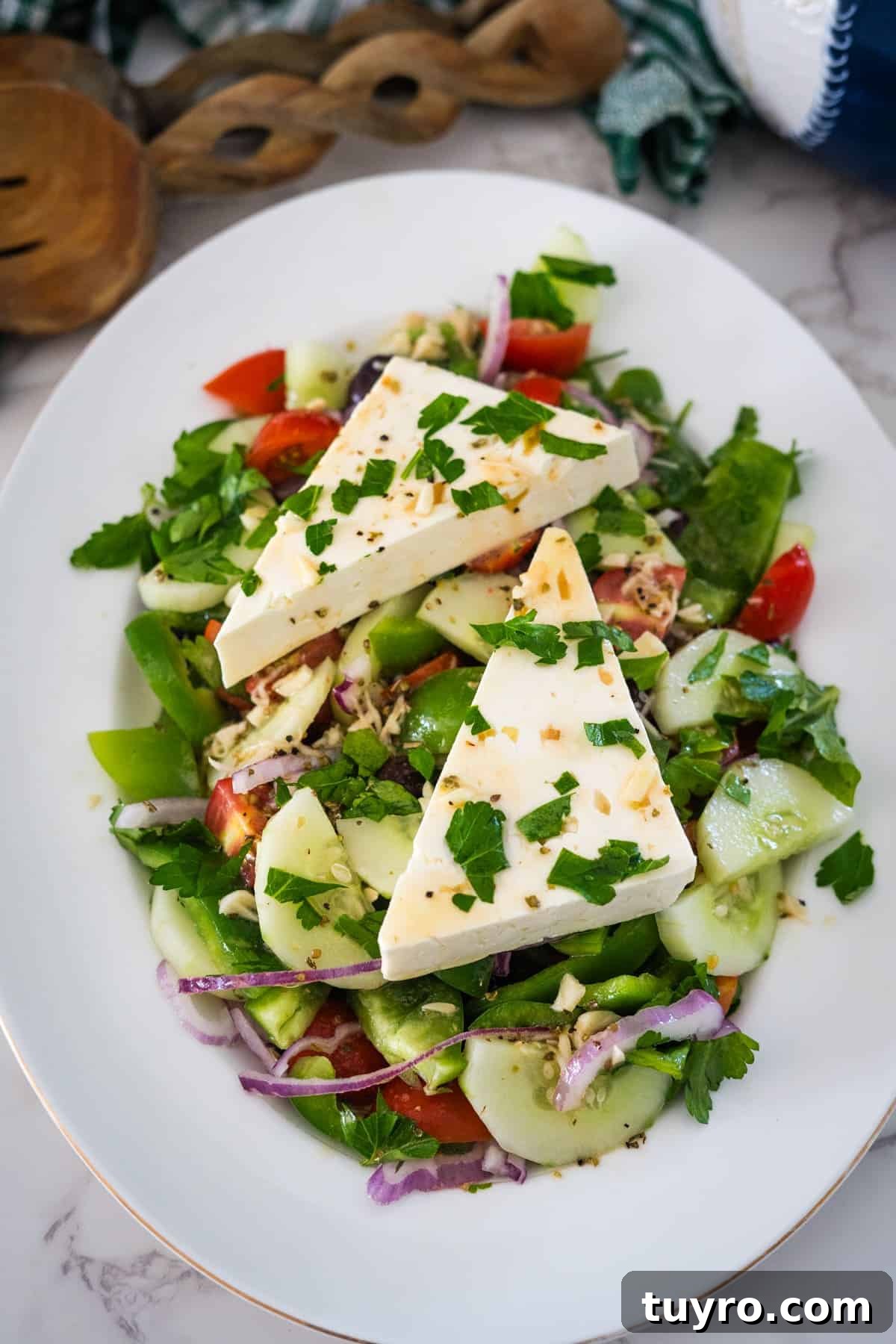
Drizzle the dressing over the salad and toss gently. Top with a slab or slices of feta cheese and serve.
Storage
Horiatiki is best eaten fresh. If you have leftovers, store them in an airtight container in the refrigerator for up to 2 days. Keep in mind that vegetables will soften over time and feta can absorb liquid, so for the freshest texture consider adding a little extra feta when serving leftovers.
Horiatiki Salad Recipe Tips
Choose the freshest, highest-quality produce and olive oil you can find; the salad relies on ingredient quality. To tame strong red onion, soak slices in cold water for 10–15 minutes before draining. For a more cohesive flavor, chill the salad for about 30 minutes before serving so the dressing can meld with the vegetables.
What to Serve with Greek Village Salad
Horiatiki pairs beautifully with grilled meats such as chicken, lamb, or pork. Its bright flavors cut through rich, smoky dishes and complement souvlaki or grilled kebabs. It also works well alongside pita and tzatziki, or as part of a mezze spread with roasted vegetables, spanakopita, and grilled seafood.
More Salad Recipes Without Lettuce
Salads can be creative and hearty without relying on lettuce. Try other vegetable-forward recipes for variety and lower carbs.
Greek Village Salad (Horiatiki Salad)
Angela Coleby
Need Metric Measurements?
Use the unit toggle to switch between US customary and metric measurements.
Ingredients
- 1 large cucumber, English or Persian
- 1 green bell pepper
- 2 cups chopped tomatoes
- 5 oz Feta cheese
- ½ red onion, finely sliced
- ⅓ cup Kalamata olives
- 1 tablespoon capers optional
- 2 tablespoons flat leaf parsley, chopped optional
Salad Dressing
- ¼ cup olive oil
- 3 tablespoons red wine vinegar
- 2 cloves garlic, minced optional
- 1 teaspoon dried oregano
- ¼ teaspoon Dijon mustard
- ¼ teaspoon salt
- ¼ teaspoon black pepper
Instructions
-
Chop the green bell pepper into chunks and remove the seeds.
-
Cut the cucumber into chunks; peel first if you prefer.
-
In a large serving dish, combine cucumber, tomatoes, pepper and sliced red onion.
-
Scatter parsley and capers over the vegetables, if using.
-
Whisk the dressing ingredients together in a small bowl until combined.
-
Drizzle the dressing over the salad and toss gently to coat.
-
Top the salad with feta slices or a slab of feta, add a final drizzle of dressing, and serve.
Notes
Chill for 30 minutes before serving to allow flavors to meld.
Nutrition
Nutrition info is an estimate provided by an online calculator.

Discover a collection of salad recipes designed for low-carb eating, including a variety of dressings and vegetable-forward combinations.
Downloadable eBook available.