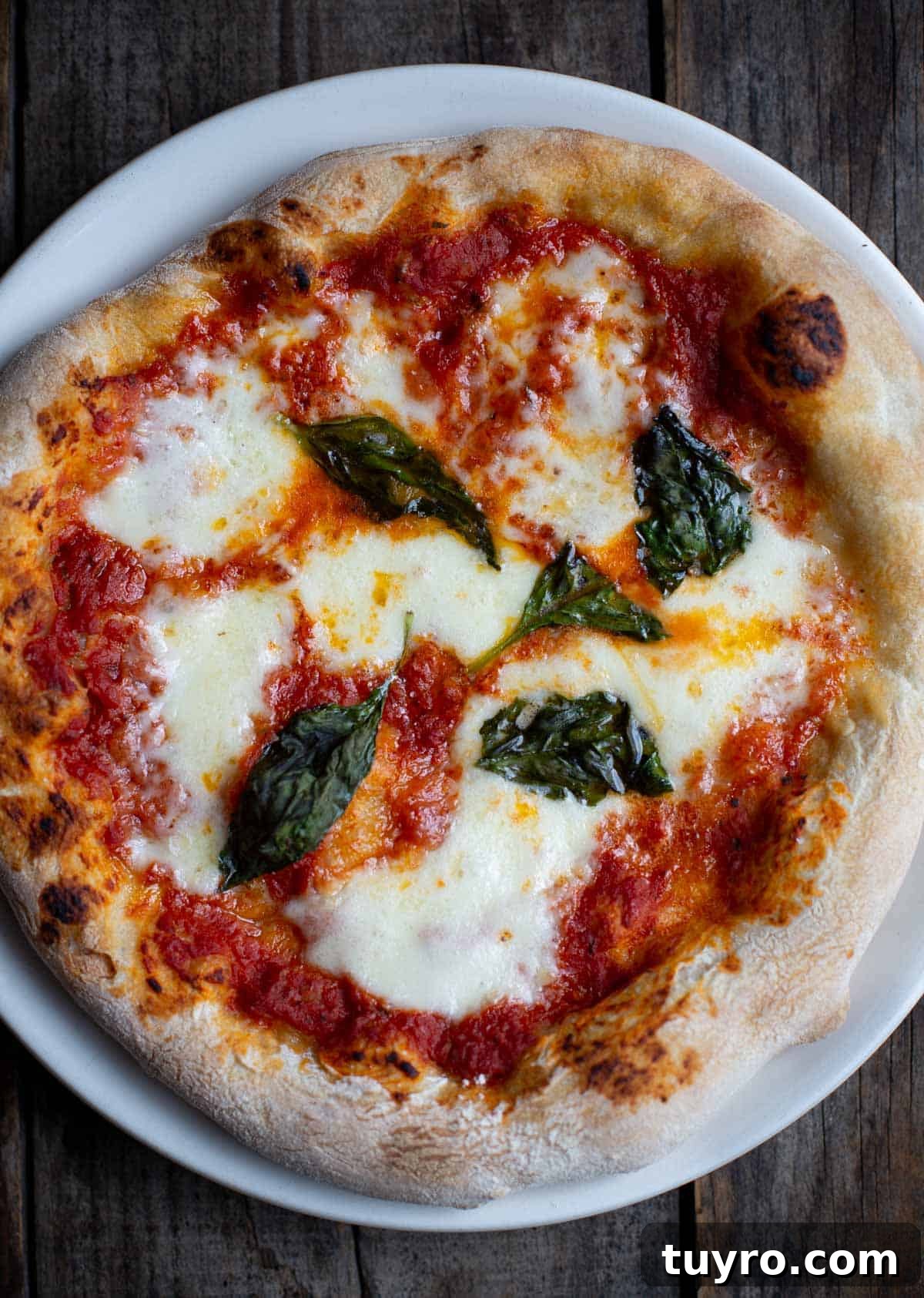
If you love a classic Neapolitan-inspired pizza, this Margherita Pizza Recipe is a beautiful place to start. Made with simple ingredients, a hot stone, and carefully handled dough, it delivers a chewy crust, fresh tomato flavor, melted mozzarella, and fragrant basil in every bite.
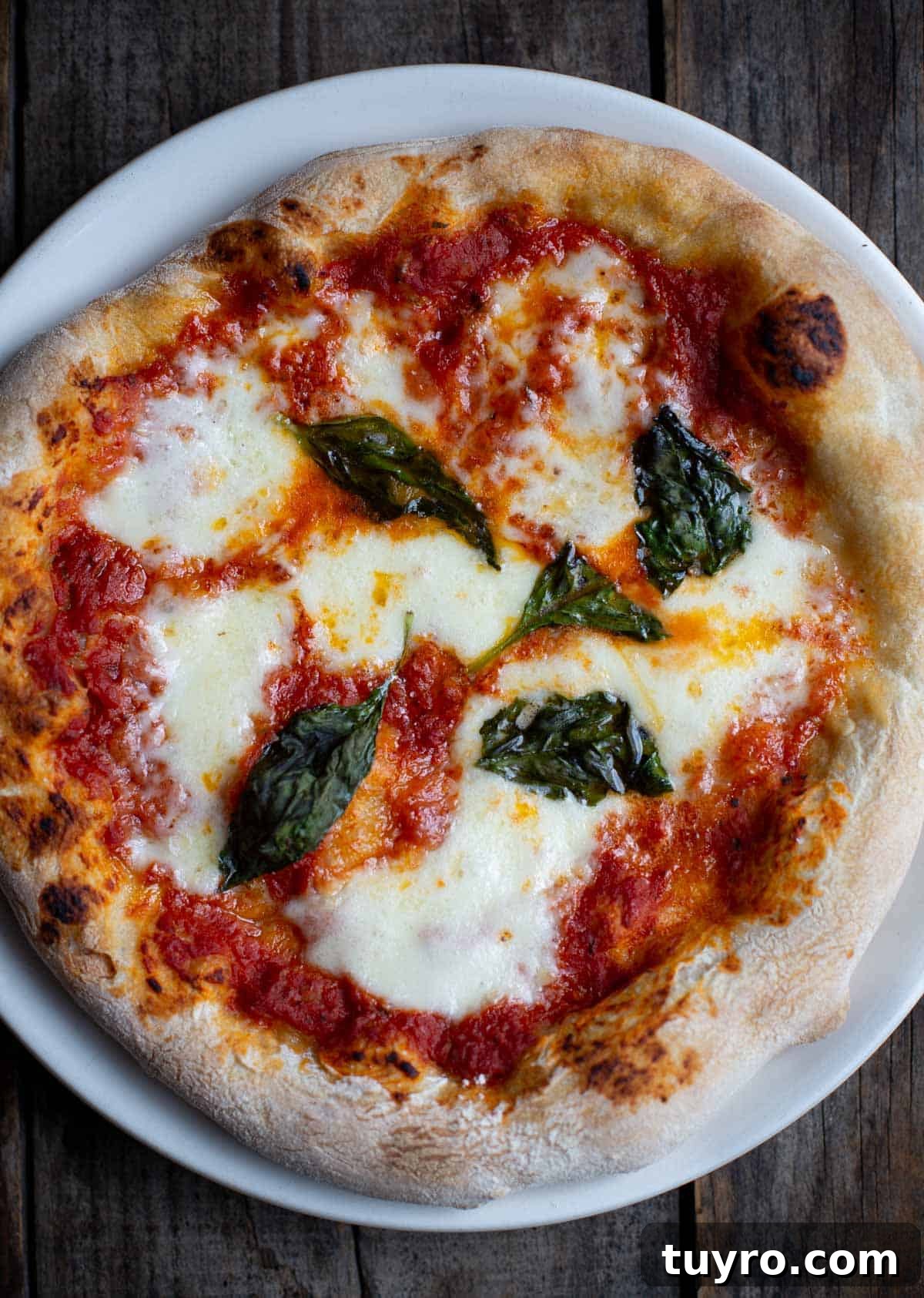
Margherita pizza is one of the most loved styles of pizza because it proves that great food does not need to be complicated. With a balanced dough, a thick tomato sauce, fresh mozzarella, basil, olive oil, and a little finishing salt, you can make a pizza that tastes clean, bright, and deeply satisfying. The key is heat. A hot pizza stone helps create the signature chewy crust, lightly charred edges, and crisp base associated with Neapolitan-style pizza.
This recipe is designed for an outdoor pizza oven, where the stone can reach about 700 degrees F. That high heat allows the dough to cook quickly while the cheese melts and the crust puffs beautifully. If you do not have an outdoor pizza oven, you can still make a delicious Margherita pizza in a home oven using a pizza stone and broiler method. The texture will be slightly different, but the result is still flavorful, fresh, and worth making.
Table of Contents
- Margherita Pizza Recipe Highlights
- History
- What is Margherita Pizza
- Ingredients
- Basic Tools
- Preparation
- How to Make Margherita Pizza
- Modification for Indoor Oven
- Troubleshooting
- Recommended Sides
- Other Pizza Inspired Recipes
- Margherita Pizza Recipe
Margherita Pizza Recipe Highlights
- This pizza uses a short list of simple ingredients: dough, tomato sauce, fresh mozzarella, basil, olive oil, and salt.
- The dough is the most important part of a good Margherita pizza because it controls the texture, rise, and chew.
- For the best Neapolitan-inspired crust, the pizza stone should reach about 700 degrees F (370 degrees C).
- An outdoor tabletop pizza oven works best, but the recipe can be adapted for a kitchen oven at 550 degrees F.
- A thick, low-moisture sauce and well-drained mozzarella help prevent the pizza from becoming soggy.
History
Neapolitan pizza comes from Naples, Italy, and true certified Neapolitan pizza follows very specific standards. These standards cover the size of the dough, the ingredients, the style of cheese, the cooking method, and the cooking time. Because of those strict requirements, this recipe is best described as Neapolitan-inspired rather than certified Neapolitan pizza.
The inspiration remains the same: a small round pizza cooked quickly at high heat, with a tender base, airy rim, light charring, fresh tomato, mozzarella, and basil. This Margherita pizza recipe focuses on those classic elements while keeping the method practical for home cooks.
What is Margherita Pizza
Margherita pizza is a classic pizza style known for its simplicity. It is usually made as a 10 to 12-inch round pizza with a thin center and a slightly raised outer crust. When cooked at high heat, the crust develops a chewy texture, a lightly crisp base, and small charred spots often called leopard spots.
The texture comes from properly fermented dough and intense heat. As the pizza cooks, air pockets in the dough expand quickly, creating a light, puffy rim. The sauce should be fresh and not too watery. The mozzarella should melt without releasing too much liquid. The basil adds aroma and freshness, while a small drizzle of extra virgin olive oil brings everything together.
Traditional versions are cooked in very hot pizza ovens with a stone floor and heat moving across the top of the pizza. That combination cooks the dough rapidly and melts the cheese at the same time. At home, the goal is to get as close to that environment as possible.
Ingredients
For the best Margherita pizza, use fresh, high-quality ingredients and avoid overloading the dough. Too much sauce, cheese, or moisture can make the center wet and prevent the crust from cooking correctly.
- Pizza dough: Use a good dough with about 66% hydration if possible. A dough ball weighing 220 to 250 grams is ideal for one 10 to 11-inch pizza.
- Tomato sauce: A classic sauce can be as simple as tomatoes and salt. The most important detail is texture. The sauce should be thick, not watery.
- Fresh mozzarella: Mozzarella packed in water works well, but press out excess moisture before adding it to the pizza. Tear or cut it into smaller pieces for even melting.
- Extra virgin olive oil: Add a light drizzle after baking for richness and aroma.
- Fresh basil: Basil gives Margherita pizza its signature fresh flavor.
- Finishing salt: A small amount of flake salt at the end enhances the tomato, cheese, and crust.
Most store-bought pizza dough has a higher hydration level, often closer to 70%. That can still work, but it may need a slightly longer cooking time and closer attention, especially in a very hot outdoor pizza oven.
Basic Tools
A few basic tools make a big difference when making homemade Margherita pizza. You do not need a complicated setup, but you do need equipment that can handle high heat and help move the pizza safely.
- Pizza stone: A pizza stone stores heat and helps create a better crust. If using a home oven, make sure the stone fits with the oven door fully closed.
- Wooden pizza peel: A wooden peel stays cooler than metal, which helps the dough slide into the oven more easily.
- IR thermometer: An infrared thermometer lets you measure the surface temperature of the pizza stone, which is essential for consistent results.
- Turning peel: This is optional but very useful in a dedicated pizza oven because it makes rotating the pizza easier.
Preparation
Before shaping the pizza, let the dough come to room temperature. Cold dough is tight, difficult to stretch, and more likely to tear. Room-temperature dough is softer, easier to handle, and better at forming the airy crust that makes this style so appealing.
Outdoor Pizza Oven
- Preheat the pizza oven until the pizza stone reaches 700 degrees F. Use an IR thermometer to confirm the stone temperature.
- Lightly flour a wooden pizza peel so the dough can slide easily.
- Place the dough ball in the center of the peel. Use your fingers to gently press from the center outward, slowly stretching the dough into a 10 to 11-inch round.
- Leave the outer edge slightly thicker than the center. This creates the raised crust.
- Do not use a rolling pin. Rolling can push out the air pockets that help create the best texture.
- Gently pat the center of the dough to remove large bubbles, but do not dock it with a fork.
- Lift the edges and add a little more flour if needed so the dough moves freely on the peel.
- Add the toppings and bake immediately.
How to Make Margherita Pizza
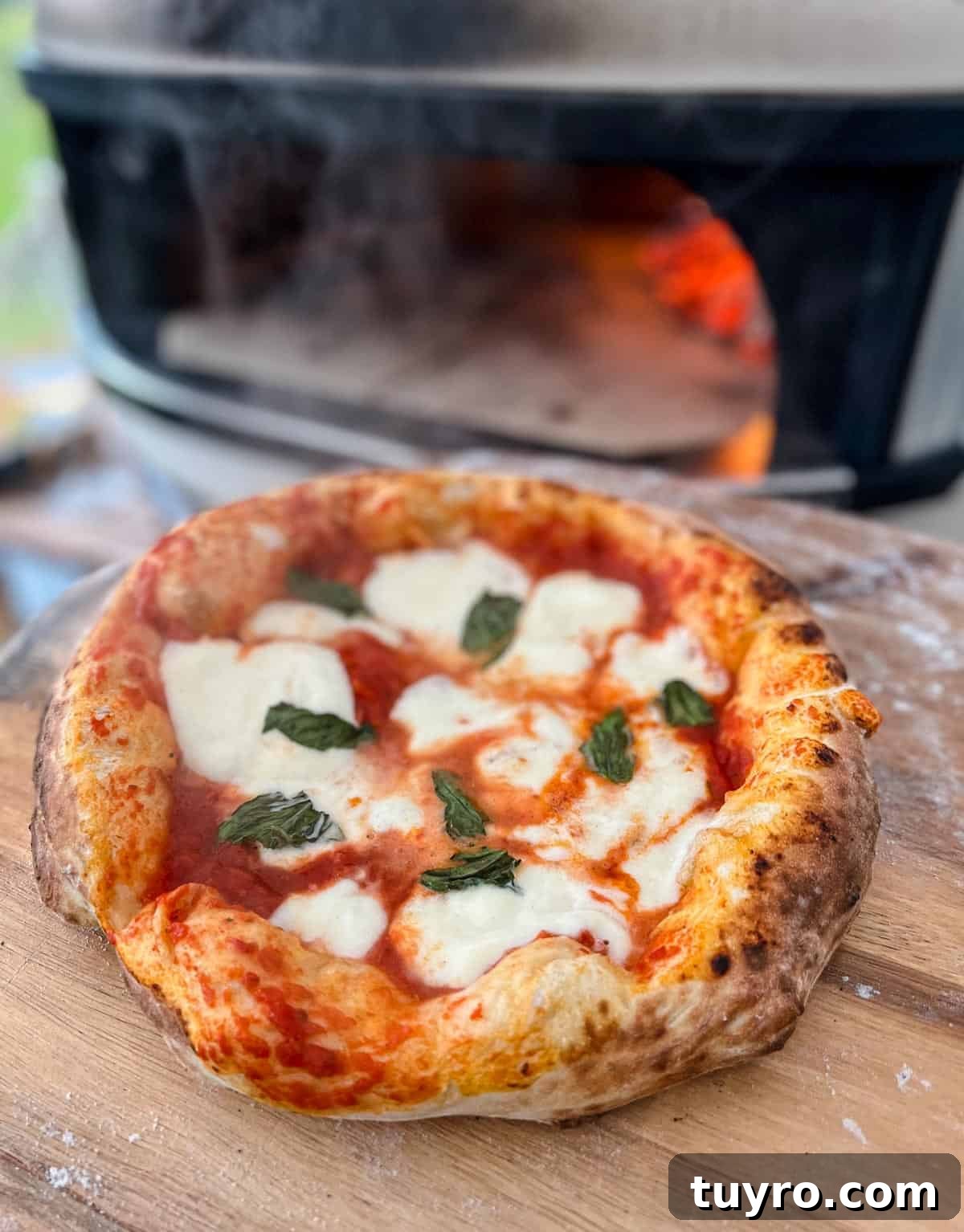
This method is ideal for compact outdoor pizza ovens and other high-heat pizza ovens. Once the oven and stone are fully preheated, the pizza cooks very quickly.
Total cooking time, not including preheating: less than 90 seconds
- With the shaped dough still on the floured peel, spoon a light layer of tomato sauce over the center. Do not add too much sauce.
- Add the fresh mozzarella, spacing the pieces evenly. Add the basil.
- Slide the pizza onto the 700 degrees F stone.
- Rotate the pizza every 10 to 15 seconds with a turning peel so it cooks evenly on all sides.
- When the crust is puffed, the cheese is bubbling, and the base has light leopard spotting, remove the pizza from the oven.
- Finish with a small drizzle of extra virgin olive oil and a pinch of finishing salt.
- Slice and serve while hot.
Modification for Indoor Oven
If your oven cannot heat a pizza stone to 700 degrees F, use the highest oven setting available, along with a pizza stone and broiler. This method helps build more heat into the stone and gives the top of the pizza enough heat to melt the cheese.
Total cooking time, not including preheating: 8 minutes
- Place the pizza stone on the third rack position from the broiler, about 6 to 8 inches below it. Preheat the oven and stone to 550 degrees F for 30 minutes.
- Turn the broiler to high for 10 minutes to increase the stone temperature. Do not place the stone on the top rack, as intense heat may crack it.
- After 10 minutes, turn off the broiler and set the oven back to 550 degrees F. Slide the pizza directly onto the stone.
- Cook for 2 minutes, then rotate the pizza 180 degrees using a turning peel or tongs.
- Cook for another 4 minutes, then turn the broiler back on high.
- Broil for about 2 minutes, or until the mozzarella is melted and the dough is cooked through.
- Remove the pizza, add finishing salt, slice, and serve.
Troubleshooting
Dough: For the best Margherita pizza texture, use a lower-hydration dough when possible. Homemade dough gives you more control over moisture, fermentation, and dough ball size. If you use store-bought dough, watch it carefully and adjust the cooking time as needed.
Stone Temperature: The stone must be hot enough to cook the base quickly. If the stone is too cool, the top may cook before the bottom is done, leaving the center soft or pale. Use an IR thermometer for the most accurate reading.
Pizza Too Wet: Excess moisture usually comes from watery sauce, wet mozzarella, or dough with too much hydration. Use thick sauce, press the mozzarella before adding it, and avoid over-topping the pizza.
Pizza Sticking to the Peel: Make sure the peel is lightly floured before shaping. After adding toppings, give the peel a gentle shake. If the dough does not move, lift the sticky area carefully and add a little more flour underneath.
Recommended Sides
Margherita pizza pairs well with fresh, simple sides that do not overpower the pizza. A crisp salad or lightly charred vegetable is an excellent choice.
- Grilled Romaine Caesar Salad
- Charred Broccolini
- Simple green salad with olive oil and vinegar
- Fresh tomatoes with basil and salt
Other Pizza Inspired Recipes
- Smoked Buffalo Chicken Pizza
- Pear and Prosciutto Flatbread
- Smoked Brisket Pizza
- BBQ Chicken Pizza
Margherita Pizza Recipe
Equipment
- Digital scale
- IR thermometer
- Pizza stone
- Wooden pizza peel
- Turning pizza peel
Ingredients
- 1 pizza dough, ideally 66% hydration and 220 to 250 grams
- ⅓ cup thick pizza sauce
- 90 grams fresh mozzarella cheese, pressed to remove excess water
- 6 pieces fresh basil
- 1 teaspoon extra virgin olive oil
- 1 teaspoon flake salt for finishing
Instructions
-
Warm Oven: Preheat the pizza oven until the pizza stone reaches 700 degrees F. Measure the stone with an IR thermometer. Lightly flour a wooden pizza peel.
-
Prep Dough: Place the dough ball on the peel. Use your fingers to press from the center outward, stretching the dough into a 10 to 11-inch round while leaving a slightly thicker edge.
-
Make Pizza: Gently pat the center of the dough to remove large bubbles. Do not use a fork. Add a light layer of tomato sauce, then top with mozzarella and fresh basil.
-
Bake: Slide the pizza onto the hot stone. Rotate every 10 to 15 seconds until the crust rises, the cheese bubbles, and the bottom develops light charred spots.
-
Finish: Remove the pizza from the oven. Drizzle lightly with extra virgin olive oil, add finishing salt, slice, and serve.
Notes
Kitchen Oven Method: If you do not have an outdoor pizza oven, preheat a pizza stone at 550 degrees F for 30 minutes. Turn the broiler on high for 10 minutes, then return the oven to 550 degrees F and bake the pizza directly on the stone.
- Place the stone about 6 to 8 inches below the broiler.
- Preheat the oven and stone to 550 degrees F for 30 minutes.
- Broil on high for 10 minutes to increase the stone temperature.
- Turn off the broiler, return the oven to 550 degrees F, and place the pizza on the stone.
- Bake for 2 minutes, rotate, then bake for 4 more minutes.
- Turn the broiler back on and cook for about 2 minutes, or until the cheese melts and the crust is cooked.
Nutrition
| Carbohydrates: 193g
| Protein: 51g
| Fat: 37g
Nutrition information is automatically calculated and should be used only as an approximation.