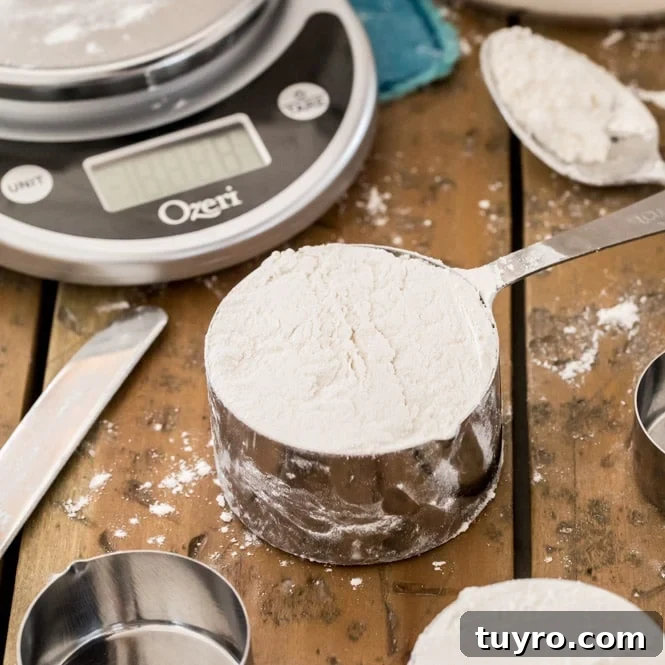
Today I’m sharing a short and practical kitchen tip: how to measure flour the right way. One of the easiest ways to ruin baked goods is improper flour measurement, and it’s surprisingly common. Below I’ll explain the correct and incorrect methods, and I’ve included photos and a short video to illustrate.
Baking is chemistry, and precise ingredient measurements are critical to a recipe’s success. Flour often makes up the largest portion of dry ingredients (aside from sugar), so knowing how to measure it correctly will improve the texture and consistency of your baked goods.
If your homemade brownies came out too cakey, chocolate chip cookies turned out flat, birthday cake was dry, or sugar cookie dough was crumbly, the likely culprit is mis-measured flour. I’ve faced those frustrations too, and the fix is simple once you know the right technique.
So How Do I Measure My Flour?
DO:
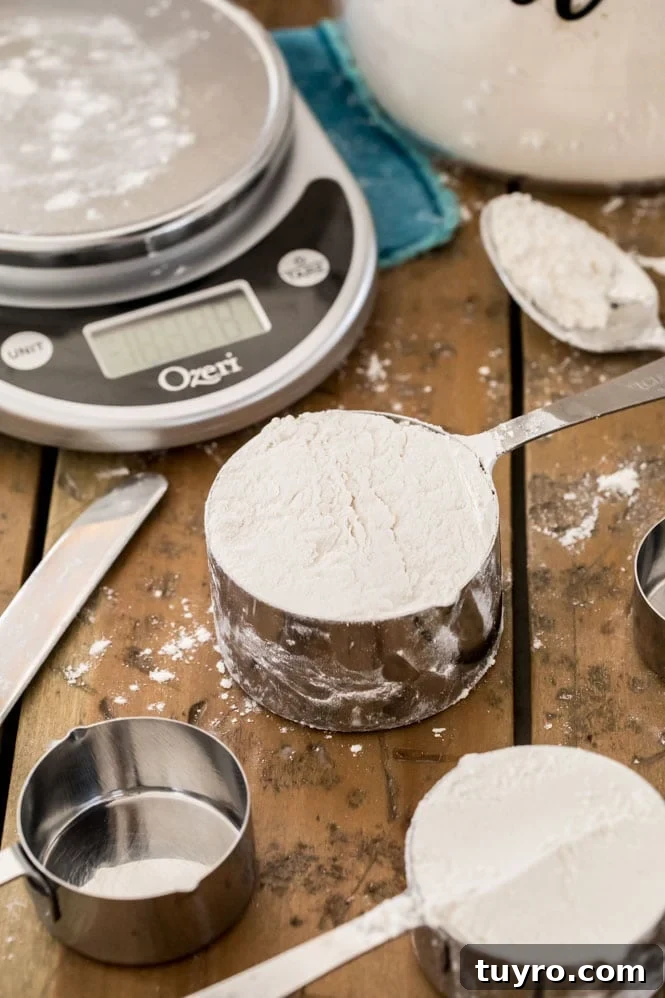
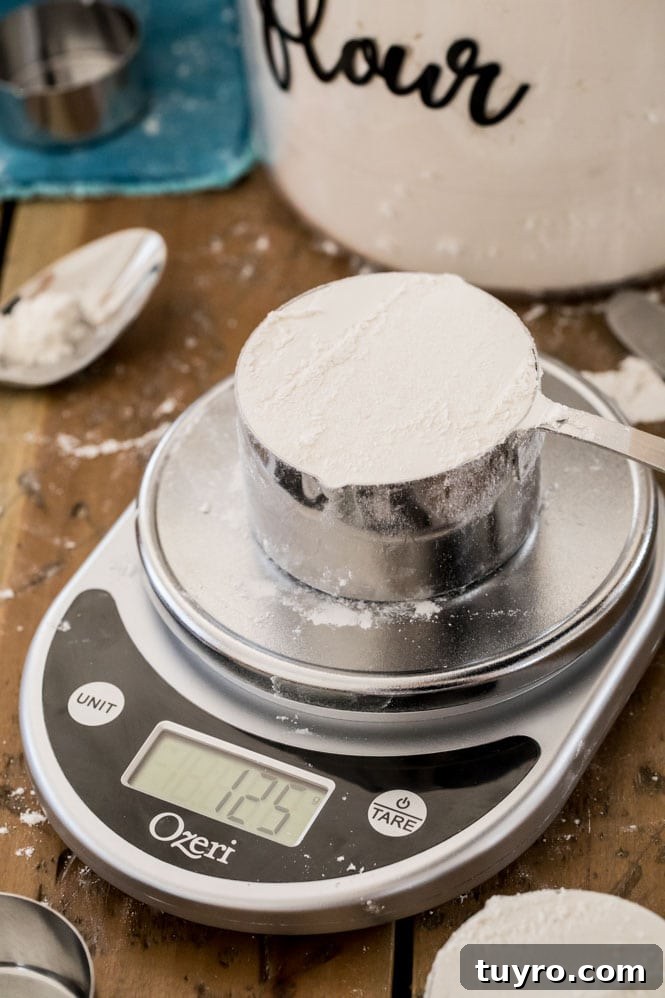
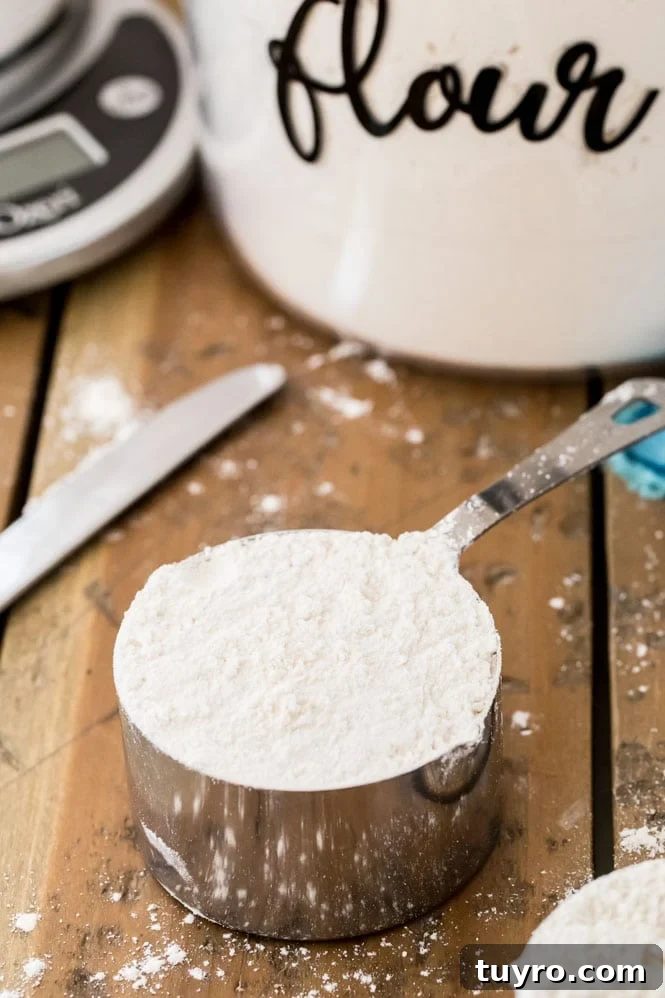
First, stir the flour in its container to loosen any settled or compacted areas. Use a spoon to lightly spoon the flour into your dry measuring cup. Once the cup is heaped, level the top with a straight edge (the back of a flat knife works well) so the surface is smooth and even. Repeat until you reach the desired measure.
If you weigh the flour, one cup should be about 125 grams (4.4 oz), which is the amount I use as my standard on this site.
DO NOT:
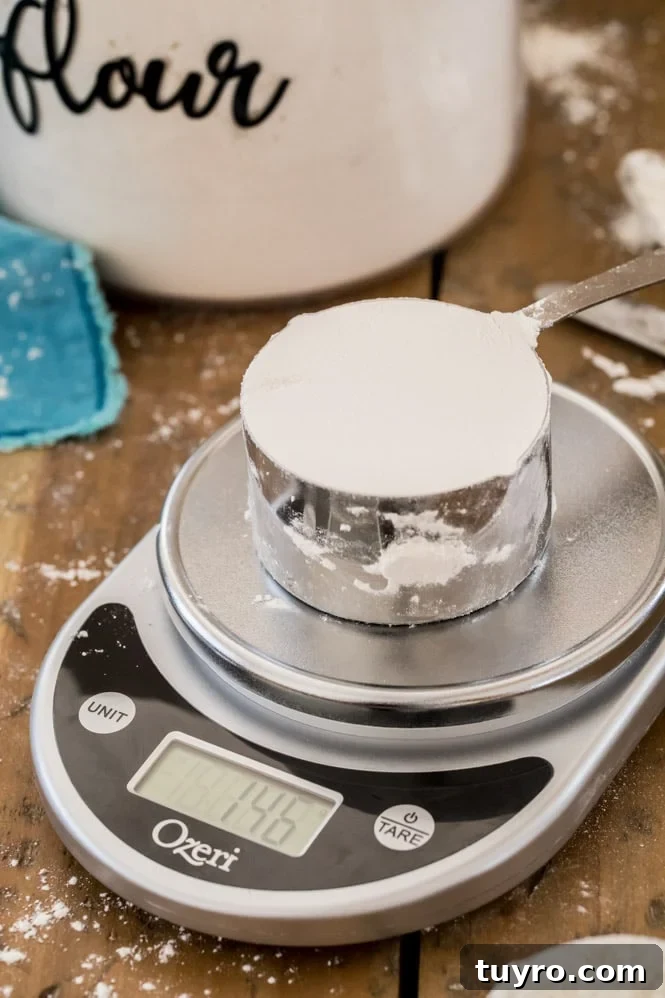
Do not scoop flour directly with the measuring cup. Scooping packs flour into the cup and can add significantly more flour than the recipe intends.
When flour is packed, you can end up with a much larger weight than the intended amount. In my example photos, an improperly scooped cup measured about 21 grams more than the correctly spooned cup. For recipes calling for multiple cups, this adds up quickly — three cups measured that way could mean an extra half cup of flour in the batter, which alters texture and moisture dramatically.
Over-measuring commonly leads to dry, dense cakes and crumbly cookie dough; under-measuring is possible too if the flour is fluffed excessively and the cup captures air pockets. Both produce inconsistent results.
My Number One Tip: Get a Scale & Use Weights!
If I could give one piece of baking advice that changed my baking life, it would be to move away from cups and use a kitchen scale. I’ve standardized my recipes so that 1 cup of flour equals 125 grams (4.4 oz) on this site, but other bakers may use a different conversion. Weighing ingredients removes that variability and ensures consistent results.
I now always weigh my ingredients, which makes baking easier and cleaner — fewer measuring cups to wash, and greater accuracy. A small, accurate digital scale is inexpensive and one of the most useful kitchen tools you can own.
How to Measure Using a Scale
To measure with a scale, place the bowl you plan to mix in on the scale and tare or zero it so the bowl’s weight isn’t counted. Add flour directly to the bowl until you reach the desired weight. Alternatively, weigh flour into a separate small bowl if you prefer, especially when the flour isn’t the first ingredient in the mixing bowl. That way, if you over-measure, you can correct it without disturbing other ingredients.
More Kitchen Tips:
- Salted vs. Unsalted Butter — what’s the difference?
- How to Make an Easy Buttermilk Substitute
- How to Make a Perfect Easy Pie Crust
- How to Make a Graham Cracker Crust
IN SUMMARY: How to Measure Flour
Follow these simple steps for reliable results:
- Stir the flour in its container to loosen any settling.
- Spoon the flour into your measuring cup rather than scooping with the cup.
- Level the top with a flat straight edge so the surface is smooth and even.
I don’t recommend sifting flour before measuring unless a recipe specifically calls for it — sifting first will decrease the amount of flour you measure and can create inaccurate results.
Or, use a kitchen scale. On this site, 1 cup of flour = 125 grams (4.4 oz). To use a scale, place your mixing bowl on the scale, tare it to zero, and spoon the flour into the bowl until you reach the correct weight. No measuring cups required.
VIDEO