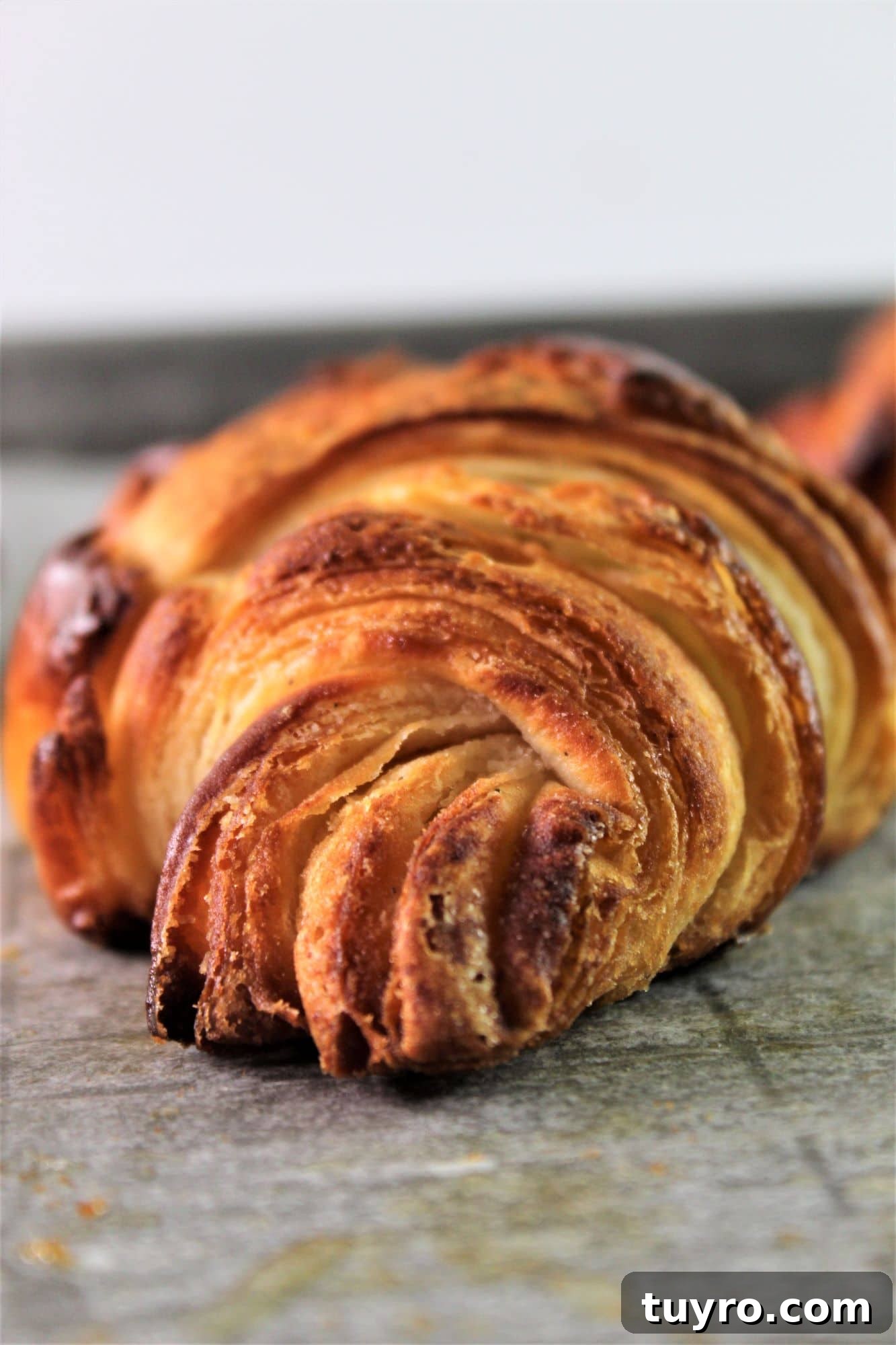
Buttery, flaky, feathery and light — these newly improved gluten-free croissants are sensational. If you thought gluten-free pastries couldn’t reach this level, prepare to be surprised.
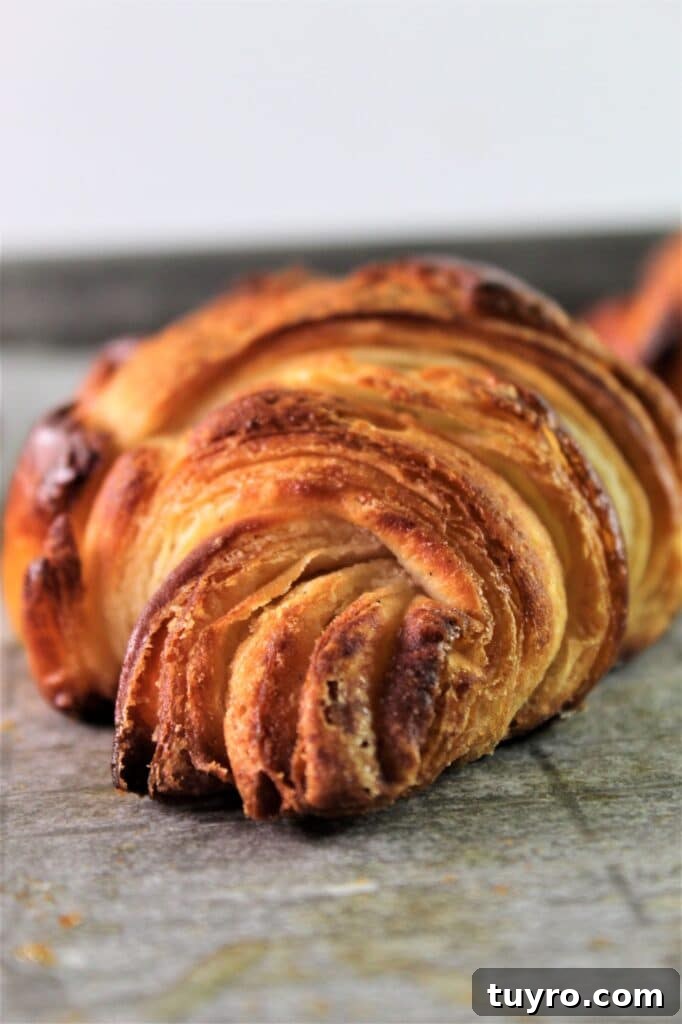
It took years to develop my first gluten-free croissants, and they were wonderful. Still, I kept experimenting and improving the method. These updated croissants are not only better in texture and flavor but also easier and faster to make — often taking less than half the time of earlier versions.
I’ll guide you step-by-step through the process. While laminated dough can look intimidating, these croissants are achievable if you follow the instructions. The effort pays off with delicate, layered pastries made by your own hands.
When I learned I had celiac disease, I missed croissants — not daily, but enough to notice when serving special sandwiches or salads. I tried store-bought gluten-free versions and found them too small, too roll-like, and too costly. That motivated me to create a croissant that truly resembles the real thing.
How I Reformulated My Gluten-Free Croissants
I’m a self-taught baker and, after many trials, I achieved a croissant that is light, flaky, and buttery. Two main innovations helped transform the recipe: the addition of psyllium husk for improved dough extensibility and a freezing step before incorporating the butter so dough and butter match in firmness. Psyllium husk gives the dough the stretch and structure it needs without gluten. Freezing the dough briefly before locking in the butter avoids breakage and helps produce clean layers when rolling.
Before You Begin — Read These Tips
Croissant-making requires patience and preparation. Even experienced bakers sometimes need practice. Read the recipe through, set aside time, and follow the ingredient recommendations closely for the best result.
- Read the recipe a couple of times before you start.
- Plan this as a weekend project at first — rising and chilling take the most time.
- This gluten-free dough uses slightly different proportions than traditional recipes (for example, a bit more sugar). In gluten-free yeast baking, adjustments like this are often necessary.
- Use the ingredients specified for reliable results. Substitutions (dairy-free, egg-free, etc.) may not produce the same outcome.
- Gluten-free croissants typically span 1–2 days because of resting and proofing times. After laminating, you can refrigerate the dough for a few days before shaping.
Laminated Dough Explained
Croissants consist of two components: the beurrage (butter block) and the détrempe (dough). Laminating means folding butter into the dough in layers. As the butter melts in the oven, steam forms and, together with yeast activity, lifts the layers to create a flaky, layered interior and a crisp exterior.
Making the Dough (Détrempe)
Combine flour, sugar, psyllium husk, salt, yeast, and baking powder in the bowl of a stand mixer and whisk. With the dough hook on low, add butter, milk, and beaten eggs. Mix until the dough comes together, then increase to medium-high and knead for five minutes. Scrape the dough together, cover with plastic wrap or place in a lidded container, and refrigerate overnight for cold fermentation. The dough will rise slightly, but most of the rising happens during final proofing.
Making the Butter Block (Beurrage)
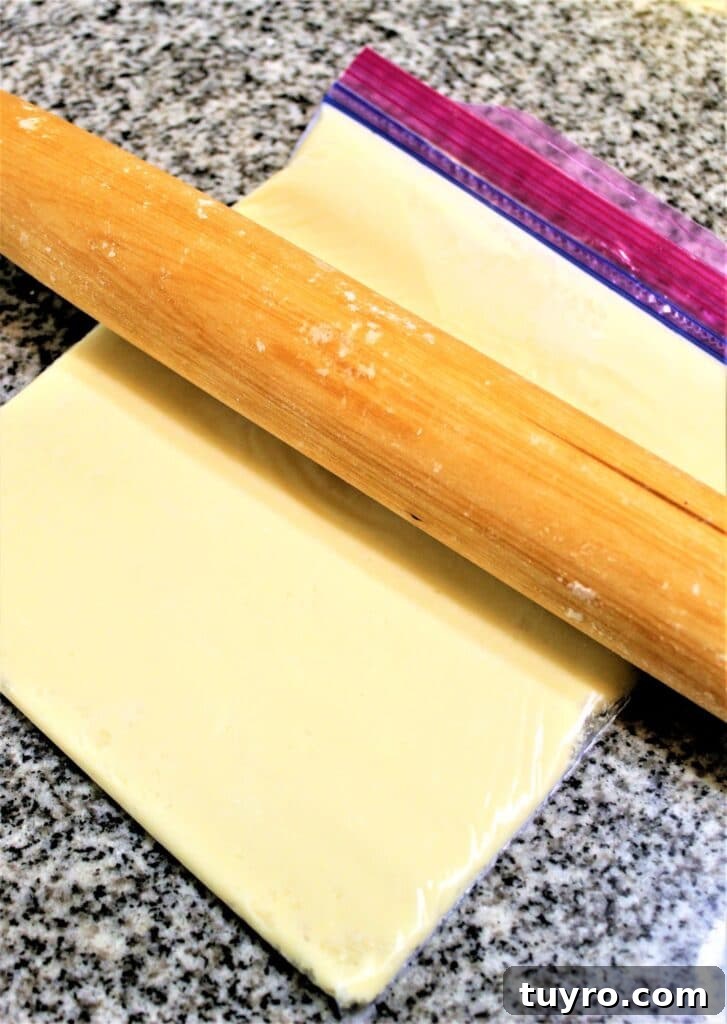
The next day, mix softened butter with a small amount of bread flour until smooth. Spoon the mixture into a quart-sized zip-top bag, press it into the corners, and roll with a rolling pin until it forms an even block. Chill the butter block while you prepare the dough. Note: the listed butter block quantity is for half the dough; double it if using the full dough at once.
Preparing the Dough
Work with half the dough the first time. Knead it on a lightly floured surface and roll into a rectangle about the size of a quarter sheet pan (9 x 13 inches). Place it on a sheet pan, cover, and freeze for 10 minutes. Flip and freeze another 10 minutes. This chilling step ensures the dough and butter will have similar firmness when combined.
Locking in the Butter and First Fold
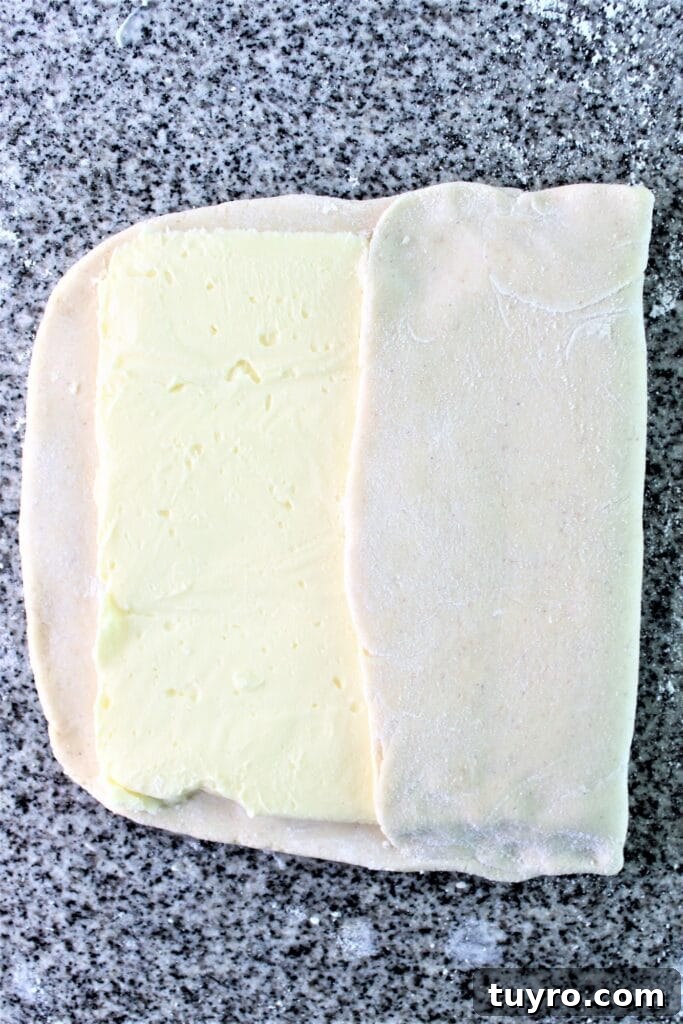
Remove the butter block; it should be firm but pliable. Cut open the bag and place the exposed butter onto the top two-thirds of the rolled dough, then remove the bag. Fold the bottom third of dough over the butter, then fold the top third down like a letter, pressing to seal the edges so the butter is enclosed.
Turning the Dough
Work quickly to keep the dough cold; if it warms, chill it in the freezer for 10 minutes. Turn the dough so the short end faces you and press the rolling pin lengthwise to elongate without pushing the butter out. Roll gently from the center to each end to reach a consistent thickness of about 1/4 inch.
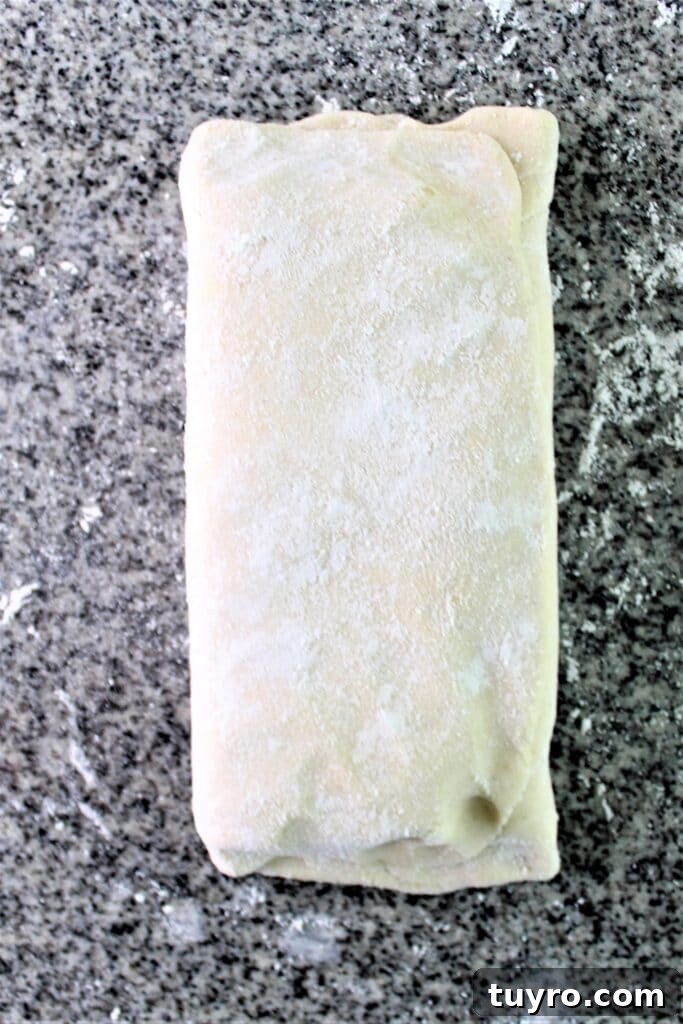
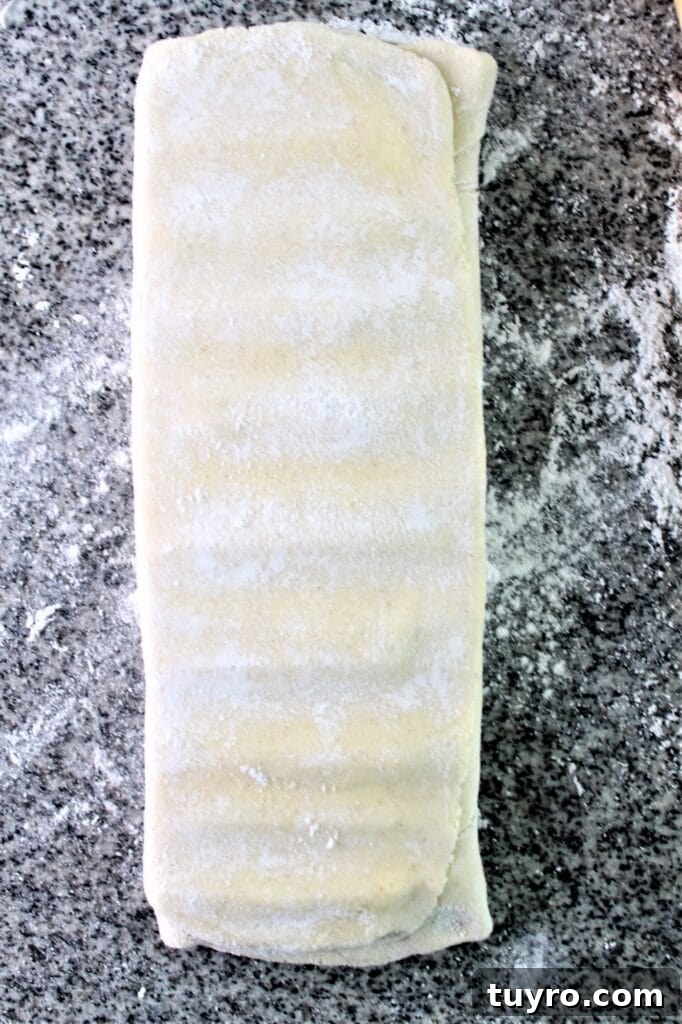
If the dough sticks, use a bench scraper to lift it and add a little flour underneath. If the dough tears, dust lightly with flour and gently press the tear closed. Focus on dough thickness rather than exact dimensions.
Making the Second Fold
Perform a book fold: fold the bottom third up, then fold the top two-thirds down to meet it, and fold once more so you end up with four layers. Turn the dough 90 degrees so the long opening is on your right and the short end is closest to you.
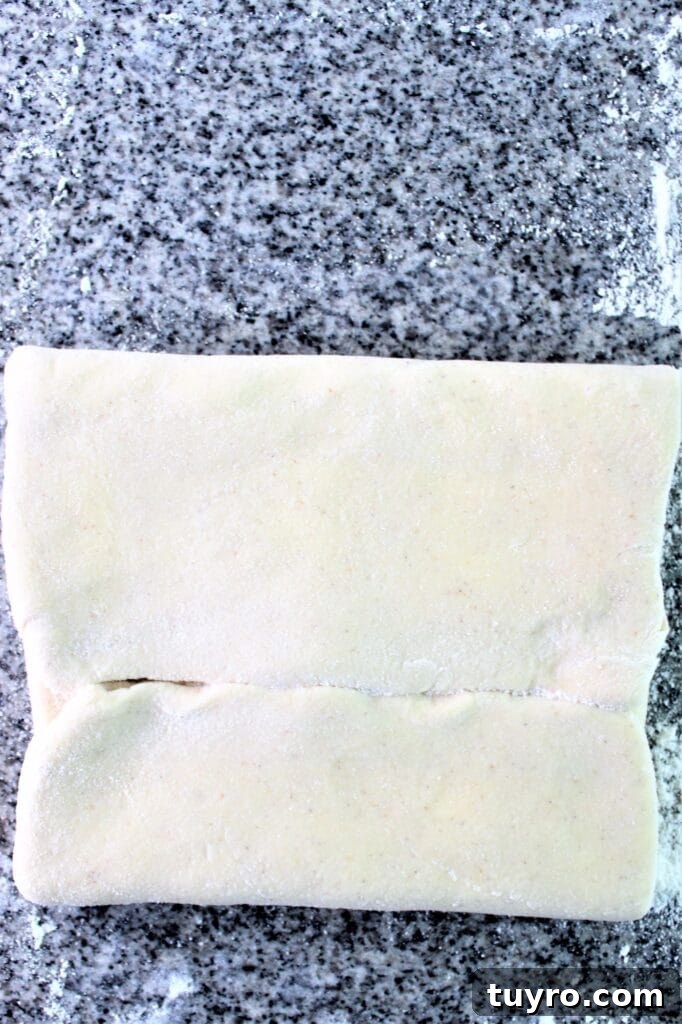
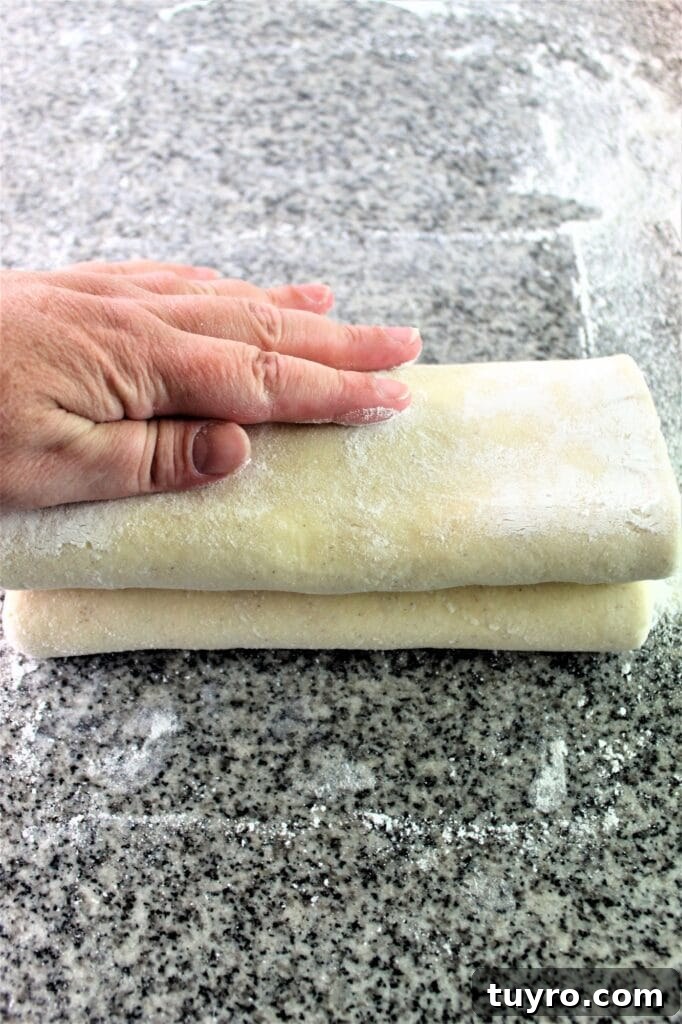
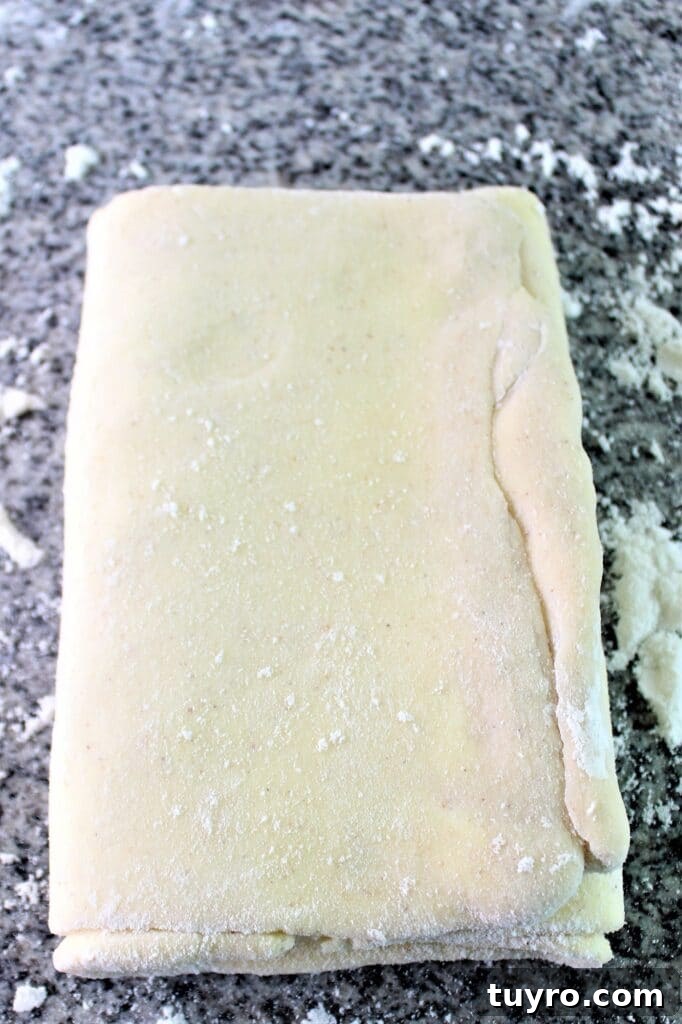
The Final Fold
Roll the dough again using the press-and-roll method to maintain layers. Make a final letter fold (bottom third up, top third down), turn the dough 90 degrees, and roll to roughly a quarter sheet size (9 x 13 inches). Place on a sheet pan, cover, and chill in the refrigerator for about 30 minutes.
Cutting the Triangles
Roll the chilled dough to about 10 x 12 inches at 1/4-inch thickness. Trim the edges if desired to expose layers and help lift. Mark notches along the bottom about 4 inches apart, then cut triangles. From half a batch you should get six large triangles.
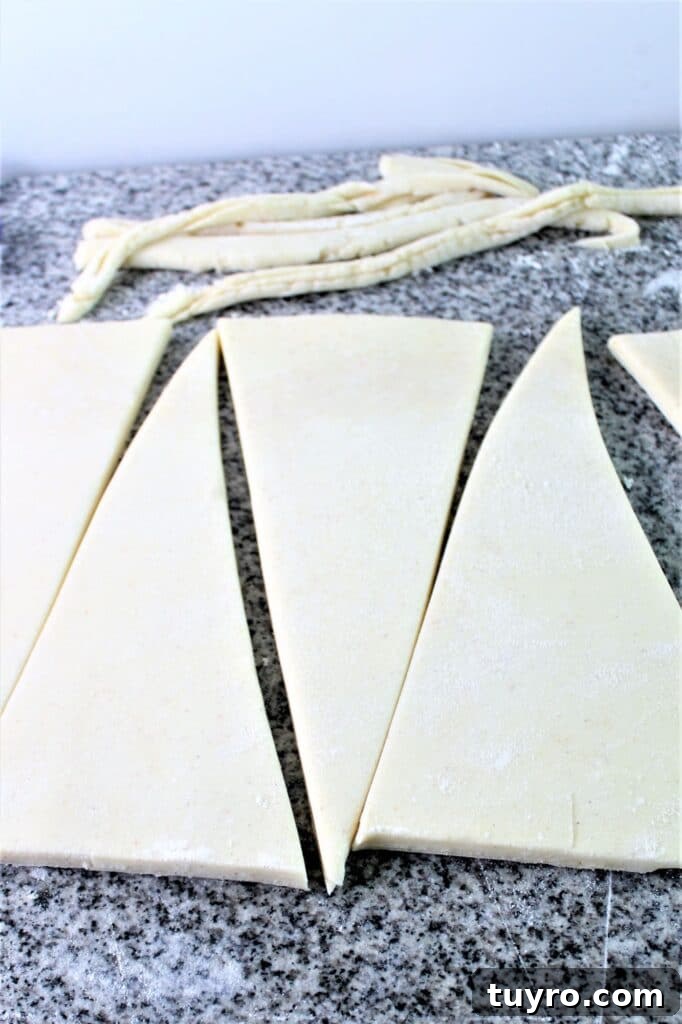
Shaping the Croissants
Cut a one-inch notch in the center of each triangle’s base, gently stretch the slit, and roll the dough up loosely from base to tip. For gluten-free dough, avoid tucking the tip underneath; leaving it on top prevents tearing during proofing and rising.
Proofing the Croissants
Place croissants at least 2 inches apart on parchment-lined sheets, cover loosely, and proof in a warm, humid environment. My method: set the croissants in the oven (turned off) and place a small pot of boiled water on a lower rack or on the oven floor to create gentle humidity and warmth. Close the oven and proof until the croissants look puffed and marshmallow-like but not doubled. This can take 1½–4 hours depending on conditions.
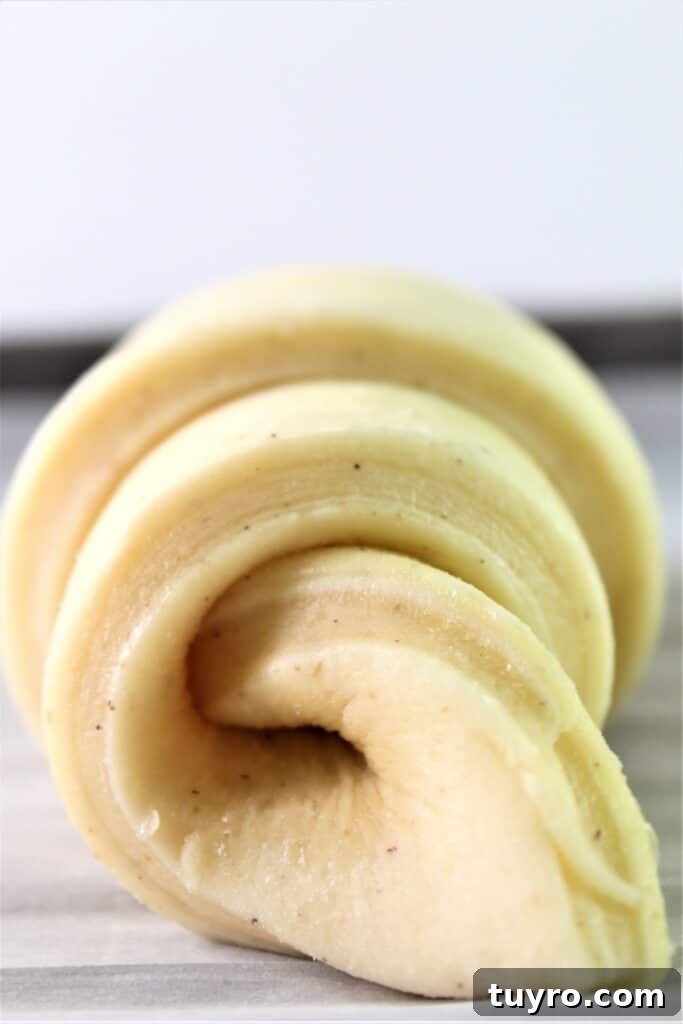
Baking Gluten-Free Croissants
Baking gluten-free croissants requires different timing and temperatures than traditional croissants. Place your filled baking sheet on top of another sheet to insulate the bottoms. Brush lightly with egg wash, chill in the freezer for about 10 minutes (or fridge 20 minutes), then preheat the oven to 475°F.
When the oven is ready, quickly drop 2–3 ice cubes on the oven floor to create steam, slide the croissants in, and shut the door. Bake at 475°F for 5 minutes, reduce to 450°F for 5 minutes, then 425°F for 5 minutes. If the croissants still feel heavy when lifted, bake another 5 minutes at 375°F. Done croissants should feel light for their size and show well-separated layers.
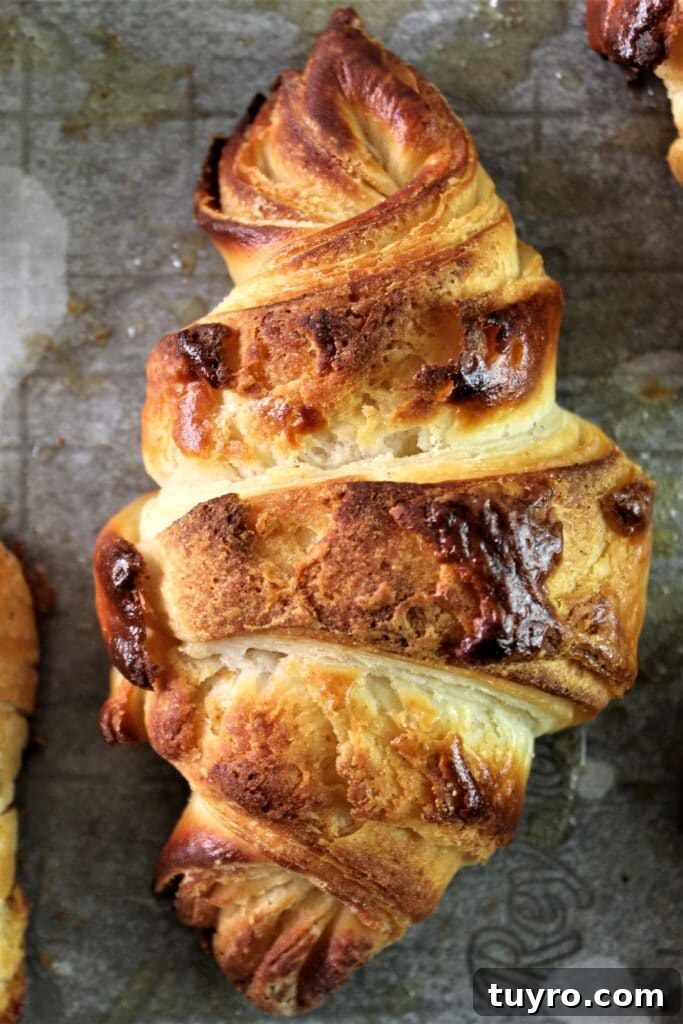
Tools That Make Croissant Making Easier
You don’t need specialty tools, but a few items streamline the process: dough scrapers, a bench scraper, a pastry wheel or cutter, a pastry brush, an acrylic ruler, quarter- and half-sheet pans, pre-cut parchment sheets, and a French-style rolling pin. These items help with handling, cutting, and rolling laminated dough.
Frequently Asked Questions
You can double the recipe, but for your first attempt I recommend working with half the dough to make six croissants. The smaller batch is easier to manage while you learn the technique. Once comfortable, you can make the full amount and double the butter block.
Yes. Smaller croissants are possible, but they require adjusted baking times. If you try smaller ones, monitor them closely and reduce baking time as needed.
European butter generally yields better flakiness and higher rise because of its higher fat and lower water content. American butter will still work but may produce slightly different results.
Yes. Unbaked croissant dough or shaped croissants can be frozen up to one month. Freeze shaped croissants on a sheet, then transfer to a freezer bag. Thaw in the refrigerator overnight before proofing and baking.
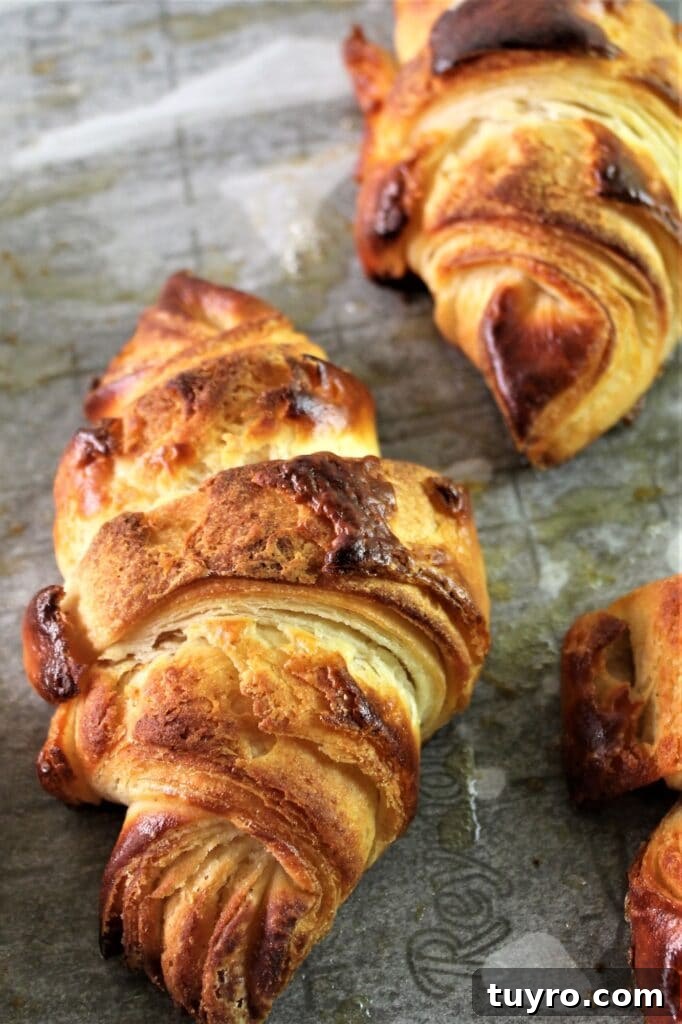
If you’ve been missing a great croissant, these gluten-free croissants are worth trying. One bite will bring back those memories of flaky, buttery pastries from before going gluten-free.

New and Improved Gluten Free Croissants
Ingredients
BUTTER BLOCK (BEURRAGE) FOR HALF THE DOUGH
- 1 cup (2 sticks or 226 g) high-quality unsalted butter, such as Irish or European, at room temperature
- 2 tablespoon gluten-free bread flour blend
DOUGH (DÉTREMPE) FULL RECIPE
- 3 cups (420 g) gluten-free bread flour blend
- 2 tablespoon whole psyllium husks or 1½ tbsp psyllium husk powder
- 1 teaspoon fine sea salt
- 1 teaspoon baking powder
- 1 tbsp plus ¾ tsp fast-acting yeast (instant or bread machine)
- ½ cup (100 g) granulated sugar
- 1 cup (240 ml) milk
- 6 tablespoon butter, softened
- 2 large eggs, beaten
EGG WASH
- 1 large egg beaten with 1 tablespoon water and a pinch of salt
Instructions
FOR THE DOUGH (DÉTREMPE)
-
In a stand mixer bowl, whisk the dry ingredients together. With the mixer on low, add milk, beaten eggs, and softened butter. Increase speed to medium-high and knead for five minutes.
-
Scrape the dough together, cover, and refrigerate overnight up to 48 hours for cold fermentation.
FOR THE BUTTER BLOCK (BEURRAGE)
-
Mix softened butter with 2 tablespoons bread flour until smooth. Spoon into a quart bag, press into a flat block with a rolling pin, and chill.
LAMINATING AND FOLDS
-
Work with half the dough. Roll to a 9 x 13-inch rectangle, freeze 10 minutes, flip and freeze another 10. Place the butter block on the top two-thirds and perform the first letter fold, sealing edges. Turn and press to lengthen, then roll to 1/4-inch thickness and perform a book fold. Turn, roll, and perform a final letter fold. Chill 30 minutes.
SHAPING AND PROOFING
-
Roll to about 10 x 12 inches and cut triangles. Cut a 1-inch slit at each base, stretch slightly, and roll up loosely. Place 2 inches apart on parchment, cover, and proof in a warm, humid oven until puffed and marshmallow-like (1½–4 hours).
BAKING
-
Place baking sheet on another sheet to insulate bottoms. Brush lightly with egg wash and chill briefly. Preheat oven to 475°F, toss 2–3 ice cubes on the oven floor for steam, and bake 5 minutes at 475°F, then 5 minutes at 450°F, then 5 minutes at 425°F. If still heavy, finish 5 minutes at 375°F.
Notes
Freeze shaped, unbaked croissants on a sheet until solid, then transfer to a freezer bag for up to one month. Thaw in the refrigerator overnight and proof before baking.
To freeze baked croissants, wrap individually and store in a freezer bag. Reheat wrapped in foil at 350°F for 5–7 minutes or slice and toast.
Fresh croissants keep well wrapped at room temperature for a couple of days before beginning to stale.
Start with half the dough for your first attempt. When comfortable, double the butter block and use the full dough for more croissants.